
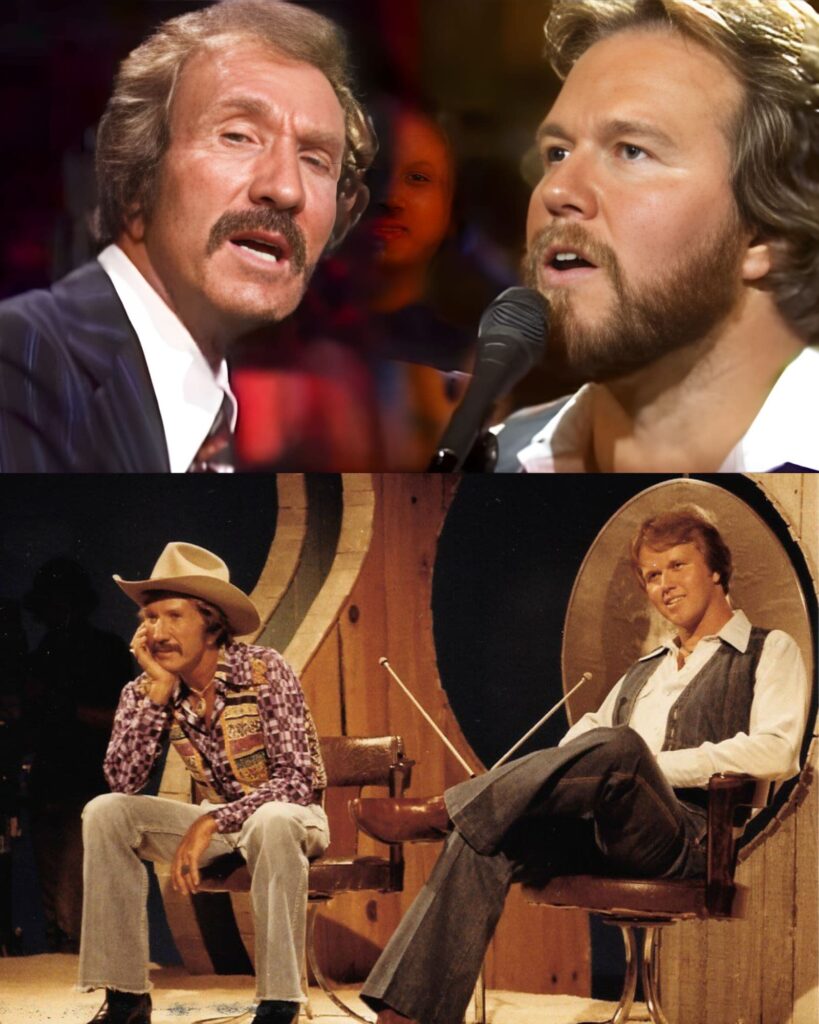
The Handing Over of a Legend
People talk about Marty Robbins as if he stepped out of myth — the rhinestone cowboy who could make a story breathe, who carried country music on his back for half a century. His voice wasn’t just heard; it shimmered through decades, turning ballads into memories and stages into sanctuaries.
But near the end, in those early 1980s shows, something gentler began to unfold. The lights still glowed, the fans still roared, yet behind Marty, standing just a few steps away, was Ronny Robbins — guitar in hand, quiet, steady, almost invisible. He wasn’t there for the glory. He was there for the man.
As Marty’s health faltered, Ronny became the anchor no one noticed. A nod here, a soft harmony there, a gentle move closer whenever his father needed a breath — it was a dance of instinct and devotion. Ronny didn’t try to shine. He tried to hold. Every note he played seemed to say, “I’ve got you, Dad.”
There was something sacred about those moments — a son holding up the weight of a legacy without ever trying to claim it. The crowds thought they were witnessing the final years of a legend. But in truth, they were watching a quiet handover, the tender exchange between generations.
When Marty sang “El Paso” or “My Woman, My Woman, My Wife,” Ronny’s voice brushed against his like a whisper of memory. It wasn’t imitation; it was inheritance. And every time Marty’s strength wavered, Ronny’s presence filled the silence — not to replace him, but to remind the world that love can outlast applause.
By the time the curtain fell, what lingered wasn’t the ache of an ending. It was the beauty of continuation — the sound of a father’s final rhythm echoing through his son’s steady hands.
Marty’s last performances weren’t just concerts; they were conversations — between life and legacy, between a father and the boy who had grown up watching him from the wings. And when the lights dimmed for the last time, Ronny didn’t step out of his father’s shadow. He carried the light forward.
Because some legacies aren’t passed down through fame — they’re passed through love.