
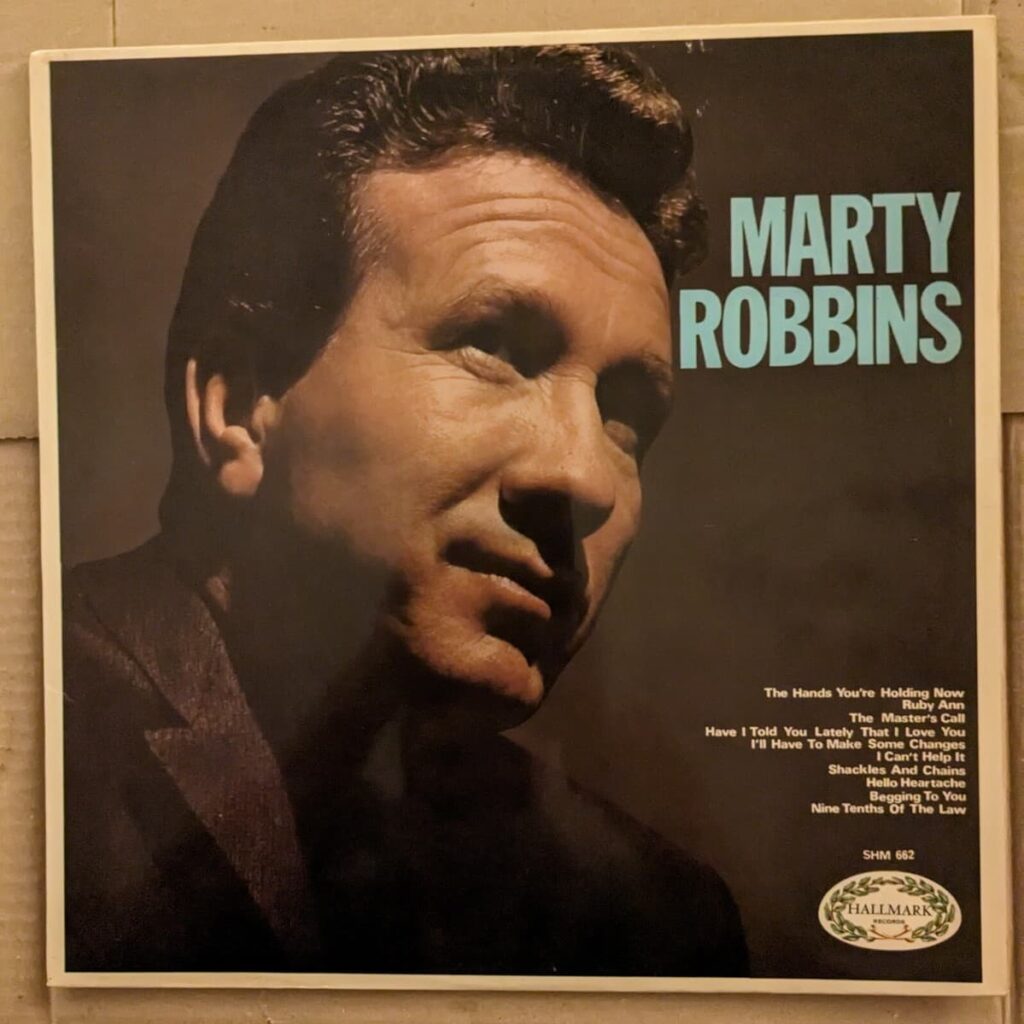
Marty Robbins: “Wedding Bells”—The Unbearable Contrast Between Joy and Personal Misery
There are very few sounds in life as clear, bright, and hopeful as the ringing of wedding bells, yet for the person standing on the outside looking in, they can sound like a cruel, mocking knell. Marty Robbins’s recording of “Wedding Bells” perfectly captures this searing, unbearable contrast. Though the song was originally a tremendous hit for the legendary Hank Williams in 1949, Robbins’s version, released around the late 1950s/early 1960s (and often found on compilations from that era), brings his smooth, slightly more polished Nashville sound to the raw, traditional country heartbreak.
This song is a foundational piece of the classic country genre, representing the quintessential theme of lost love made worse by seeing the former beloved move on. Hank Williams‘s version was an absolute sensation, peaking at No. 2 on the Billboard Country & Western chart in 1949 and remaining one of his most beloved recordings. For Robbins to tackle such an iconic song shows his respect for the genre’s history and his confidence in his ability to offer a powerful interpretation. While Robbins’s recording didn’t replicate the chart success of Williams’s original, his smooth vocal mastery ensures the heartache feels just as immediate and real, showcasing his versatility beyond his cowboy ballads and pop-country hits.
The story unfolded in “Wedding Bells” is simple, devastatingly so. The narrator is watching his former sweetheart marry another man. It’s the sheer proximity to the source of his pain that makes the situation unbearable. He sees her walking down the aisle, radiant and happy, while he stands alone, wrestling with the memory of the love that was supposed to be his.
The core meaning of the song lies in the bitter irony of the title image. The bells are ringing for joy and new beginnings, but for the narrator, they are tolling a final, mournful farewell. The lyric cuts deep into the psychology of jealousy and enduring attachment: “I hear the wedding bells a-ringing / But they don’t ring for me / I see the smiles, the tears, the joy / The bride and groom you see.” He is forced to be a ghost at the celebration of his own defeat.
Marty Robbins’s performance is characterized by his restrained emotional power. Where Hank Williams’s delivery was often more raw and lonesome, Robbins offers a smoother, perhaps more dignified grief. His voice glides over the melody, but the subtle quaver and the clear, intentional way he pronounces the words—especially lines that emphasize the finality of the loss—convey a deep, civilized agony. It’s the sound of a man who knows he must keep his composure, even as his heart is shattering inside the church.
For those of us who remember the classic era of country music, this song is a potent echo of the fundamental themes that defined the genre: fidelity, regret, and the inescapable truth that happiness for one person often means profound sorrow for another. “Wedding Bells,” especially in Marty Robbins‘s capable hands, reminds us that the most painful heartbreaks are often witnessed, not simply endured in private. It’s a beautiful, aching tribute to the kind of traditional country sadness that remains timeless.
 Music Legend