
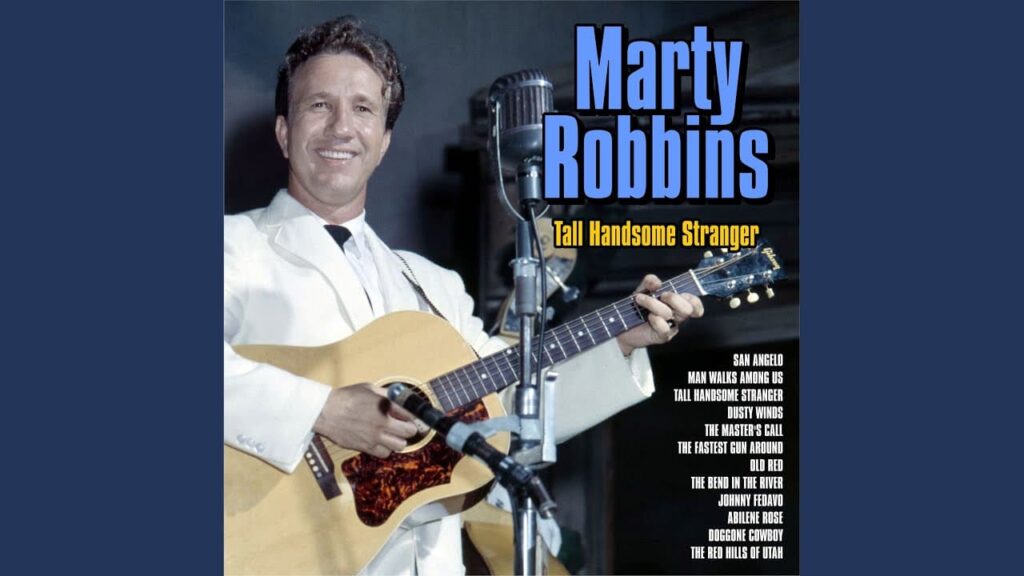
Marty Robbins’ “Most Of The Time”: The Fragile Illusion of Moving On
There are few voices in the history of Country and Western music as distinctive and versatile as that of Marty Robbins. He was a true Renaissance man: a beloved Grand Ole Opry member, a prolific songwriter, a stock car racer, and, critically, a master storyteller whose smooth, velvet baritone could slide effortlessly from a dramatic “gunfighter ballad” to a heartbreaking traditional country lament. When we talk about “Most Of The Time,” we are peeling back the heroic facade of the “El Paso” balladeer and finding the vulnerable, deeply human heart beneath.
The song was released in 1968 on his album I Walk Alone. By this point, Marty Robbins had already cemented his legendary status, having topped both the Country and Pop charts with classics like “El Paso” and “A White Sport Coat (and a Pink Carnation).” I Walk Alone, the album that housed this track, reflected Robbins’ ability to maintain chart presence even as country music began to shift, reaching a solid Number 7 on the Billboard Top Country Albums chart. “Most Of The Time” itself was not a breakthrough single—it was a cherished album cut—but its placement in his discography shows that even amidst the dramatic narratives and upbeat rockers, Robbins always reserved space for the quiet, enduring pain of lost love.
The essence of “Most Of The Time” is encapsulated in its title and its heartbreaking premise: the narrator claims he is doing fine, he has moved on, and he only thinks about his lost love fleetingly. He has, in his words, forgotten the old feelings and the old flames. But the genius of the song—and the reason it resonates so profoundly with older, wiser listeners—is that the entire lyric structure is a brilliant, fragile contradiction.
The very act of spending three minutes carefully detailing all the things one doesn’t think about, and all the times one isn’t sad, reveals the truth: the loss is a constant, suffocating weight. The elaborate denial is the heartache. He is so focused on proving he’s happy that he can’t stop talking about the person he’s trying to forget. The song becomes a profound commentary on the human tendency toward self-deception in the face of emotional devastation. It’s a beautifully subtle, almost stoic way of admitting defeat, a quiet surrender to memory.
Marty Robbins’ delivery is what elevates this song from a simple ballad to a deeply reflective piece. There’s a measured, conversational quality to his voice; he sounds like a man trying to convince himself as much as the listener. His baritone is warm and inviting, yet there’s a subtle weariness, a lingering crack of vulnerability that exposes the lie of the lyrics. For those who have loved and lost, this song cuts straight to the bone. It perfectly captures that adult experience of carrying on, functioning “most of the time,” while knowing that beneath the surface, the deepest connections are never truly broken, merely suppressed. It is the ultimate expression of the adage that time doesn’t heal all wounds, it just teaches us how to live with the scar.
 Music Legend