
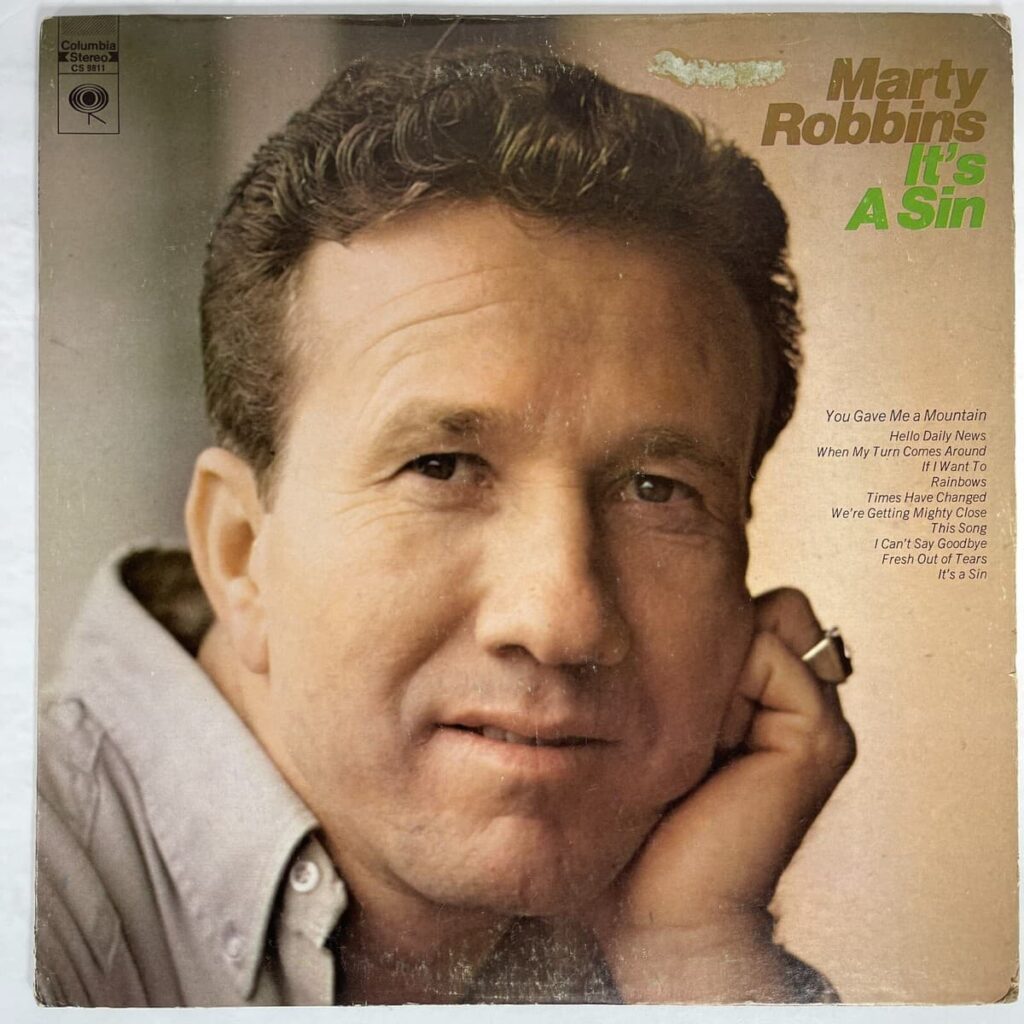
Marty Robbins – Knee Deep In The Blues: When the Sky Turns Gray and the Heart Sinks Low
There is an electricity in the air when you hear an early Marty Robbins record, a sound poised right on the fault line between traditional Country and the nascent rockabilly pulse of the mid-1950s. “Knee Deep In The Blues,” released in December 1956, is a brilliant example of this vibrant era. It wasn’t just a successful record; it was a key moment in the career of one of Country music’s true Renaissance men. The song, a masterful piece of songwriting by Melvin Endsley, was a significant hit for Robbins, climbing to the coveted No. 3 spot on the Billboard Country Singles chart. For those of us who remember buying this 78 or 45 RPM single and bringing it home, the memory is less about the charts and more about the way it perfectly captured that feeling of being utterly, hopelessly down in the dumps.
The essence of “Knee Deep In The Blues” is exactly what the title promises: a portrait of total emotional saturation. It is the sound of a person who has passed the point of simple sadness and is now submerged in sorrow. The lyrics, direct and devastating, paint a picture of perennial heartache: “My life just don’t seem worth livin’ / And it’s been this way for years.” This isn’t a single-day disappointment; it’s the heavy, accumulated weight of persistent bad luck and loss. The simple yet profound image of walking “the soles offa my shoes” beautifully conveys the restless, directionless nature of true despair.
What makes Marty Robbins’ version so compelling, especially for the older listener, is the incredible versatility he demonstrated as an artist. While many people associate him with the sweeping, dramatic Western ballads like “El Paso,” or the pop sensibility of “A White Sport Coat (And a Pink Carnation),” this track showcases his mastery of that fast-paced, steel-guitar-driven Honky-Tonk sound. His delivery here is not a cowboy’s drawl or a crooner’s whisper, but a lively, almost defiant lament. There’s a spirited energy to the music itself, a tension that paradoxically makes the crushing sadness of the words feel even more real. It’s the musical equivalent of putting on a brave face and dancing through your tears—a coping mechanism many of us know all too well.
The story behind the song also touches on a critical, often frustrating aspect of the music business in that transitional era. Robbins had just scored a huge crossover hit with “Singing the Blues,” and when “Knee Deep In The Blues” came out, his labelmate, pop singer Guy Mitchell, quickly released a cover version. This practice of “covering” a Country hit with a Pop arrangement to capture the broader market often limited the crossover success of the original Country artists like Robbins. This competition meant that while Marty Robbins’ version dominated the Country charts, it was Mitchell’s cover that prevented the song from achieving similar heights on the Pop charts. For those who value the purity of the Country sound, this episode serves as a reminder of the artistic battles fought behind the scenes in Nashville during the 1950s.
Yet, that commercial jostling ultimately mattered little to the enduring quality of Robbins’ recording. It lives on as a vibrant, authentic expression of sorrow, underscored by an irresistible, toe-tapping rhythm. It’s a nostalgic glimpse back at a time when music felt immediate, raw, and true—a perfect soundtrack for remembering a long, tear-filled night from decades past, and appreciating the resilience that got you through it.
 Music Legend