
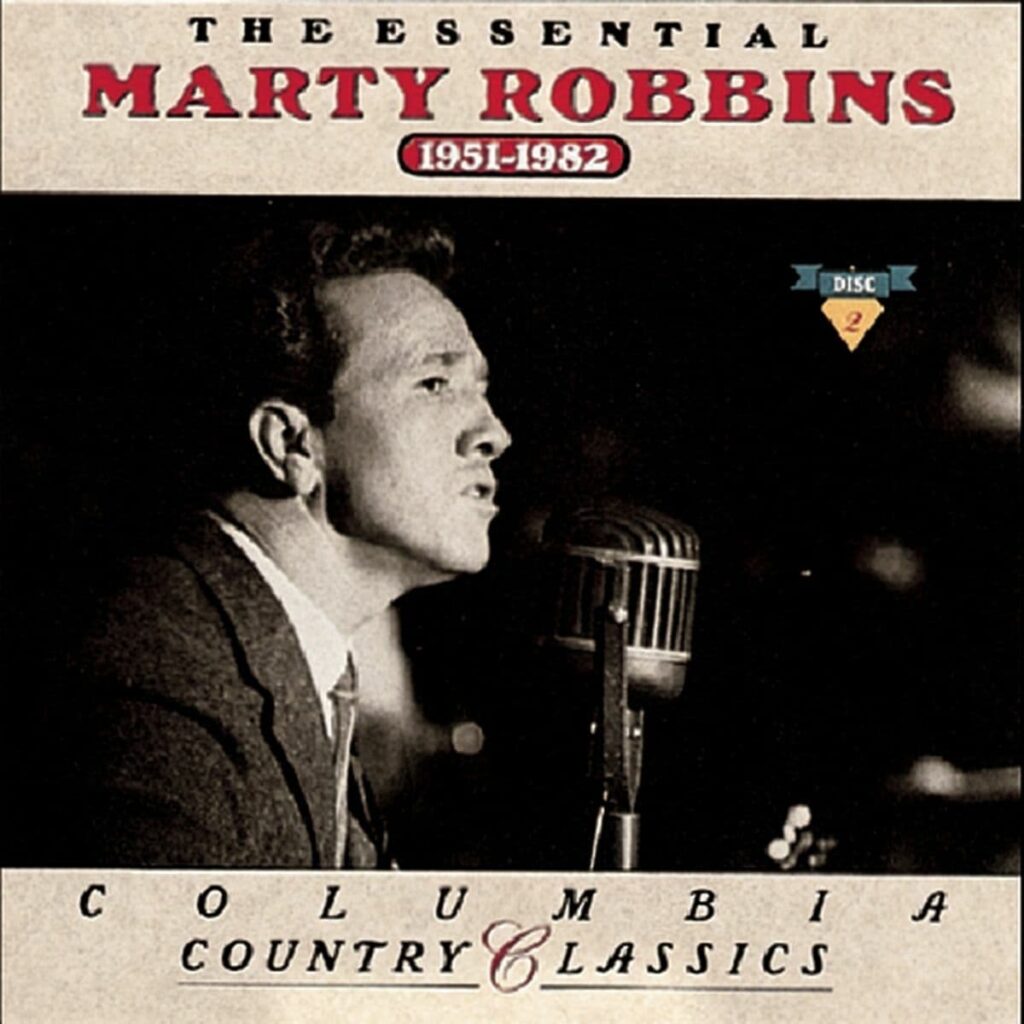
A timeless country lament of unending love and loss, “Oh, Virginia” evokes the ache of memory and the sorrow of a heart that never learned to let go.
When “Oh, Virginia” was released in 1966 by Marty Robbins, it came as part of his evocative album The Drifter, a record that stands today as one of his most contemplative works in the country and western genre. The album itself debuted on the Billboard country album chart on September 3, 1966, eventually peaking at No. 6 and remaining on the chart for 26 weeks, which reflects not only the strength of Robbins’s artistic vision at that time but also the enduring appeal of his storytelling through song.
Unlike many of Robbins’s standalone singles — such as Devil Woman or Tonight Carmen, which soared to the top of the charts in other years — “Oh, Virginia” did not become a hit single in its own right. It was released on Columbia Records as a track from The Drifter and later appeared as the A-side of a 7″ single paired with the B-side “Camelia” in New Zealand in 1969, but without significant chart impact in major markets.
That absence from the charts, however, belies the emotional richness of the song itself — a deep, aching ballad that resonates as much with the soul as with the ear. Robbins wrote “Oh, Virginia” himself, and the lyrics unfold like a diary entry from a man whose heart is trapped in the past. The verses speak of roses that have faded and died, moonlit nights and sunrises and sunsets that have passed without solace, and tears shed in the long wake of separation. In the shadow of lost love, time has marched on, but the singer’s heart remains painfully unchanged — a testament to the enduring power of love and memory.
The chorus, repeated with plaintive longing, asks again and again — “Oh, Virginia, when will I stop loving you?” — and offers no suggestion of an answer except uncertainty, yearning, and the possibility that such love may never truly fade. This profound emotional honesty is carried further in the imagery of dreams and visions that appear and then vanish, and the haunting metaphor of a dove that flies alone after losing its chosen mate. The emptiness the singer feels echoes not just in the silence of goodbye, but in the very structure of his memories — full of presence, but devoid of the beloved whose name echoes in every line.
Musically, “Oh, Virginia” is rooted in traditional country and western arrangements — gentle acoustic guitar, restrained percussion, and that unmistakable vocal presence of Robbins himself. His baritone, always smooth and measured, finds in this song a rare depth of vulnerability. There’s no bravado here; there’s only an honest, aching heart laid bare, weighted by the memories of love and pain intertwined.
Within the broader arc of The Drifter — an album often praised for its artistic ambition and subtle exploration of cowboy and wanderer narratives — “Oh, Virginia” stands out for its introspection. Where some tracks on the record evoke open plains and long trails, this one turns inward, exploring the internal landscape of longing and loneliness. It’s a song that doesn’t rush to resolution, but remains in that quiet place between memory and hope.
For listeners who appreciate country music’s power to express human emotion in its rawest forms, “Oh, Virginia” resonates like a letter never sent, a whisper caught on the wind, and a sound that lingers long after the final chord fades. Its strength lies not in chart positions, but in its capacity to mirror the universal experience of love that refuses to fade, and loss that remains etched in the heart. In the quiet moments of reflection, when moonlight touches half-closed eyes and memories drift like petals on a breeze, the song still speaks — a testament to Marty Robbins’s ability to turn heartbreak into timeless melody.