
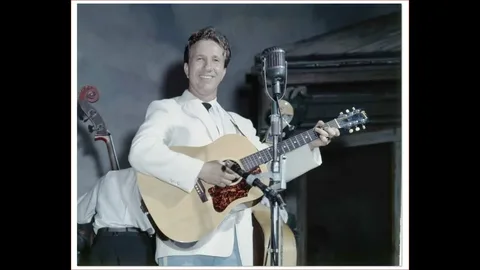
Marty Robbins’ “A White Sport Coat (And a Pink Carnation)”: The Agony and Expectation of a Fateful Prom Night
Step back in time with me, if you will, to the mid-1950s—a world of crisp suits, pastel colors, and the monumental, heart-stopping significance of a single evening: the high school dance. Marty Robbins’ 1957 classic, “A White Sport Coat (And a Pink Carnation),” is the definitive musical time capsule of that era’s youthful anxiety and romantic expectation. It’s a song that perfectly blends Country sensibility with Pop sophistication, capturing the universal, yet deeply personal, agony of waiting for a date who is tragically late.
This song wasn’t just a hit; it was a cultural phenomenon that launched Marty Robbins into crossover stardom and remains one of the most recognizable tunes of the era. Released in 1957, the track shot up the charts with dizzying speed. It peaked at an incredible Number 2 on the U.S. Billboard Top 100 chart (the precursor to the Hot 100) and simultaneously hit Number 1 on the Billboard Country & Western Best Sellers in Stores chart. This dual-chart dominance demonstrated Robbins’ remarkable appeal to both the emerging teen Pop audience and his established Country fan base. The song was so ubiquitous that the image of the title attire became synonymous with the romantic idealism of the 1950s.
The story behind this smash hit is often cited as a moment of pure inspiration. Marty Robbins reportedly wrote the entire song in the back seat of a car while traveling. The iconic attire—the white sport coat and the pink carnation—was the standard formal dress code for many high school proms and dances during that time, making the image immediately relatable to millions of young listeners. The song’s clever arrangement, featuring a plucked, almost rhythmic acoustic bass and gentle, sophisticated strings, marked it as a key entry into the burgeoning genre of “Countrypolitan” or Nashville Sound, giving it the necessary polish to succeed on Pop radio.
The central meaning of “A White Sport Coat” is the excruciating tension between hopeful expectation and crushing disappointment. The narrator has prepared everything perfectly for his date—the required attire, the corsage, the car—only to be left standing, waiting, as the music starts and the other couples dance. The lyric, “I’m all dressed up for a date, but you stood me up at the door,” is a simple, devastating articulation of rejection. The irony lies in the impeccable perfection of his external appearance—the white sport coat symbolizes his pure intent and hopeful readiness—which only serves to amplify the shame and emptiness of his internal state. He is dressed for happiness, but consumed by anxiety and loneliness.
For those of us who came of age during those years, this song is a potent trigger for powerful memories. It instantly conjures the sights and sounds of the 1950s: the nervous excitement, the slow dances, and the dramatic heartbreak that felt so monumental at seventeen. Marty Robbins’ vocal delivery is perfect here; he sounds earnest, slightly vulnerable, and deeply invested in the outcome of this fateful night. He manages to convey youthful nervousness and profound disappointment without ever sounding whiny, transforming a simple high school mishap into a timeless anthem of romantic vulnerability.
“A White Sport Coat” remains a brilliant piece of musical history, a flawless fusion of genre and emotion that immortalized a simple piece of formal wear and, more importantly, the universal experience of waiting for a love that may never show.
 Music Legend