
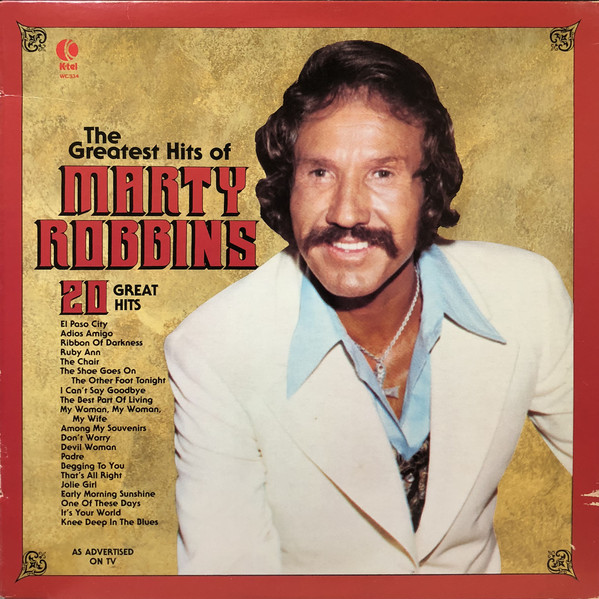
Marty Robbins – You Don’t Really Know: A Haunting Glimpse Behind the Smiling Mask
In the intricate theater of human emotion, there is often a vast, echoing distance between the face we show the world and the truth we carry in the quiet of our souls. Marty Robbins, the master portraitist of the lonely heart, explored this hidden chasm with devastating precision in “You Don’t Really Know.” Featured on his landmark 1962 album Portrait of Marty, this song served as a poignant cornerstone for a collection that ascended to Number 7 on the Billboard Top Country Albums chart. It is a song for those of us who have mastered the art of the “brave front”—those who understand that a smile is sometimes the heaviest burden a person can carry.
To remember “You Don’t Really Know” is to recall the peak of the Nashville Sound, a time when music was an intimate confession whispered through the radio dial. When Marty performed this, he didn’t need grand gestures or dramatic crescendos. He stood with a quiet, almost regal poise, his voice a shimmering baritone that seemed to reach out and touch the listener’s own secrets. The story behind this recording is one of soulful restraint; working in the legendary RCA Studio B, Robbins and the Jordanaires created a sonic atmosphere that felt like a dim room at three in the morning—a place where the truth finally catches up with the pretense.
The story within the lyrics is a direct address to a lover—or perhaps an old friend—who believes they have the narrator all figured out. It is a narrative of the invisible ache. The narrator gently refutes the idea that he is happy, “moving on,” or unaffected by the past. He explains that while he may laugh at the jokes and walk with a steady stride, the person they see is merely a ghost of the man he used to be. It is the story of the “public life” versus the “private heart,” capturing the profound isolation that comes when the people closest to us fail to see the tears we’ve learned to hide.
The profound meaning of this ballad strikes a deep, resonant chord with a mature audience because it honors the complexity of the long-lived heart:
- The Fallibility of Perception: It acknowledges that even those who love us most can be blind to our deepest struggles. There is a nostalgic wisdom in the song’s reminder that we never truly know the “full story” of the people around us.
- The Architecture of Stoicism: For our generation, who were raised to “keep calm and carry on,” the song is a powerful validation. it honors the grit it takes to hide a broken heart, while also acknowledging the exhausting toll that such a performance requires.
- The Sanctity of the Inner World: By stating “you don’t really know,” the narrator reclaims his own experience. He asserts that his pain belongs to him alone, creating a sacred, private space that the outside world cannot touch or diminish.
Marty Robbins delivers this performance with a voice that is as clear as a bell but infused with a weary, midnight warmth. His signature vibrato is used here to create a sense of trembling resolve, making the listener feel the “cracks” in the narrator’s armor. The arrangement is quintessentially lush—featuring a soft, rolling piano that mimics the steady passage of time and the ethereal, humming backing of the Jordanaires that feels like the sighs of a lonely house. For those of us looking back through the lens of decades, “You Don’t Really Know” is a timeless masterpiece. It reminds us that behind every “I’m fine” lies a universe of memory, and that the most beautiful souls are often the ones who have learned to carry their shadows in the light.
 Music Legend