
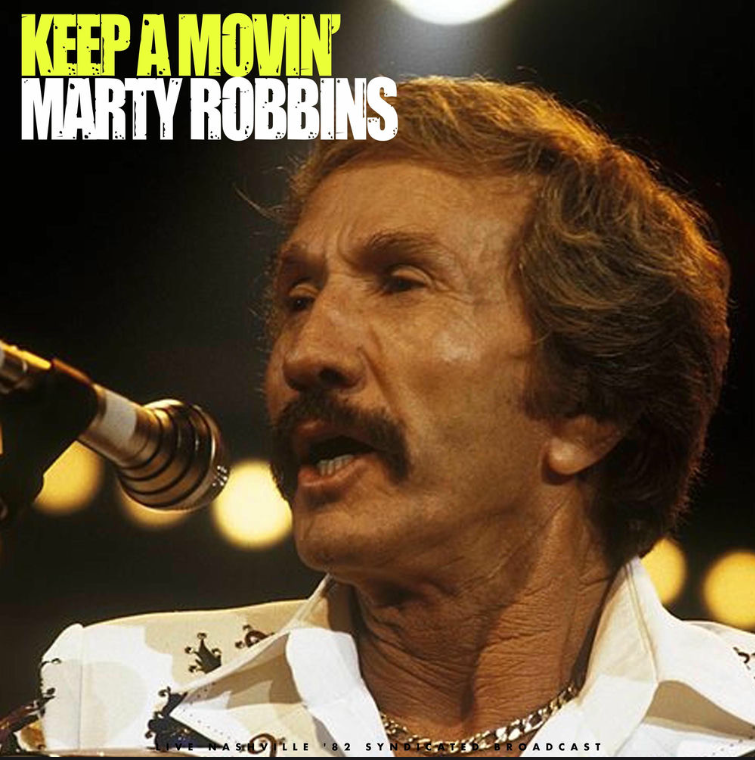
Marty Robbins – 18 Yellow Roses: A Fragile Bouquet of Regret and Mystery
In the early 1960s, Marty Robbins demonstrated his uncanny ability to take a contemporary pop hit and drape it in his signature “velvet” Western elegance. “18 Yellow Roses,” originally written and recorded by Bobby Darin in 1963, was reimagined by Marty for his album A Portrait of Marty. While the song was a top-10 hit for Darin, Marty’s version transformed it into a more contemplative, atmospheric piece of storytelling. It is a song for those who have stood outside a door they can no longer enter—a narrative for the “secret sharers” of a love that has drifted just out of reach.
To listen to “18 Yellow Roses” is to hear Marty master the art of the “musical mystery.” The story behind this recording is one of masterful subtlety. Marty moved away from the brassy, upbeat production of the original, opting instead for a softer, more intimate arrangement. Recorded during the height of his “crooner” era, his voice acts as a gentle narrator, inviting the listener to witness a private moment of heartbreak that feels both timeless and deeply personal.
The story within the lyrics is a hauntingly beautiful scene of unspoken sorrow. The narrator describes a man standing at a flower shop, ordering eighteen yellow roses to be delivered to a woman’s house. He includes a note that simply says, “To the one that I love best.” It is a narrative of the “outsider” looking in. The narrator is not the one receiving the roses, nor is he the one inside the house; he is a witness to this gesture of silent devotion. The mystery lies in the “why”—why eighteen? Why yellow? The roses represent a history that the world isn’t privy to, a secret language between two souls that have been separated by time or circumstance.
The profound meaning of this ballad strikes a deep, resonant chord with a mature audience because it honors the complexity of unspoken love:
- The Beauty of the Symbolic Gesture: It acknowledges that sometimes flowers can say what a heart is too broken to speak. For those of us who have used symbols—a letter, a song, or a gift—to reach across a distance, the song validates the power of the “silent message.”
- The Maturity of Letting Go: There is a sense of resignation in the song. It reflects a stage of life where we realize that some loves cannot be “won” back, but they can be honored with grace and beauty from afar.
- The Nostalgia for Courtly Romance: The image of a man sending roses anonymously evokes a time of chivalry and “gentle” heartbreak. It reflects a nostalgia for an era when emotions were handled with a certain level of decorum and poetic mystery.
Marty Robbins delivers this performance with a voice that is as delicate as the petals he sings about. He handles the melody with a “hushed” reverence, allowing the listener to feel the weight of the man’s loneliness. The arrangement is quintessential early-60s Nashville Sound—featuring a soft, tinkling piano that sounds like morning dew, a gentle acoustic guitar, and a subtle string section that wraps around the vocal like a warm shawl. For our generation, “18 Yellow Roses” is a timeless piece of emotional storytelling; it reminds us that while some loves are meant to bloom in the sun, others are cherished most in the quiet shadows of memory.
 Music Legend