
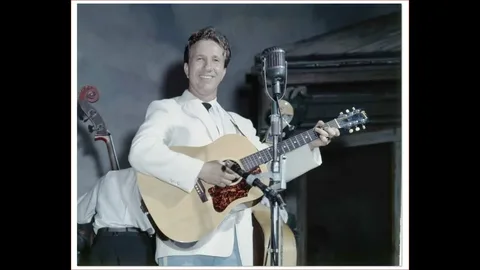
Marty Robbins – Won’t You Forgive: A Soul-Baring Plea for Redemption and the Grace of a Second Chance
In the sacred quiet of a recording studio in 1962, Marty Robbins laid down a track that would become a beacon for every heart that has ever wandered and sought the way back home. Released on his deeply spiritual and introspective album What God Has Done, “Won’t You Forgive” is a profound departure from the dusty trails of his gunfighter sagas. While the album itself was a significant success, reaching No. 10 on the Billboard Top Country Albums chart, this specific song stands out as a raw, unfiltered dialogue between a flawed man and his Creator. It is a song for the twilight hours, where the noise of the world fades away and we are left alone with our reflections and our regrets.
For the reader who has lived a full life—one marked by both triumphant peaks and the shadows of the valley—this song carries a weight that only time can grant. Marty Robbins, with a voice that felt like a hand extended in the dark, narrates the universal experience of “falling short.” For the mature listener, the plea for forgiveness isn’t just about religious doctrine; it’s about the human necessity of reconciliation. It is a song for anyone who has ever looked back at a missed opportunity or a broken promise and felt the ache for a clean slate. There is a shimmering, nostalgic beauty in the way Marty delivers this prayer, reminding us that no matter how far we have drifted, the possibility of grace is always just a whisper away.
The story behind the song is rooted in Marty’s own complex relationship with faith and his incredible ability to write from a place of absolute sincerity. Written by Marty himself, it reflects the “Gentle Balladeer” at his most humble. In 1962, at the height of his global fame, Marty chose to dedicate an entire project to his spiritual roots. He understood that his audience, many of whom had seen the hardships of war and the struggles of the Depression, found their greatest strength in the quiet resilience of faith. He didn’t approach the song as a distant preacher, but as a fellow traveler on a dusty road, asking the same questions we all eventually ask when the sun begins to set on our own horizons.
The lyrical meaning of “Won’t You Forgive” lies in the power of total surrender. The narrator acknowledges his pride and his mistakes, stripping away the armor of the “gunfighter” to reveal a vulnerable soul. The refrain—a simple, melodic repetition of the plea for forgiveness—is one of the most moving moments in his 1960s catalog. For those of us looking back through the lens of our own decades, the song serves as a reminder that the most difficult person to forgive is often oneself. Marty’s phrasing, especially his signature “quaver” in the higher registers, suggests a man who is holding his breath, waiting for the peace that passes all understanding to finally settle over his heart.
Musically, the track is a masterclass in Country-Gospel minimalism. It features:
- A Gentle, Rhythmic Organ: Providing a warm, “church-pew” atmosphere that grounds the song in tradition.
- Understated Choral Harmonies: Subtle backing vocals that lift Marty’s lead, suggesting a chorus of angels or perhaps just the comforting presence of a community.
- Marty’s Unadorned Tenor: Free from the lush orchestral “swells” of his pop hits, his voice here is clear, direct, and profoundly honest.
To listen to this track today is to appreciate the spiritual depth of a man who was so much more than a Western icon. Marty Robbins reminds us that the greatest strength is found in humility, and that the most beautiful songs are the ones we sing when we are “crawling on our knees” toward the light. It is a song that honors the journey of the soul and the enduring hope that it is never too late to be made whole again.
 Music Legend