
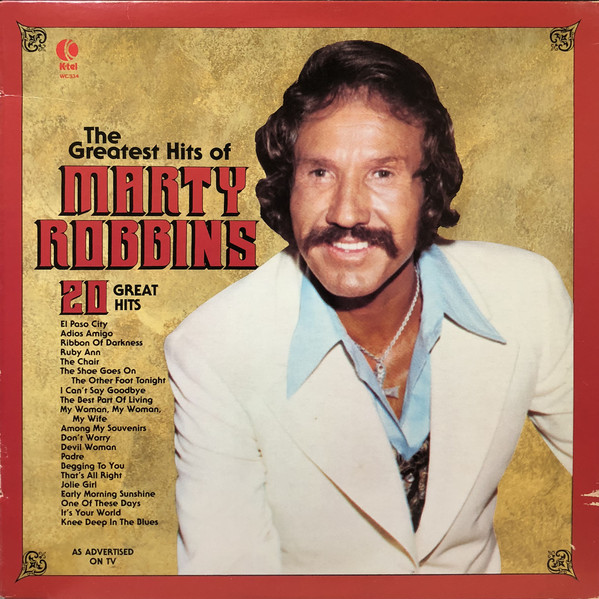
Marty Robbins – Lily of the Valley: A Sacred Floral Tribute to the Unfading Beauty of Faith
In the serene spring of 1962, Marty Robbins stepped away from the dramatic showdowns of the Old West to walk through a different kind of valley—one filled with the quiet, restorative light of the spirit. Released on his landmark gospel album What God Has Done, his rendition of the traditional hymn “Lily of the Valley” remains one of the most luminous recordings of his career. While the album secured its place in history by reaching No. 10 on the Billboard Top Country Albums chart, this particular track serves as a delicate, fragrant reminder of Marty’s roots. It is a song for the Sunday morning of the soul, capturing a moment where the “Gentle Balladeer” found a peace that no gunfighter’s victory could ever provide.
For the listener who has witnessed the slow turning of many seasons, this song is like a pressed flower found between the pages of a family Bible—fragile, yet imbued with an eternal strength. Marty Robbins, with a voice that possessed the clarity of a mountain bell, breathes new life into a melody that has sustained generations. For the mature reader, the “Lily” is more than just a botanical metaphor; it represents the constant, unchanging presence of grace in a world that is often harsh and unpredictable. There is a profound, nostalgic resonance in hearing Marty’s smooth tenor dwell on these ancient lines, evoking memories of wooden pews, sunlight streaming through stained glass, and the steady hand of a parent holding a hymnal.
The history of the song stretches back long before Marty’s time, originally written in 1881 by William Charles Fry to a melody likely inspired by a folk tune. It became a cornerstone of the salvation movement, but when Marty Robbins approached it in 1962, he stripped away the booming bravado often associated with old-fashioned tent revivals. In the midst of his most prolific era, Marty recognized that the song’s true power lay in its intimacy. He treated the hymn not as a lecture, but as a personal testimony. In an age where the “Nashville Sound” was becoming increasingly polished, Marty used that sophistication to create a spiritual atmosphere that felt both timeless and deeply personal.
The lyrical meaning of “Lily of the Valley” is found in the theme of total, unwavering refuge. The narrator describes a “Friend” who is “the fairest of ten thousand to my soul,” a constant companion who provides comfort in times of trouble. For those of us looking back through the lens of our own decades, the song speaks to the resilience required to navigate life’s “valleys.” Marty’s delivery is impeccably graceful; he doesn’t shout his faith, but rather whispers it with a conviction that feels absolute. When he sings of the “Bright and Morning Star,” his voice seems to catch the light, reminding us that even in our darkest hours, there is a beauty that remains untouched by the world’s sorrows.
Musically, the track is a masterclass in Sacred Minimalism. It features:
- A Soft, Swaying Organ: Creating a foundation that feels as sturdy and comforting as an old country church.
- Muted Acoustic Accents: Allowing the rhythm to breathe like a quiet pulse.
- Angelic Backing Harmonies: Soft vocal layers that provide a “heavenly” cushion for Marty’s lead, echoing the communal spirit of traditional worship.
To listen to this track today is to appreciate the sheer versatility and spiritual depth of Marty Robbins. He reminds us that while the “roses” of our youth may eventually fade, the “Lily” of faith continues to bloom in the garden of the heart. It is a song that invites us to slow down, to breathe, and to remember that we are never truly walking the valley alone.
 Music Legend