
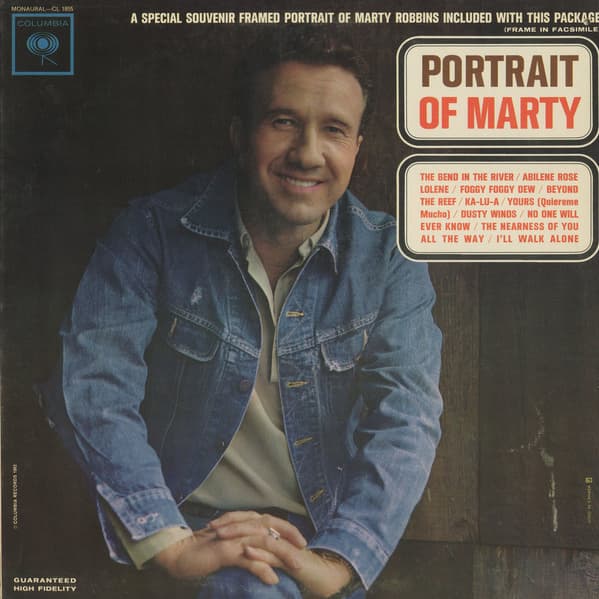
Marty Robbins – Like All the Other Times: A Quiet Study in the Familiar Rhythm of Heartbreak
In the early spring of 1962, Marty Robbins released the album Portrait of Marty, a collection that served as a showcase for his unrivaled ability to navigate the nuanced emotions of the “Gentle Balladeer.” Tucked into this sophisticated project is “Like All the Other Times,” a song that explores the weariness of a heart that has been broken so often it has developed a routine for the pain. While the album itself reached No. 10 on the Billboard Top Country Albums chart, this track remains a poignant example of Marty’s gift for capturing the “aftermath” of a storm. It is a song for those who have learned that the end of a love is rarely a surprise, but rather a recurring melody in the grand symphony of life.
For the reader who has lived through the cycles of many relationships and the slow turning of the years, this song resonates with a profound, understated truth. Marty Robbins, with a voice as smooth as a silk ribbon and as clear as a mountain stream, inhabits the soul of a man who is no longer shocked by rejection. For the mature listener, “Like All the Other Times” captures that specific, hard-won resilience—the moment when you realize you’ve been here before and you know exactly how to survive it. There is a deep, nostalgic comfort in Marty’s delivery; he doesn’t rage against the dying of the light, but instead sits quietly in the shadows, acknowledging that this “new” pain is just an old acquaintance returning for a visit.
The story behind the song is a masterclass in the Nashville Sound’s transition toward pop-inspired elegance. Written by the legendary Boudleaux Bryant, the song was crafted to fit Marty’s mid-range like a glove. In 1962, Marty was successfully distancing himself from the “Dusty Western” image to prove he was a world-class crooner. Recorded under the watchful eye of producer Don Law, the track benefited from a production style that favored space and intimacy over the booming orchestrations of the later sixties. Marty understood that to make the listener feel the “familiarity” of the heartbreak, he had to deliver the lyrics with a conversational, almost weary grace.
The lyrical meaning of “Like All the Other Times” lies in its sense of inevitable repetition. The narrator watches his lover walk away and, instead of pleading for her to stay, he begins the practiced motions of grief—the sighing, the crying, and the slow process of forgetting. For those of us looking back through the lens of many decades, the song speaks to the “callus” that forms over the heart after years of experience. When Marty sings the refrain, his signature controlled vibrato carries a touch of irony; he isn’t just sad, he is experienced. It is a song that honors the endurance of the human spirit, proving that even when we are broken, we are remarkably efficient at putting ourselves back together.
Musically, the track is a hallmark of Early-Sixties Sophistication. It features:
- A Soft, Swaying Rhythm: Providing a gentle, waltz-like cadence that mimics the repetitive nature of the narrator’s experiences.
- Minimalist Guitar and Piano: Allowing the instruments to act as “punctuation” for Marty’s vocal, never crowding the emotional core of the song.
- Marty’s Crystalline Phrasing: He delivers every word with a pristine clarity, ensuring that the “sameness” of the heartbreak is the central theme of the performance.
To listen to this track today is to appreciate the “Quiet Master” in Marty Robbins. He reminds us that while heartbreak is a heavy burden, it is one we get better at carrying as we go along. It is a song that invites us to look at our scars not as signs of defeat, but as evidence of our survival—reminding us that even if we’ve been here “all the other times,” we are still here to tell the tale.
 Music Legend