
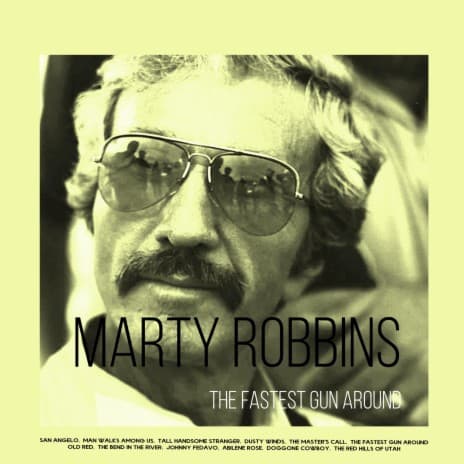
Marty Robbins – Ain’t I Right: A Firebrand Anthem from the Height of the Cold War
In the sweltering summer of 1966, Marty Robbins recorded a track that would become one of the most polarizing and debated entries in the history of country music. “Ain’t I Right” was not a ballad of broken hearts or desert sunsets; it was a sharply pointed, fiercely anti-communist political statement aimed directly at the heart of the 1960s counterculture. While it eventually became a cult classic for its raw conviction, its path to the public was blocked by one of the biggest controversies of Marty’s career. It is a song for the patriot, the firebrand, and those who remember the deep ideological rifts that defined the Vietnam War era.
For the reader who lived through the sixties, this song is a visceral reminder of a country divided. Marty Robbins, stepping away from his “Gentle Balladeer” persona, delivers the lyrics with a biting, rhythmic intensity. For the mature listener, “Ain’t I Right” captures the genuine fear and frustration many felt as they watched traditional American values clash with the rise of anti-war protests and civil rights activism. There is a stark, uncompromising power in Marty’s voice; he isn’t singing to soothe, but to challenge, reflecting a time when “which side are you on” was more than just a lyric—it was a daily reality.
The story behind the song is a legendary tale of artistic defiance versus corporate caution. Written and produced by Marty himself in June 1966, the song was so politically “dynamite” that his long-time label, Columbia Records, refused to release it. They feared it was too provocative and would damage his crossover appeal. Undeterred, Marty allowed his backup singer Bobby Sykes to record it under the pseudonym Johnny Freedom for the smaller Sims label. Marty’s own version remained unreleased for decades, finally seeing the light of day in the late 1980s through a comprehensive Bear Family Records box set. It stands as a rare moment where Marty’s personal convictions outweighed his commercial interests.
The lyrical meaning of “Ain’t I Right” is a direct critique of what Marty perceived as communist infiltration in America. He describes activists visiting “Southern towns” to cause trouble, labeling them a “bearded, bathless bunch” and accusing them of playing a “Communistic game.” He even takes aim at “two-faced politicians” who suggested sending blood to North Vietnam, famously retorting, “Let’s just keep the blood, instead let’s send that politician man.” For those looking back today, the song is a fascinating historical document—a snapshot of the “Old Guard” pushing back against a rapidly changing world. It is a song that honors the fierce, sometimes abrasive loyalty to one’s country during a time of global uncertainty.
Musically, the track is a hallmark of Protest-Era Country. It features:
- A Driving, Martial Rhythm: A percussive, “marching” beat that gives the song a sense of urgency and combativeness.
- Sharp, Staccato Guitar Fills: Cutting through the mix with a precision that mirrors the directness of the lyrics.
- Marty’s Uncharacteristic “Edge”: His voice loses its usual smoothness in favor of a gravelly, authoritative tone, proving he could command a political rally just as easily as a stage at the Grand Ole Opry.
To listen to this track today is to appreciate the “Unfiltered” Marty Robbins. He reminds us that even the most beloved artists have complex, deeply held beliefs that they aren’t afraid to stand by, even at the risk of their own careers. It is a song that invites us to remember the intensity of the Cold War, to respect the courage of conviction, and to acknowledge the power of music to act as a megaphone for the soul.
 Music Legend