
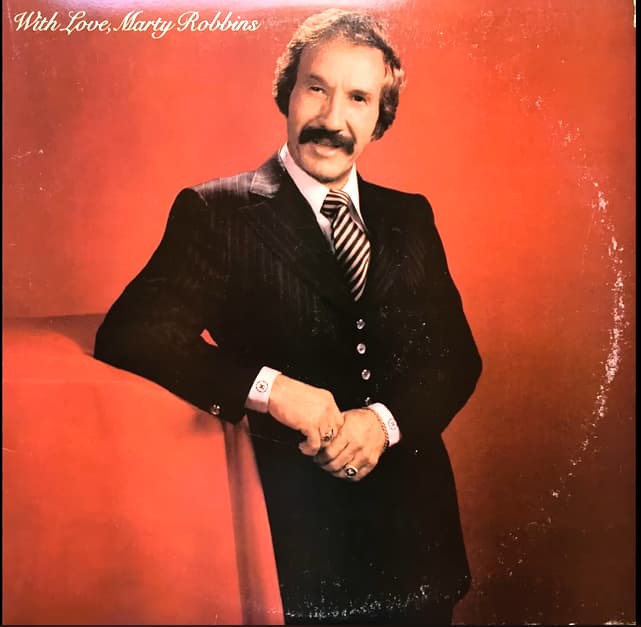
Marty Robbins – The Wabash Cannonball: A High-Speed Tribute to the Queen of the Rails
In 1960, for his album More Gunfighter Ballads and Trail Songs, Marty Robbins took a seat in the engineer’s car to tackle one of the most beloved anthems in the history of American music: “The Wabash Cannonball.” While the song had been a staple of country music for decades, Marty’s version brought a unique blend of “Gentle Balladeer” smoothness and authentic Western grit to the tracks. It is a song for the traveler and the dreamer—a rhythmic celebration of the iron horse that once connected the vast stretches of the American heartland.
For the reader who remembers the golden age of rail travel—the distant whistle in the night and the rhythmic “clack-clack” of steel on steel—this song is a vivid journey back in time. Marty Robbins, with a voice that could handle a high-speed tempo as easily as a slow waltz, delivers a performance that feels like a locomotive gaining steam. For the mature listener, “The Wabash Cannonball” represents the romanticism of the open road (or rail), reminding us of a time when the arrival of a train was the most exciting event in a small town. There is a joyful, nostalgic energy in Marty’s delivery; he doesn’t just sing about a train—he makes you feel the wind on your face as the “Cannonball” thunders past.
The story behind the song is a fascinating piece of American folklore. Though often associated with the legendary Roy Acuff (who made it a massive hit in the 1930s), the song’s origins are much older, dating back to the late 19th century. It describes a mythical train that traveled through every “state and territory” of the Great West. By the time Marty recorded it in 1960, he was paying homage to the roots of country music while adding his own polished “Nashville” touch. Recorded during the peak of his Gunfighter era, Marty’s version emphasizes the storytelling aspect of the song, ensuring that every town from “the hills of Minnesota” to “the shore of the Atlantic” gets its due mention.
The lyrical meaning of “The Wabash Cannonball” lies in its celebration of the “mighty” and the “grand.” The narrator lists the cities and landmarks the train passes, painting a picture of a nation unified by the rails. For those of us looking back through the lens of many decades, the song resonates with a sense of “boundless possibility.” When Marty sings about the train being “standard size” and “well-beloved,” his signature vibrato is used sparingly, allowing the driving rhythm of the song to take center stage. It is a song that honors the engineering marvels of the past and the enduring spirit of the people who rode them.
Musically, the track is a hallmark of Classic Up-Tempo Country. It features:
- The “Chugging” Acoustic Rhythm: A relentless, driving beat that mimics the steady pulse of a steam engine.
- Bright, Flat-Picked Guitar Fills: Cutting through the arrangement like the sun glinting off a polished boiler.
- Marty’s Impeccable Timing: He handles the rapid-fire lyrics with a clarity and ease that prove he was just as comfortable with a “breakneck” rhythm as he was with a slow ballad.
To listen to this track today is to appreciate the “Historian” in Marty Robbins. He reminds us that some legends are too big to be contained in a history book—they need to be sung. It is a song that invites us to listen for that distant whistle, to appreciate the “rolling wheels” of our own history, and to celebrate the “Wabash Cannonball” as she continues her eternal journey through the American imagination.
 Music Legend