
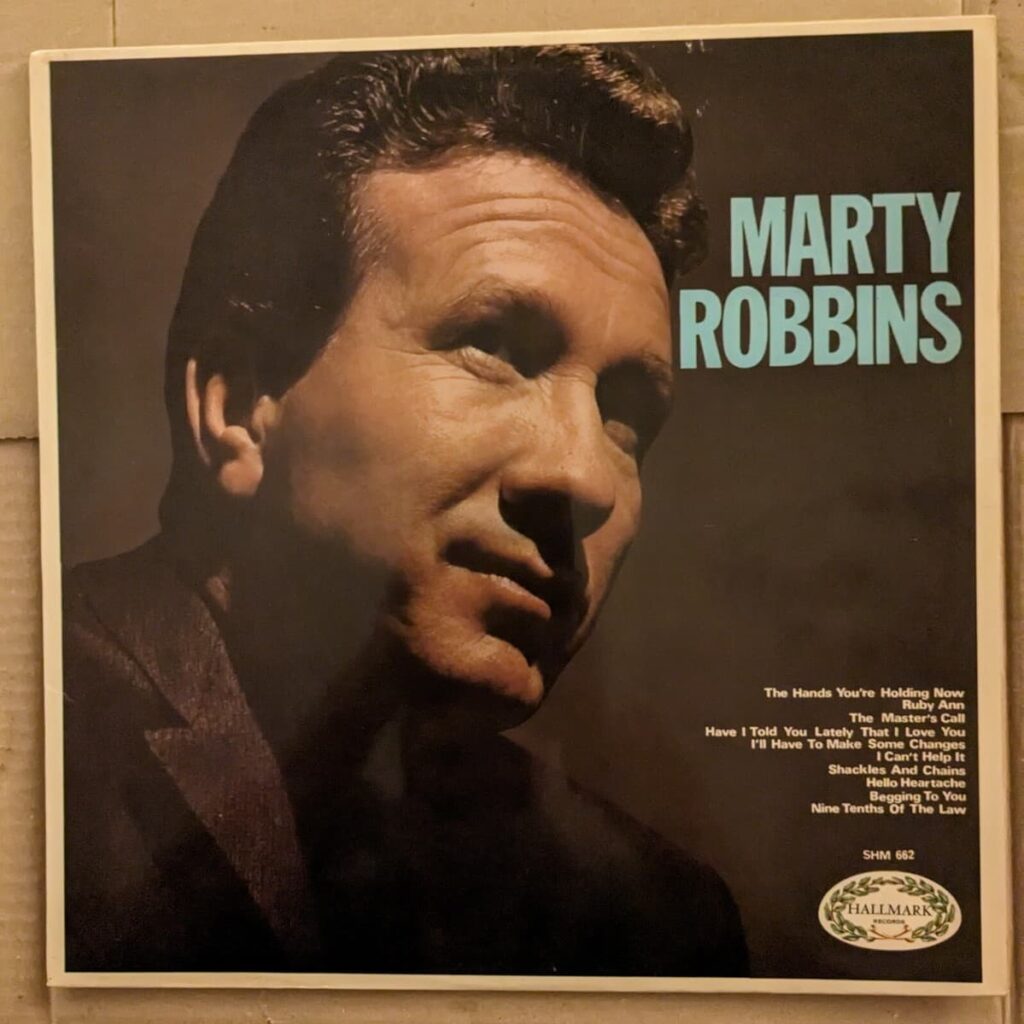
Marty Robbins – I’ll Step Aside: The Noble Quietude of a Heart’s Final Sacrifice
To sit with the music of Marty Robbins is to invite a ghost into the room—a gentlemanly spirit who understands that life is often defined by the things we let go of. For those of us who have lived through the long, winding chapters of the mid-20th century, “I’ll Step Aside” is a song that feels like a cherished, slightly weathered photograph. Recorded for his 1967 album My Kind of Country, this track represents the pinnacle of the “Nashville Sound” at its most sophisticated and empathetic. It is a song for the dignified, for the ones who have learned that the ultimate proof of love isn’t always found in holding on tight, but in having the grace to walk away when the flame has moved to another hearth.
The Charting History and Artistic Milestone
While “I’ll Step Aside” was a staple of the 1967 release My Kind of Country, it arrived during a period of incredible productivity for Marty Robbins. The album itself was a triumph of his traditional roots, peaking at number 9 on the Billboard Top Country Albums chart. Released by Columbia Records, the song didn’t need to be a chart-topping radio “smash” to find its immortality; instead, it became an essential part of Marty’s identity as a crooner of the highest order.
At a time when the world was changing rapidly—with the loud, psychedelic sounds of the late sixties beginning to roar—Marty stood his ground with this quiet, steel-guitar-laced ballad. It was a reminder to his loyal audience that the timeless themes of honor, heartbreak, and self-sacrifice would never go out of style. For the listener of today, it remains a pillar of his “soft country” era, showcasing a man who could command an audience with nothing more than a gentle breath and a heartbreaking melody.
The Story Behind the Song
The composition of “I’ll Step Aside” is rooted in the tradition of the great country torch songs. It was written by Bond S. Helvey, a songwriter who understood the specific, melancholic “sweet spot” of Marty’s vocal range. The story of the song is a masterclass in emotional maturity. It tells the tale of a man who realizes he is no longer the center of his lover’s world. Rather than resorting to the bitterness or “cheatin’ heart” tropes common in country music, the narrator chooses the path of the martyr.
The “story” is really about the moment of realization. It’s that heavy, silent second when you look into someone’s eyes and see a future that no longer includes you. By recording this, Marty Robbins gave a voice to the quiet dignity of the “loser” in a love triangle. It reflected his own persona: the “Gentle Giant” who was always more interested in the emotional truth of a character than in being the hero who wins the girl in the final reel.
Reflections on a Lifelong Echo
For the sophisticated listener who has seen the sun set on many different eras of their own life, “I’ll Step Aside” resonates with a powerful, nostalgic frequency. We hear in Marty’s voice the echoes of our own past choices—the times we had to swallow our pride for the sake of someone else’s happiness. The line “If I’m in the way of your true love, I’ll step aside” is perhaps one of the most selfless declarations in the American songbook.
Listening to this song today, we aren’t just hearing a track from 1967; we are feeling the weight of our own memories. We remember the dances at the community hall, the quiet drives home in the dark, and the people we loved enough to let go. Marty Robbins doesn’t just sing to us; he consoles us. He reminds us that stepping aside isn’t an act of weakness, but a profound act of love. As the final notes of the guitar fade, we are left with a sense of peace—a recognition that even in loss, there is a beauty that time can never erase.
 Music Legend