
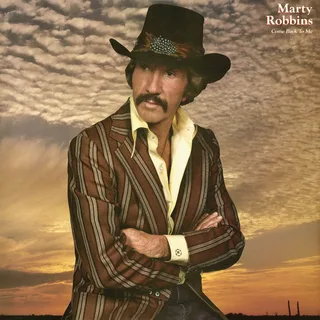
Marty Robbins – Cigarettes And Coffee Blues: A Late-Night Vigil in the Cathedral of Honky-Tonk Melancholy
In the cool, shadowy corridors of 1963, a year defined by the quiet tension of a world in flux, the legendary Marty Robbins released a track that would become the definitive anthem for the restless soul. “Cigarettes And Coffee Blues” (often titled “Smokin’ Cigarettes and Drinkin’ Coffee Blues”) arrived as a poignant single on Columbia Records, paired with “Teenager’s Dad.” While Marty had originally penned the song years earlier for his friend Lefty Frizzell—who took it to the Top 15 in 1958—it was Marty’s own rendition that truly captured the song’s spiritual exhaustion. His version became a staple of his live performances and early 60s repertoire, cementing his status as a man who could navigate the darkness of a lonely room as skillfully as the vastness of the Arizona desert.
The Blue Light of the After-Hours
To listen to “Cigarettes And Coffee Blues” today is to be pulled back to a time of vinyl booths, linoleum counters, and the rhythmic hiss of a coffee percolator in the dead of night. For those of us who have lived through the long hours of the mid-century, this song is more than a melody; it is a sensory experience. It evokes the sharp scent of tobacco and the bitter warmth of a diner cup, serving as a sanctuary for anyone who has ever found themselves wide awake while the rest of the world slept. Marty Robbins, with his signature “velvet” tenor, didn’t just sing about the blues; he lived inside them, offering a hand to those of us who knew exactly what it meant to “lay there and weep.”
A Masterclass in Honky-Tonk Philosophy
The narrative of the song is a deceptively simple study in the anatomy of a broken heart. It eschews the grand, cinematic violence of Marty’s gunfighter ballads in favor of a much more intimate tragedy: the “misery” of the everyday. It tells the story of a man who cannot face the silence of his own bed, choosing instead to wander the streets and haunt the “favorite spots” where a love so right suddenly went so wrong.
“Smokin’ cigarettes and drinkin’ coffee all night long / Wondrin’ how a love so right could suddenly go wrong.”
For the mature listener, these words carry a profound, heavy truth. We have all reached that point in our lives where the answers are found at the bottom of a cup or in the blue smoke of a cigarette. Marty’s delivery is masterful; he finds a rhythm in the restlessness, his voice steady yet imbued with a subtle, heartbreaking vibrato. It is a song for the “misery” we share—a reminder that even in our most solitary moments of reflection, we are part of a vast brotherhood of the broken-hearted.
The Sound of the Nashville Vigil
Produced during Marty’s prolific era with Columbia, the track features the impeccable “tic-tac” bass and the stinging, clean electric guitar licks of the legendary Grady Martin. The arrangement is sparse and rhythmic, mimicking the steady, nervous energy of someone who has had too much caffeine and too little sleep. Unlike his lush, orchestral hits, this is “bare-bones” Nashville—a sound that feels as honest as a late-night confession.
As we revisit “Cigarettes And Coffee Blues” decades later, we recognize it as a glowing ember of a bygone era. It is a nostalgic masterpiece because it respects the dignity of our sorrows. Marty Robbins gave a voice to the quietest struggles of the human spirit, turning a simple ritual of coffee and smoke into a sacred rite of passage. In the final, fading notes, he leaves us in that diner booth at 3:00 AM, reminding us that while the sun will eventually rise, there is a certain, somber beauty in the blues that come before the dawn.
 Music Legend