
A Song About Pride, Loneliness, and the Man Who Learned to Hide His Heart Behind a Rodeo Smile
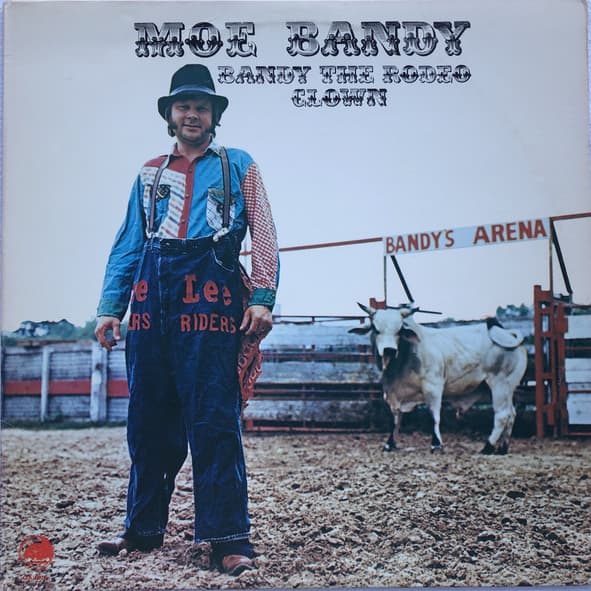
When Moe Bandy released Bandy the Rodeo Clown in 1975, the record quietly captured something deeper than a simple country ballad. The song climbed to No. 7 on the Billboard Hot Country Singles chart, becoming one of the defining recordings of Bandy’s career and a cornerstone of the traditional country revival that was beginning to take shape in Nashville during the mid 1970s. Drawn from the album Bandy the Rodeo Clown, the track revealed a singer whose voice carried the kind of emotional honesty that country music had always valued most.
By the time the song appeared on radio, Moe Bandy had already established himself as one of the strongest defenders of classic honky tonk tradition. Born in Mississippi and raised in Texas, Bandy was not a polished pop crossover figure. His music belonged to dance halls, roadside bars, and jukebox corners where stories of heartbreak and stubborn pride were told with plainspoken sincerity. That authenticity became the very thing that made him stand out during an era when Nashville was experimenting with smoother, more commercial sounds.
“Bandy the Rodeo Clown” was written by legendary songwriter Sanger D. Shafer, a man whose pen understood the emotional language of country music perhaps better than most. Shafer had a gift for turning ordinary working lives into poetic reflections on resilience. In this song, he created a character who seems larger than life yet painfully human at the same time.
The story unfolds around a rodeo clown, a figure known for stepping into danger to distract bulls and protect fallen riders. In the world of rodeo, the clown is part performer and part guardian, wearing bright paint and exaggerated smiles while chaos unfolds around him. But in the song, that colorful figure becomes something more symbolic. The clown is a man who once loved deeply, lost that love, and chose a life where laughter could hide the wounds he carried.
When Moe Bandy sings the opening lines, there is a subtle sadness that settles into the melody. His voice does not exaggerate the emotion. Instead, he delivers the lyrics with quiet restraint, as if the story is being remembered rather than performed. That approach makes the song feel authentic, almost like a personal confession overheard late at night.
The brilliance of “Bandy the Rodeo Clown” lies in how it transforms the rodeo arena into a metaphor for emotional survival. The man in the story is not simply entertaining crowds. He is protecting himself. The paint on his face becomes a shield, the jokes a distraction from memories that still linger somewhere beneath the surface.
Musically, the arrangement reflects the clean, traditional sound that defined much of Moe Bandy’s work during the 1970s. Steel guitar drifts gently through the background while the rhythm section moves at an easy, deliberate pace. Nothing in the production tries to overshadow the narrative. Every element seems carefully placed to support the story rather than dominate it.
Listeners responded immediately to the song’s emotional clarity. Country audiences have always had a deep appreciation for characters who carry their pain quietly while continuing to move forward. The rodeo clown in the song embodies that spirit perfectly. He does not complain. He simply keeps performing.
As the track climbed the country charts in 1975, it helped cement Moe Bandy’s reputation as one of the era’s most dependable interpreters of traditional country storytelling. Unlike many singers who chased trends, Bandy remained rooted in the emotional realism that defined classic honky tonk music.
Looking back now, “Bandy the Rodeo Clown” feels less like a novelty song about rodeo life and more like a reflection on how people cope with heartbreak. Some write letters. Some disappear into their work. And some, like the character in the song, learn to smile in front of a crowd while carrying memories that never quite fade.
That quiet truth is what continues to give the song its power decades later. Beneath the bright costume and painted grin stands a man who once loved deeply and never entirely stopped. And through Moe Bandy’s steady voice, that story still echoes across time with remarkable clarity.