
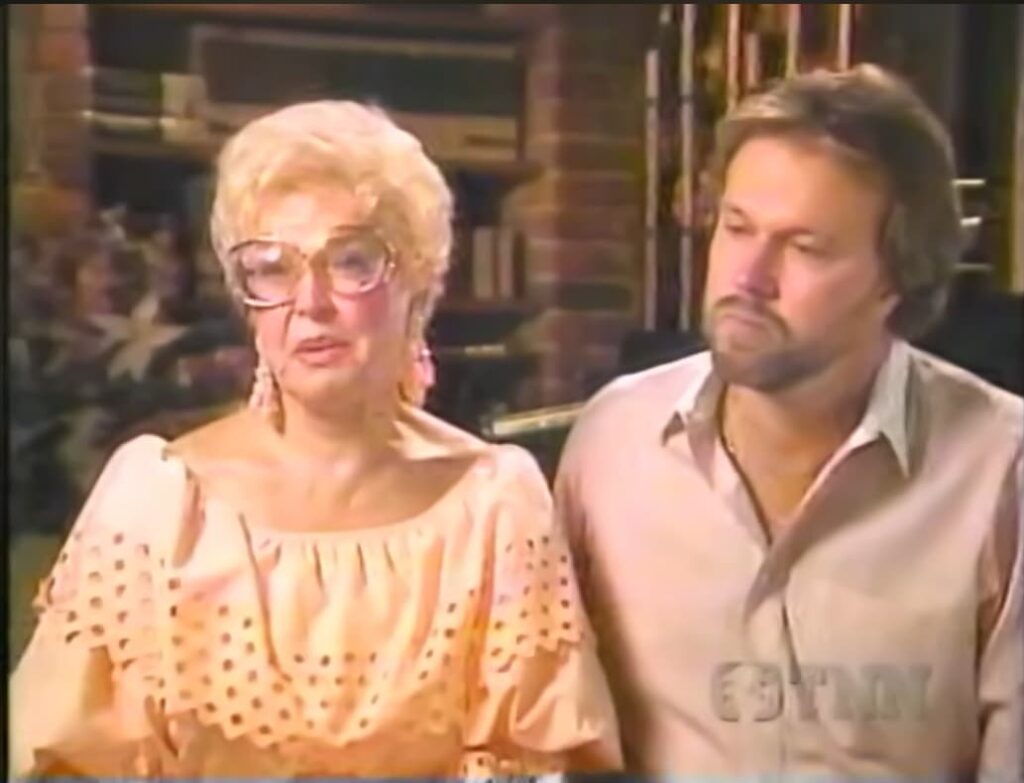
A life shaped by open roads and quiet regrets—Marty Robbins turned stories into songs that still echo long after the last note fades
There are artists who follow the current of their time, and then there are those who seem to carry their own landscape within them. Marty Robbins belonged firmly to the latter. His life, much like his music, unfolded with a restless sense of movement—never confined to a single style, never entirely settled in one place. From the dusty imagery of the American West to the polished studios of Nashville, Robbins built a career that felt less like a steady climb and more like a long, winding journey.
Born in Glendale, Arizona, in 1925, Robbins grew up surrounded by stories—many of them told by his grandfather, who spoke of outlaws, gunfighters, and the harsh beauty of desert life. Those early impressions would later find their way into his music, not as nostalgia, but as something lived and remembered. Before music took hold, however, life had already begun to shape him. Service in the United States Navy during World War II introduced him to both discipline and solitude, and it was during those years that he began teaching himself guitar, quietly laying the foundation for what would follow.
By the early 1950s, Robbins had found his way into the Nashville scene, signing with Columbia Records. His early success came through more conventional country hits, but even then, there was a sense that he was searching for something more personal. That search reached a turning point in 1957 with “A White Sport Coat (and a Pink Carnation)”, which climbed to No. 2 on the Billboard Hot 100 and became one of his most recognizable songs. It was polished, accessible, and widely embraced—but it did not fully contain the artist he was becoming.
That fuller expression arrived in 1959 with the album Gunfighter Ballads and Trail Songs, a project that many at the label initially doubted. The songs were narrative-driven, rooted in Western themes that felt out of step with mainstream trends at the time. Yet Robbins insisted, and the result was “El Paso,” a song that would go on to reach No. 1 on the Billboard Hot 100 and win the Grammy Award for Best Country & Western Recording. More than just a hit, it redefined what country music could be—expansive, cinematic, and unafraid of telling long, detailed stories.
What set Robbins apart was not simply his versatility, though that alone was remarkable. Over the course of his career, he moved effortlessly between country, pop, rockabilly, and Western ballads, often achieving chart success in each. Songs like “Don’t Worry” (No. 1 on the country chart in 1961) and “My Woman, My Woman, My Wife” (which won a Grammy in 1970) demonstrated his ability to evolve without losing his identity. His voice—smooth, controlled, and quietly expressive—remained the constant thread connecting these varied styles.
Yet beyond the charts and accolades, there was always a sense of duality in Robbins’ life. Offstage, he was known for his love of auto racing, even competing professionally in NASCAR events. It was a passion that mirrored something deeper in his character—the same restlessness that could be heard in his music. There was always movement, always a pull toward something just beyond reach.
In his later years, that sense of urgency seemed to grow more pronounced. Despite ongoing health issues, Robbins continued to record and perform, maintaining a schedule that suggested he understood time in a way that others perhaps did not. When he passed away in December 1982 at the age of 57, it felt less like a conclusion and more like an interruption—a journey that had simply been cut short.
Looking back, the life and career of Marty Robbins resist simple summary. He was not defined by a single genre, nor by a single era. Instead, he left behind something more enduring: a body of work that feels lived-in, shaped by experience rather than image. His songs do not demand attention; they invite it, unfolding gradually, revealing their depth over time.
And perhaps that is why they continue to resonate. Because within them, there is always a sense of distance—of roads traveled, of choices made, of moments that cannot be revisited. Not with regret, exactly, but with understanding.
In the end, Marty Robbins did not just sing about stories. He carried them. And even now, long after his voice has gone quiet, those stories remain—steady, unhurried, and impossible to forget.