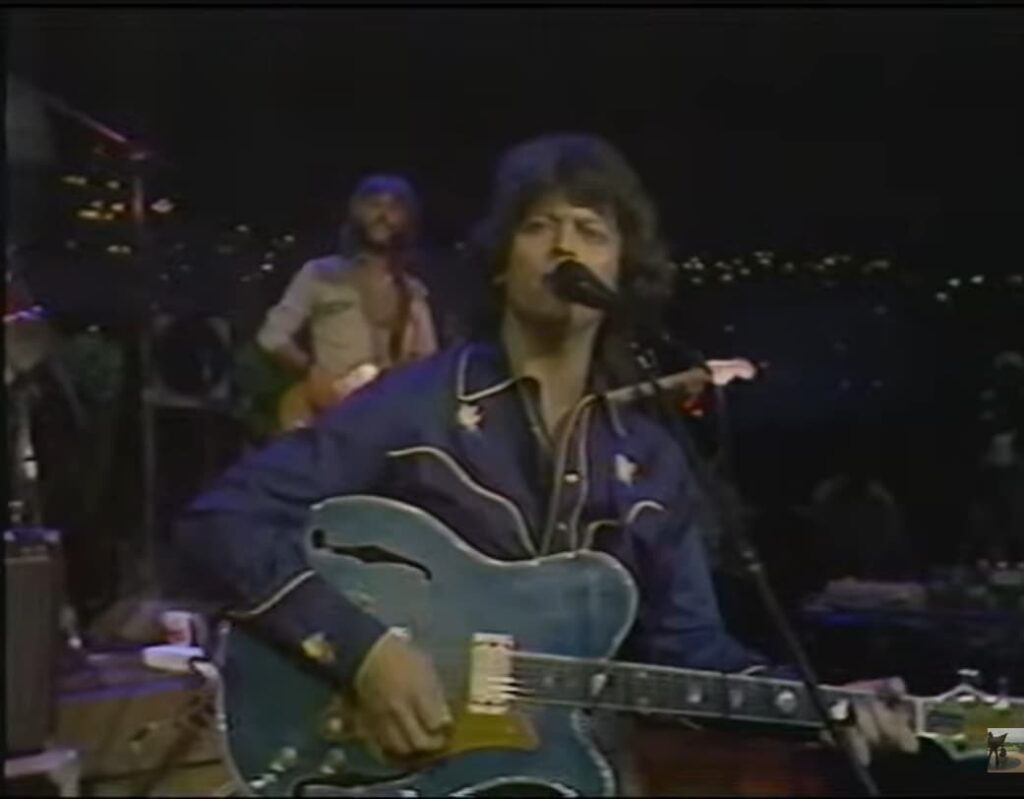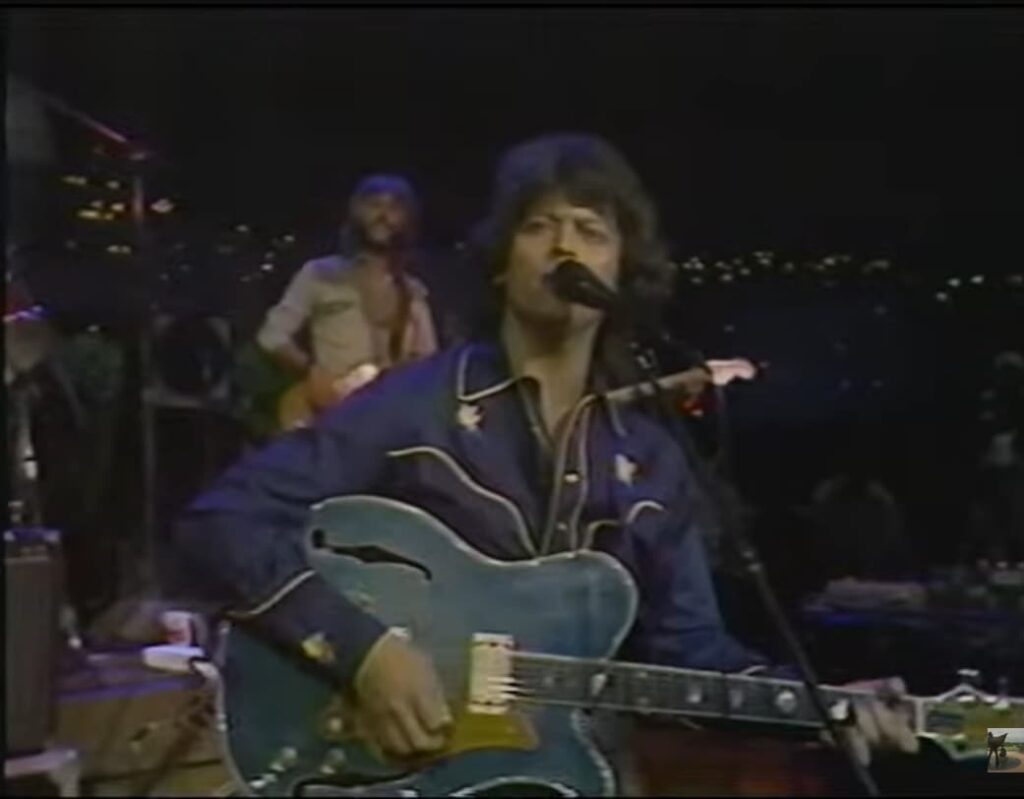
A quiet affirmation that even after heartbreak, the human heart still dares to hope for love’s gentle return
There is a certain kind of song that does not shout for attention, nor demand to be remembered—yet somehow, it lingers. “We Believe In Happy Endings” by Johnny Rodriguez is one such piece, a tender reflection wrapped in the warm textures of country music’s most sincere tradition. Released in 1988 as part of the album “I Didn’t (Every Chance I Had)”, the song may not have reached the towering chart heights of Rodriguez’s earlier classics, but it carries something arguably more enduring: emotional truth.
At the time of its release, “We Believe In Happy Endings” reached No.92 on the Billboard Hot Country Singles chart, a modest position when compared to the artist’s remarkable run in the 1970s, when songs like “You Always Come Back (To Hurting Me)” and “Ridin’ My Thumb to Mexico” climbed all the way to No.1. Yet, to focus solely on chart performance would be to miss the deeper significance of this song. By the late 1980s, Johnny Rodriguez was no longer chasing commercial dominance—he was telling stories, quieter perhaps, but no less meaningful.
Written by Bob McDill and Wayland Holyfield, two of Nashville’s most respected songwriters, “We Believe In Happy Endings” is built on a simple but powerful premise: that love, even when tested, is worth believing in. There is no grand drama here, no sweeping declarations. Instead, the song unfolds like a conversation between two people who have seen enough of life to understand its imperfections, yet still choose hope.
Johnny Rodriguez’s voice, by this stage in his career, had taken on a deeper resonance. The youthful brightness of his early recordings had softened into something more reflective, more grounded. When he sings, there is a sense that he is not merely interpreting the lyrics, but living within them. Each line feels measured, deliberate, as though shaped by experience rather than performance.
The beauty of “We Believe In Happy Endings” lies in its restraint. The arrangement is gentle—acoustic guitars, subtle steel, and a rhythm section that never intrudes. It allows the story to breathe. And in that space, the listener finds something familiar: the quiet moments between people who have chosen to stay, even when it might have been easier to walk away.
There is also a subtle universality to the song’s message. It does not promise perfection. It does not suggest that love is without struggle. Instead, it offers something far more realistic—that happiness, when it comes, is often hard-earned, shaped by patience, forgiveness, and a willingness to believe in something beyond immediate circumstance.
In many ways, this song feels like a reflection of Johnny Rodriguez’s own journey. From his meteoric rise in the early 1970s—becoming one of the first major Hispanic stars in country music—to the quieter, more introspective phase of his later career, there is a sense of continuity. The road may have changed, the spotlight may have dimmed, but the music remained—honest, unpretentious, and deeply human.
Listening to “We Believe In Happy Endings” today, one cannot help but feel a gentle sense of reassurance. It does not overwhelm the listener with emotion; it invites them in, offering a place to reflect. It reminds us that even in a world that often feels uncertain, there is still room for belief—for the idea that not every story ends in loss, that sometimes, quietly and without fanfare, things do work out.
And perhaps that is why the song endures. Not because it was a chart-topping hit, but because it speaks to something enduring within us all: the quiet, persistent hope that, in the end, love will find its way.
Video: