
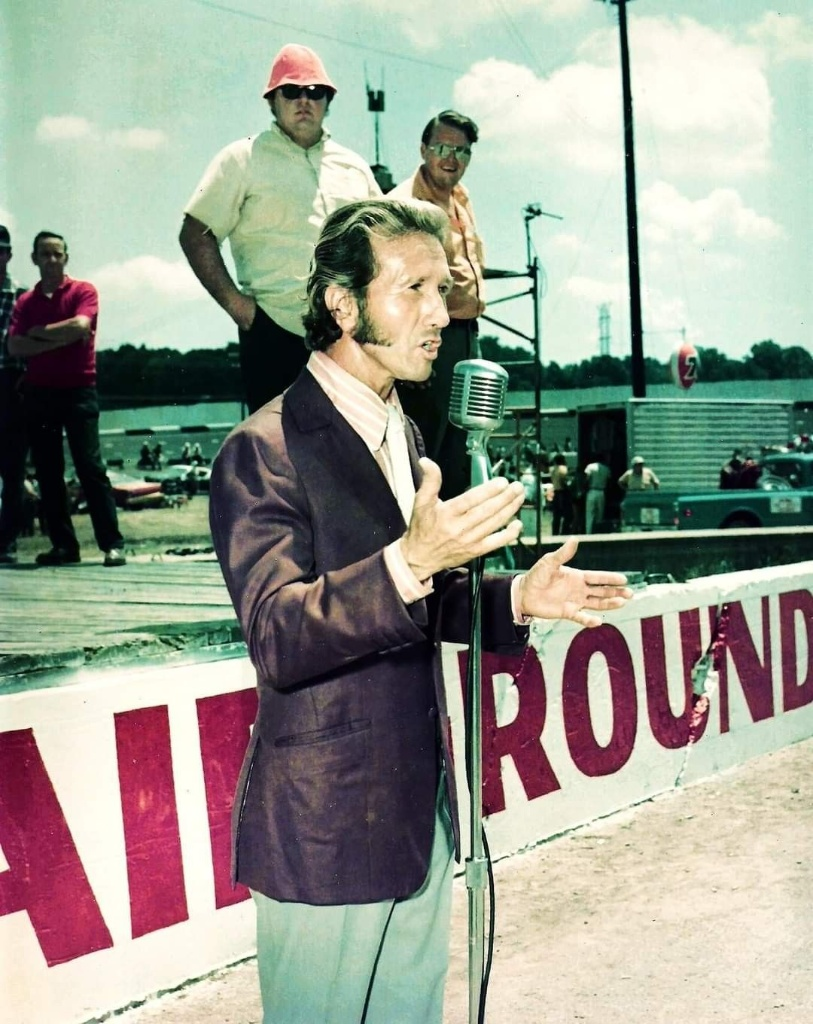
Marty Robbins’ “Big Iron”: The Ballad of a Swift Gun and a Terrifying Legend
Ah, there are few sounds more evocative than the galloping rhythm and the Spanish guitar intro of a classic Western ballad, and when that voice is the commanding, clear baritone of Marty Robbins, you know you’re in for a definitive ride. “Big Iron” is more than just a song; it’s a perfectly crafted, three-minute, high-noon drama, a definitive piece of American folklore set to music. It’s the kind of epic narrative that defined the ‘Saga Songs’ of the late 1950s and early 1960s, a period where Robbins stood as the undisputed master of the genre.
This unforgettable track was released in 1959 as part of Robbins’ landmark album, Gunfighter Ballads and Trail Songs. The impact of this album was immediate and immense, and “Big Iron” was a standout track that quickly cemented its place as a classic. While the single did not achieve the massive crossover success of his colossal hit “El Paso,” it was hugely popular, climbing to Number 5 on the U.S. Billboard Hot Country Singles chart and showcasing the enduring public appetite for authentic, dramatic Western stories. The entire Gunfighter Ballads album itself was an artistic and commercial triumph, setting the standard for the Western narrative song.
The story behind “Big Iron” is pure, thrilling Western legend, written entirely by Marty Robbins himself. The song introduces us to an unnamed Arizona Ranger, traveling to the town of Agua Fria (Cold Water), seeking a notorious outlaw named Texas Red. The Ranger is described with meticulous detail: he is tough, fast, and carries a unique, large-calibre gun—the “Big Iron”—that has given him his fearsome reputation. The entire town lives in terror of Texas Red, who has already claimed twenty lives. The tension builds beautifully as the Ranger walks into the saloon, finds the outlaw, and the final, legendary confrontation unfolds.
The deeper meaning of “Big Iron” is a classic Western theme: the triumph of justice and skill over pure, chaotic evil. The Ranger is portrayed as a disciplined force of law, while Texas Red is merely a gun-toting bully whose speed is his only claim to fame. The climatic moment—where the Ranger draws and fires before Red even clears leather—is not just about a faster draw; it’s about a superior, cooler, more righteous temperament prevailing. The line, “Now the Ranger’s aim was deadly, though the big iron weighed him down, but his heart was not in anger, he was just tired of ridin’ around,” speaks volumes. It’s not rage that drives him, but a weary, necessary commitment to duty.
For those of us who grew up with this music, this song is deeply nostalgic. It conjures up memories of sitting around the radio or the hi-fi, utterly captivated by Robbins’ voice, which could be smooth as silk one moment and crackle with frontier grit the next. It’s a testament to the power of pure storytelling, a time before music videos, where the imagery was entirely created in your own mind, guided by the vivid lyrics and the masterful guitar work of Grady Martin. It makes us remember a time when the myth of the heroic, lone lawman offered a comforting moral clarity to a complex world.
“Big Iron” remains a magnificent, enduring jewel in the crown of Marty Robbins’ celebrated career, a perfect encapsulation of the dramatic, lyrical power that made him one of the most beloved voices in American music.
 Music Legend