
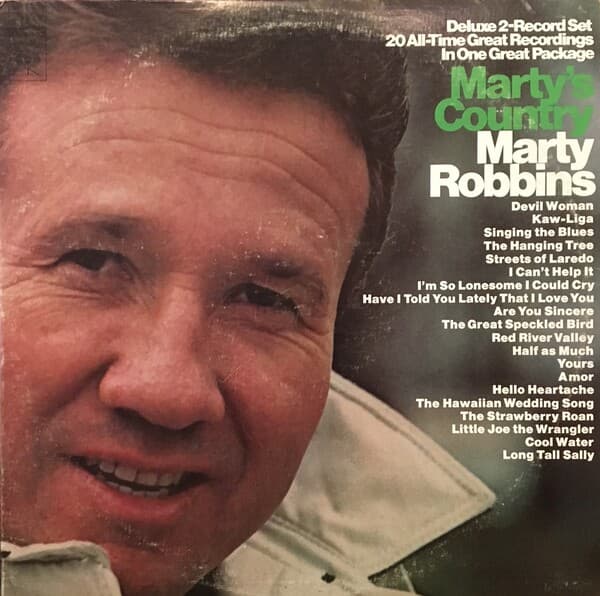
Marty Robbins’ “I Pay With Every Breath I Take”: The High Cost of a Love Lost
There is a profound difference between singing about heartbreak and truly embodying it, and few artists ever inhabited the depths of sorrow quite like Marty Robbins. His 1963 single, “I Pay With Every Breath I Take,” is not just a song; it’s an agonizing confessional, a stark and unsparing look at the perpetual, suffocating cost of a failed relationship. Delivered with his signature sincerity and a voice that always sounded like it carried the weight of the world, this song resonates with anyone who has ever found that their greatest regret is now an inescapable part of their existence.
Released in 1963, a peak period for Marty Robbins’ commercial and artistic output, the song quickly found an audience that appreciated its intense, unvarnished emotion. It was included on his album Portrait of Marty and became a significant hit, reaffirming his mastery of the emotional ballad. The track ascended the charts to Number 8 on the U.S. Billboard Hot Country Singles chart. While the Pop charts were primarily focused on the emerging sounds of the British Invasion during this time, Robbins’ powerful, traditional delivery ensured that his country audience recognized and rewarded the song’s raw emotional truth.
The song was written by the talented songwriter Marijohn Wilkin (who co-wrote the classic “The Long Black Veil”) and Johnny Christopher. They crafted a lyric that avoids the typical clichés of country sorrow and instead opts for a metaphor that is both chilling and deeply effective. The narrator isn’t just sad or lonely; he is literally paying for his mistakes and his subsequent loss with his very life force.
The core meaning of “I Pay With Every Breath I Take” is the devastating reality that regret and emotional pain can become a constant, physical burden. The lyrics make it clear: every simple act of living—drawing a breath—is a reminder of the love that is gone. The narrator states that if he has to live without her, he must pay to do so, and the currency is his own existence, spent one agonizing breath at a time. It’s a powerful expression of self-punishment and the inability to find peace or reprieve from a broken heart. The love isn’t just lost; it’s actively consuming him. The central theme speaks to the heavy, perpetual tax of grief that must be paid in the aftermath of a profound emotional loss.
For those of us who came through the heartbreaks and trials of the mid-century, this song is a stark, nostalgic echo of the era’s deeply expressive music. It reminds us of a time when songs were allowed to be slow, mournful, and unafraid of grappling with the darkest edges of human emotion. Marty Robbins’ delivery, measured and resonant, turns the narrator’s plight into a universal experience of quiet, unending suffering. It’s not an angry song; it’s a tired one, the voice of a man exhausted by the sheer effort required to continue existing while in constant pain.
This track is a brilliant display of Robbins’ ability to breathe life into the saddest stories. It serves as a haunting musical testament that sometimes, the true punishment for a lost love is not a moment of tears, but the long, relentless sentence of a life lived in regret, paid for with every single, painful breath.
 Music Legend