
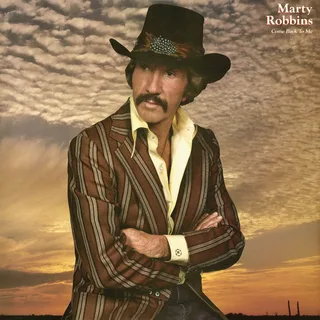
Marty Robbins’ “Ballad of a Small Man”: The Quiet Tragedy of Unseen Strength and Unrequited Love
Some of the most profound stories are found not in the towering heroes of the Wild West, but in the quiet, overlooked figures who carry their burdens with silent dignity. Marty Robbins’ 1966 track, “Ballad of a Small Man,” is a deeply moving exploration of this theme. It is a tender, mournful narrative that focuses on a man whose inner kindness and devotion are consistently eclipsed by his unassuming stature and his inability to compete with flashier, bolder rivals.
Released in 1966 on the album The Drifter (the same album that contained the epic “Feleena (From El Paso)”), this song provided a necessary contrast to Robbins’ more dramatic narratives. While it was not released as a major charting single, the track is highly regarded by devoted Marty Robbins fans for its lyrical intimacy and profound empathy. The very fact that an artist of Robbins’ magnitude would dedicate his considerable vocal talent to the quiet sorrow of a “small man” underscores the song’s artistic importance and its resonant, universal theme of feeling unseen and unappreciated.
The story, penned by the masterful writer Jerry Leiber and arranged by Billy Sherrill, paints a clear, painful picture. The narrator describes himself not just physically as small, but metaphorically—he feels small in the eyes of the world and especially in the eyes of the woman he loves. He has watched her choose other men who are bigger, louder, and arguably less devoted. He describes his love as constant and true, but acknowledges his perceived failing: he simply doesn’t stand out.
The deeper meaning of “Ballad of a Small Man” is a reflection on internal worth versus external appearance and the poignant reality of unrequited love based on superficiality. The narrator’s “smallness” symbolizes not a lack of strength, but a lack of presence and swagger—the qualities the world often rewards. He implies that the woman he loves is consistently drawn to the flashier “big man” types, overlooking the faithful, enduring devotion offered by the quiet soul. The song is a sad declaration that true love and worth are often missed because they don’t come in an imposing package. The final lines often carry the weight of resignation, the bitter realization that his quiet virtues will never be enough to win her heart.
For those of us who appreciate the soulful, reflective side of Country music, this song resonates profoundly. It speaks to the countless times in life where genuine, quiet effort went unnoticed, or where flash and superficial charm won out over steadfast loyalty. Marty Robbins’ performance is handled with immense sensitivity; his voice is gentle, almost a whisper at times, lending an aching sincerity to the small man’s confession. It reminds us of a simpler time in music when the focus was entirely on the emotional truth of the lyric, giving voice to the unsung heartache of the everyman.
“Ballad of a Small Man” is a beautiful, understated gem in Robbins’ vast catalogue, a touching tribute to the dignity of the overlooked and a sad reminder that the quietest hearts often hold the deepest, most enduring pain.
 Music Legend