
A late-night lament of heartache and solitude, “Smokin’ Cigarettes and Drinkin’ Coffee Blues” captures the lingering ache of lost love in Marlboro smoke and bitter sips of coffee.
When “Smokin’ Cigarettes and Drinkin’ Coffee Blues” found its way into the catalogue of Marty Robbins, it carried with it a quiet but aching truth — the kind of truth that sings through empty rooms, late nights and the repetitive clink of cup on saucer. Though Robbins’s own recording did not instantly top the charts like some of his more famous ballads, it did make a respectable impression: his 1963 version charted, reaching No. 14 on the Billboard Hot Country Singles chart in early May of that year.
What makes this song especially poignant is that Robbins didn’t just perform it — he wrote it. That detail roots the piece not just in the craft of country songwriting, but in Robbins’s own sensibilities as a storyteller. Long before he recorded it himself, Lefty Frizzell had cut the song in 1958 — and that recording climbed to No. 13 on the country chart in January 1959, suggesting that Robbins had penned something deeply resonant for the era’s audiences.
There’s a humble simplicity to the title “Smokin’ Cigarettes and Drinkin’ Coffee Blues” that belies a much deeper emotional landscape. The phrase itself — cigarettes and coffee — evokes a kind of restless wakefulness, a refusal or inability to sleep after a love has gone cold. It is not glamour or high romance, but rather the stripped-down routines of heartbreak. This is the music of an empty diner booth at 2 a.m., the steam of black coffee mingling with smoke drifting toward a dim light.
The lyrics plunge us directly into that scene: a man who can’t sleep, who walks out into the night not to chase dreams but to chase memories; a man who parks himself at the favorite spot he once shared with someone he loved. There, in the quiet glare of the jukebox, he smokes and drinks repeatedly — not for pleasure, but in an attempt to fill the ache. “Smokin’ cigarettes and drinkin’ coffee all night long,” he repeats in the chorus, each line feeling like a sigh captured in song.
Unlike some of Robbins’s more cinematic ballads — the sweeping western narratives of El Paso or the tall tales of Big Iron — this song feels intimate, grounded in a common human experience: the slow, cyclical drift of sadness. Here, Robbins doesn’t paint with vast horizons or dramatic plots; he sketches the tiny, telling details — a carved name at a table, a lone figure listening to heartbreak on the jukebox, another cup of coffee in hand. Those details build a portrait of loneliness that feels almost universal, familiar to anyone who has lingered too long in a place filled with memories.
It’s worth noting that this song sits comfortably within Robbins’s broader body of work — a catalogue that spans honky-tonk blues, country western narratives, romantic ballads and modern pop-leaning croons. Yet “Smokin’ Cigarettes and Drinkin’ Coffee Blues” stands apart in its emotional purity. It is not a sweeping saga of gunfighters or frontier love; it is the quiet, aching story of a heart that once beat true and now searches for rhythm in smoke rings and bitter brews.
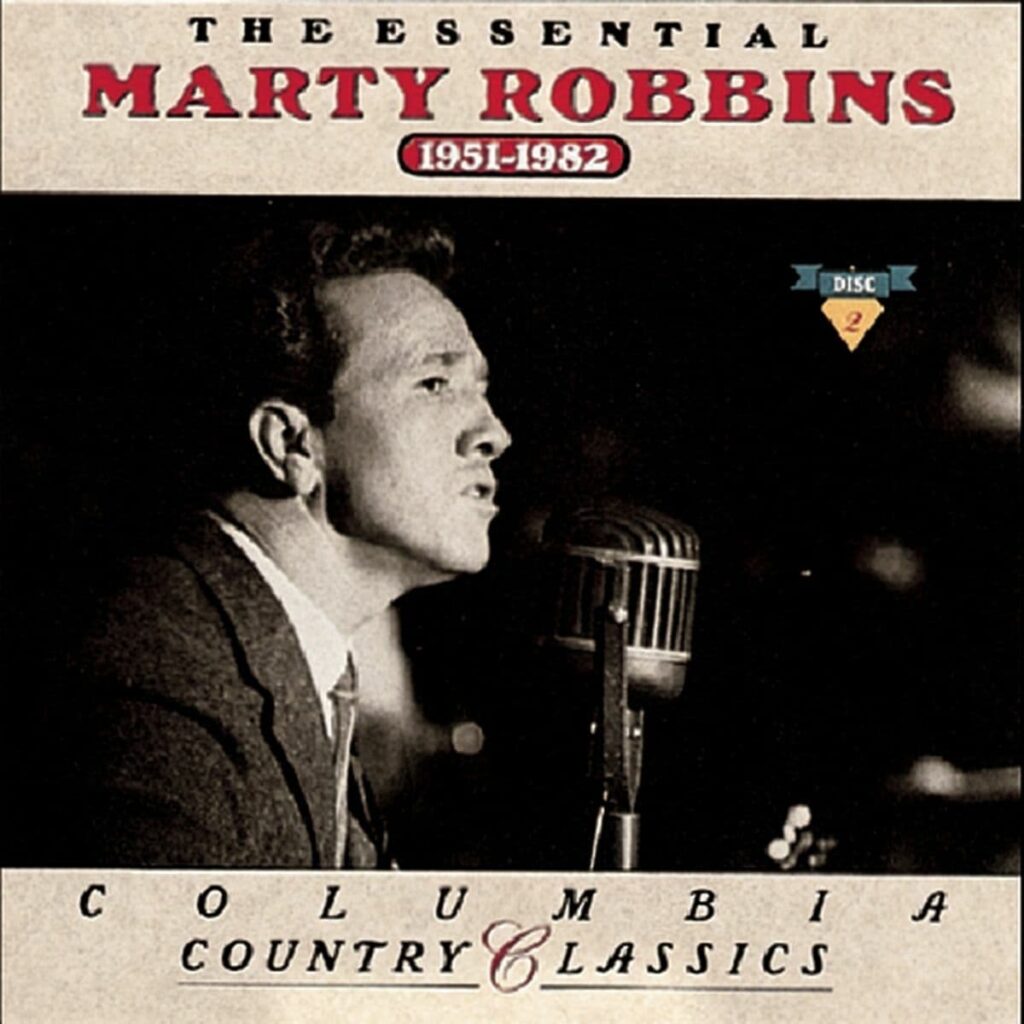
Robbins’s autobiographical impulse in writing this song — the ability to see heartbreak not as spectacle but as lived experience — is part of why it endures. This is why, decades later, the song still finds life in compilations like The Essential Marty Robbins (1951-1982), where it sits among his greatest works as a reminder that even the gentlest blues can leave a lasting mark.
Ultimately, “Smokin’ Cigarettes and Drinkin’ Coffee Blues” endures not because it was a chart-topper, but because it feels true. It is the sound of loneliness set to melody; the echo of what many know all too well — that love, when it slips away, can leave you awake with only coffee steam and cigarette smoke for company. In the hush of those small hours, the song doesn’t just play — it stays with you, a quiet companion in the long night of memory and longing.