
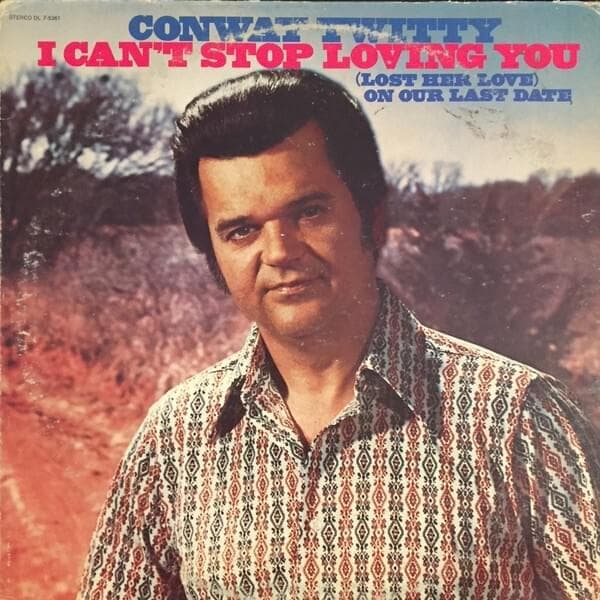
A quiet moment of resignation where love ends not with anger, but with the soft click of a door closing
When Conway Twitty released The Key’s in the Mailbox in 1968, he offered a song that felt less like a performance and more like a lived experience gently laid on the table. Upon its release, Twitty’s version climbed to number 5 on the Billboard Hot Country Singles chart, reaffirming his deep connection with narratives that spoke plainly and honestly about love’s unraveling. By this point in his career, Conway Twitty was no longer chasing trends. He was refining a voice that understood heartbreak not as drama, but as inevitability.
The Key’s in the Mailbox was not a new song when Twitty recorded it. It was first made famous by Carl Smith in 1952, when Smith’s original version reached number 2 on the country charts and became one of the defining heartbreak records of early postwar country music. Written by Carl Smith himself, the song carried a plainspoken wisdom that felt timeless even then. What Conway Twitty brought to it was not reinvention, but deepened reflection. His version does not argue with fate. It accepts it.
At its core, The Key’s in the Mailbox is about emotional surrender, not defeat. The image at the center of the song is almost painfully ordinary. A key left behind. A mailbox standing silent. No confrontation, no raised voices, no final scene. Just an unspoken understanding that something once shared has reached its natural end. In Twitty’s hands, this image becomes a symbol of dignity. The singer does not ask for explanations. He does not plead. He simply acknowledges what has already been decided.
By 1968, Conway Twitty had fully embraced country music after earlier success in rock and pop. What made him exceptional was his ability to bridge vulnerability and strength within the same line. His voice on The Key’s in the Mailbox is warm, steady, and restrained. There is sadness, but it never spills over into bitterness. Twitty sings as someone who has sat with this feeling long enough to understand it. The heartbreak here is quiet, the kind that settles in after the storm has passed.
The arrangement supports this emotional restraint beautifully. The instrumentation is traditional, unadorned, and respectful of the song’s origins. There are no dramatic flourishes, no attempts to modernize the pain. Instead, the music moves at a measured pace, allowing space for the words to breathe. Each verse feels like a step toward acceptance, not resignation, but clarity.
What gives The Key’s in the Mailbox its enduring power is its emotional honesty. The song acknowledges that love does not always end because of betrayal or cruelty. Sometimes it ends because two people have reached the limit of what they can offer each other. The act of leaving the key behind is not an insult. It is a gesture of closure. A way of saying there is nothing left to unlock here.
Within Conway Twitty’s catalog, this song stands as a reminder of why he became one of country music’s most trusted storytellers. He understood that the most lasting songs are not the ones that shout, but the ones that tell the truth quietly. His interpretation respects the song’s history while making it deeply personal. It feels less like a cover and more like a confession borrowed from someone else’s life and fully understood.
The success of The Key’s in the Mailbox in 1968 also speaks to its universality. Decades after its first recording, the song still resonated because its message had not aged. Heartbreak had not changed. Neither had the need for grace when love ends.
Listening to Conway Twitty sing The Key’s in the Mailbox today feels like standing in a familiar place long after someone has gone. Nothing is broken. Nothing is missing. Yet everything is different. The door still stands. The mailbox is still there. And the silence says everything that words no longer need to explain.
 Oldies Songs