
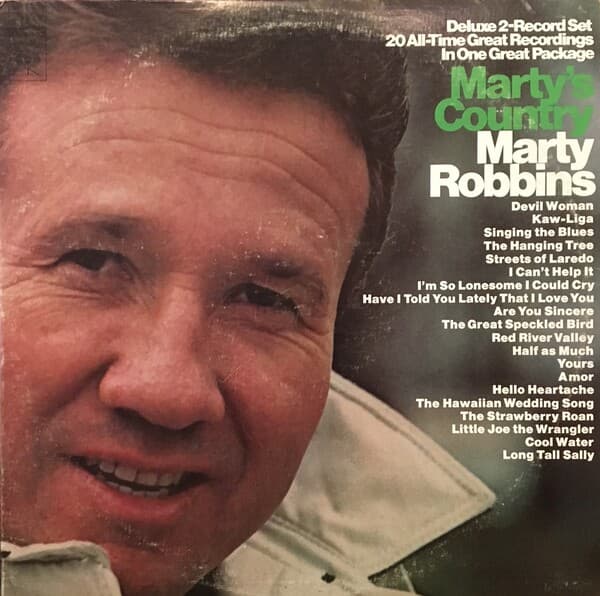
Marty Robbins – Teardrops In My Heart: A Velvet Masterpiece of Hidden Grief and Public Poise
In the tapestry of our shared memories, there are melodies that act as a gentle balm for the secret sorrows we all carry. Marty Robbins, the definitive “Mister Teardrop,” gave us one of his most elegant explorations of the “smiling mask” in his 1962 recording of “Teardrops In My Heart.” Nestled within the legendary album Portrait of Marty, which climbed to Number 7 on the Billboard Top Country Albums chart, this song is a masterclass in the Nashville Sound. It is a song for the generation that understands the quiet bravery of keeping one’s chin up when the world feels like it’s crumbling—a song for those who have learned to cry without making a sound.
For those of us who recall the hushed atmosphere of a 1960s Grand Ole Opry broadcast, seeing Marty Robbins perform this song was a lesson in artistic dignity. He stood there, impeccably dressed, his voice a soaring, crystalline instrument that seemed to touch the rafters. The story behind “Teardrops In My Heart” is one of deep musical lineage; written by the prolific Teresa Strickland, it was a song that demanded a singer with the “crooner’s touch.” Robbins took this classic and, with the help of the ethereal background harmonies of the Jordanaires, turned it into a sophisticated, internal monologue. It wasn’t just a country song; it was a refined “talk show” of the soul, whispered across the airwaves to millions of hearts that felt exactly the same way.
The story within the lyrics is a poignant study in emotional compartmentalization. The narrator describes a man moving through the world, laughing with friends and playing the part of a man who is “over” a lost love. But beneath the surface, in the private chambers of his chest, there is a steady rain of “teardrops.” It is a narrative of the double life of the broken-hearted. He speaks of the “blue” notes that play only for him and the salt that stings only in the dark. It is the story of a man who has mastered the art of the “brave front,” proving that the deepest oceans are often the ones that appear most calm on the surface.
The profound meaning of this ballad resonates so strongly with a mature audience because it honors the stoicism and grace of our era:
- The Dignity of Privacy: It acknowledges a time when we didn’t broadcast our pain to the world. There is a profound, nostalgic respect in the song for the person who carries their burden with a smile, choosing to protect others from their own gloom.
- The Persistence of Love: For those of us looking back over forty or fifty years, the song validates the reality that some loves never truly “leave.” They simply settle into the background, becoming a permanent, bittersweet part of who we are.
- The Healing Power of Music: By putting a melody to the “teardrops,” Marty Robbins suggests that we are never truly alone in our sadness. He turns a private ache into a shared, beautiful experience, reminding us that there is a certain majesty in having a heart that is capable of feeling so much.
Marty Robbins delivers this performance with a voice that is as smooth as aged silk. His signature vibrato is used with incredible restraint, appearing only at the end of phrases like a lingering sigh. The production is quintessentially early-60s—featuring a weeping steel guitar that mimics the sound of a distant cry and a rhythmic, “ticking” tempo that suggests the relentless passage of time. For our generation, “Teardrops In My Heart” is a nostalgic sanctuary. It reminds us that while we may walk through the world with dry eyes, our hearts remain a sacred place where the memories of those we loved still fall like rain.
 Music Legend