
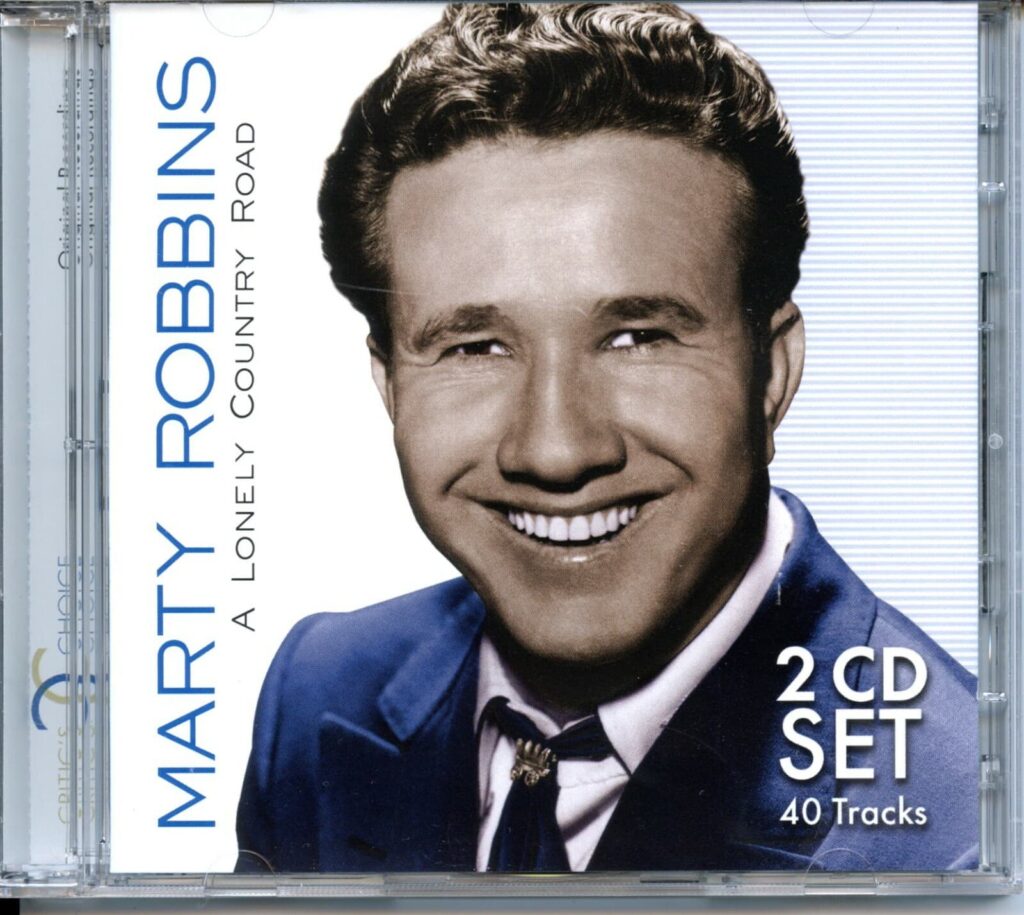
Marty Robbins – I’m Wanting To: A Gentle Whisper of Reluctant Desire and the Tender Ache of “What If”
In the quiet, twilight chapters of our lives, we often find ourselves reflecting on the paths we almost took—the hands we almost held and the words we almost spoke. Marty Robbins, a man whose voice could navigate the vast, lonely stretches of the soul with the grace of a sunset, captured this delicate state of “almost” in his 1966 gem, “I’m Wanting To.” Tucked away on his evocative album The Drifter, which reached Number 6 on the Billboard Top Country Albums chart, this song remains a masterclass in the art of the understated. It is a song for the seasoned heart that knows all too well the difference between a passing whim and a deep, soul-stirring longing that it perhaps shouldn’t act upon.
For those of us who recall the golden era of the Nashville Sound, seeing Marty Robbins perform was like watching a master painter work in watercolors rather than oils. When he sang “I’m Wanting To,” whether on a television special or in the sacred circle of the Grand Ole Opry, he didn’t need to shout to be heard. He would lean into the microphone, his eyes perhaps reflecting the soft stage lights, and deliver a performance that felt like a private conversation. The story behind the song is one of artistic maturity; by the mid-60s, Robbins had moved beyond the gunfire and the spurs of his early career to explore the sophisticated, internal landscapes of modern romance. He utilized his unique “honeyed” baritone to bridge the gap between country honesty and pop elegance, creating a sound that was as smooth as silk and as heavy as lead.
The story within the lyrics is a hauntingly beautiful monologue of restraint. It describes a man standing at the threshold of an old flame or a forbidden attraction. He confesses, with a vulnerability that feels almost tangible, that he is “wanting to” reach out, “wanting to” come back, and “wanting to” say the things that would rekindle the fire. It is a narrative of the struggle between the mind and the heart. The narrator isn’t making a move; he is merely admitting to the desire to do so. It is the story of a man who is governed by a sense of propriety or perhaps the wisdom of past pain, yet find himself helplessly pulled toward the warmth of a memory.
The profound meaning of this ballad strikes a deep, resonant chord with a mature audience because it honors the complexity of adult longing:
- The Weight of Restraint: It acknowledges that as we grow older, we learn that “wanting” and “doing” are two very different things. There is a profound dignity in the narrator’s hesitation—a recognition that some bridges, once burned, are better left as smoke.
- The Persistence of Memory: For those of us looking back over decades, the song validates the idea that some loves never truly leave us. They stay in the “waiting room” of the heart, always present, always “wanting to” be heard.
- The Beauty of Vulnerability: By admitting his weakness, the narrator shows a strength that youth rarely understands. It honors the courage it takes to admit, “I am still moved by you,” without demanding anything in return.
Marty Robbins delivers this performance with a voice that is as clear as a desert night and as warm as a campfire. His signature vibrato is used with surgical precision, adding a slight tremor to the word “wanting” that makes the listener feel the character’s internal conflict. The arrangement is a hallmark of The Drifter era—sparse, featuring a gentle acoustic guitar and the soft, rhythmic “thrum” of a bass that feels like a nervous heartbeat. For our generation, “I’m Wanting To” is a nostalgic sanctuary. It reminds us that while we may walk a straight and narrow path, the heart is always free to wander back to the bends in the river where we once felt most alive.
 Music Legend