
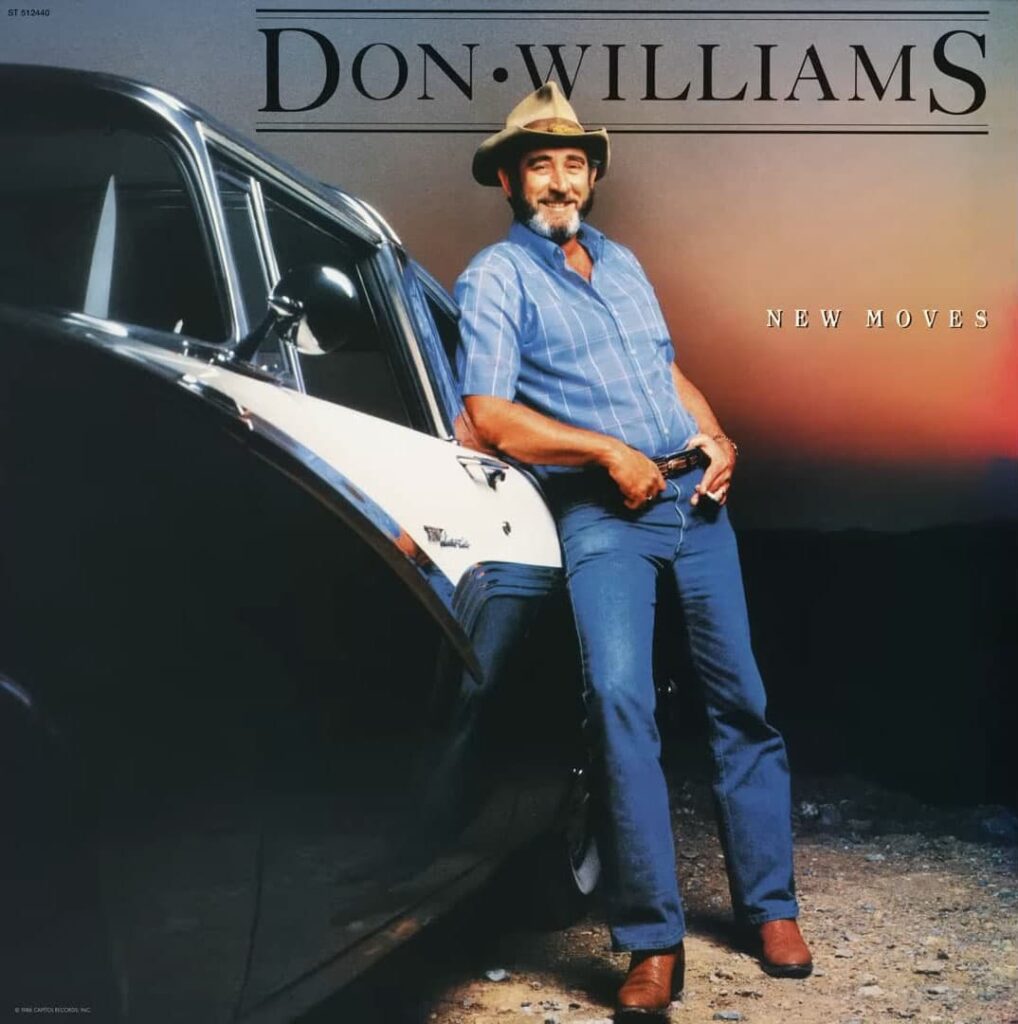
Don Williams – Maybe That’s All It Takes: A Gentle Lesson in the Art of Mending the Human Heart
There is a particular kind of wisdom that only arrives after the hair has grayed and the pace of our walk has slowed—a realization that the most complex problems in life often yield to the simplest solutions. Don Williams, our “Gentle Giant,” understood this better than perhaps any other storyteller in Nashville. In 1982, he graced us with “Maybe That’s All It Takes,” a standout track from his soulful album Listen to the Radio. While other artists of the era were chasing the neon lights of the crossover pop-country movement, Williams remained a beacon of organic warmth, reaching Number 8 on the Billboard Hot Country Songs chart and reinforcing his status as the poet laureate of the quiet life.
This song arrived at a time when the world felt increasingly loud and fractured. Released on the MCA label, it carried the unmistakable hallmarks of a Don Williams production: that rhythmic, heartbeat-like acoustic guitar and a baritone voice that felt as comforting as a wool blanket on a November evening. The “story” of this song isn’t found in a dramatic plot, but in the quiet domesticity of a kitchen table conversation. Written by the perceptive Charles John Quarto and Danny Flowers, the song was born from the observation that we often let love slip through our fingers not because of a grand betrayal, but because we simply forget how to be kind.
The lyrical heart of “Maybe That’s All It Takes” is a profound meditation for the mature listener. It suggests that the “secret” to a lasting bond isn’t found in expensive gifts or grand declarations, but in the “touch of a hand” or a “soft word spoken.” To those of us who have weathered the storms of long-term relationships, these words carry a heavy, beautiful truth. We know that the years can sometimes build walls of silence, and Williams gently reminds us that a single, honest gesture can bring those walls crumbling down. He sings about the “power of a smile” and the courage it takes to be the first to reach out—a lesson that feels more relevant the longer we live.
There is a deep, resonant nostalgia in the way the melody unfolds. It echoes the simplicity of a time when we weren’t distracted by screens and constant noise, a time when “watching the sun go down” was an event in itself. The arrangement is masterfully sparse; the dobro weeps softly in the background, mirroring the vulnerability in Williams’ delivery. He doesn’t lecture his audience; he invites us to remember the “little things” that made us fall in love in the first place.
As we revisit this classic today, “Maybe That’s All It Takes” feels less like a song and more like a gentle guidance for the soul. It encourages us to look at our partners, our friends, and our history with a sense of renewed patience. It is a reminder that even when the road feels long and the heart feels tired, grace is never further away than a kind word. It is a masterpiece of emotional economy, proving once and for all that in music, as in life, the most powerful truths are often the quietest.
 Oldies Songs