
Healing Does Not Happen Overnight, and Love Rarely Leaves Without a Trace
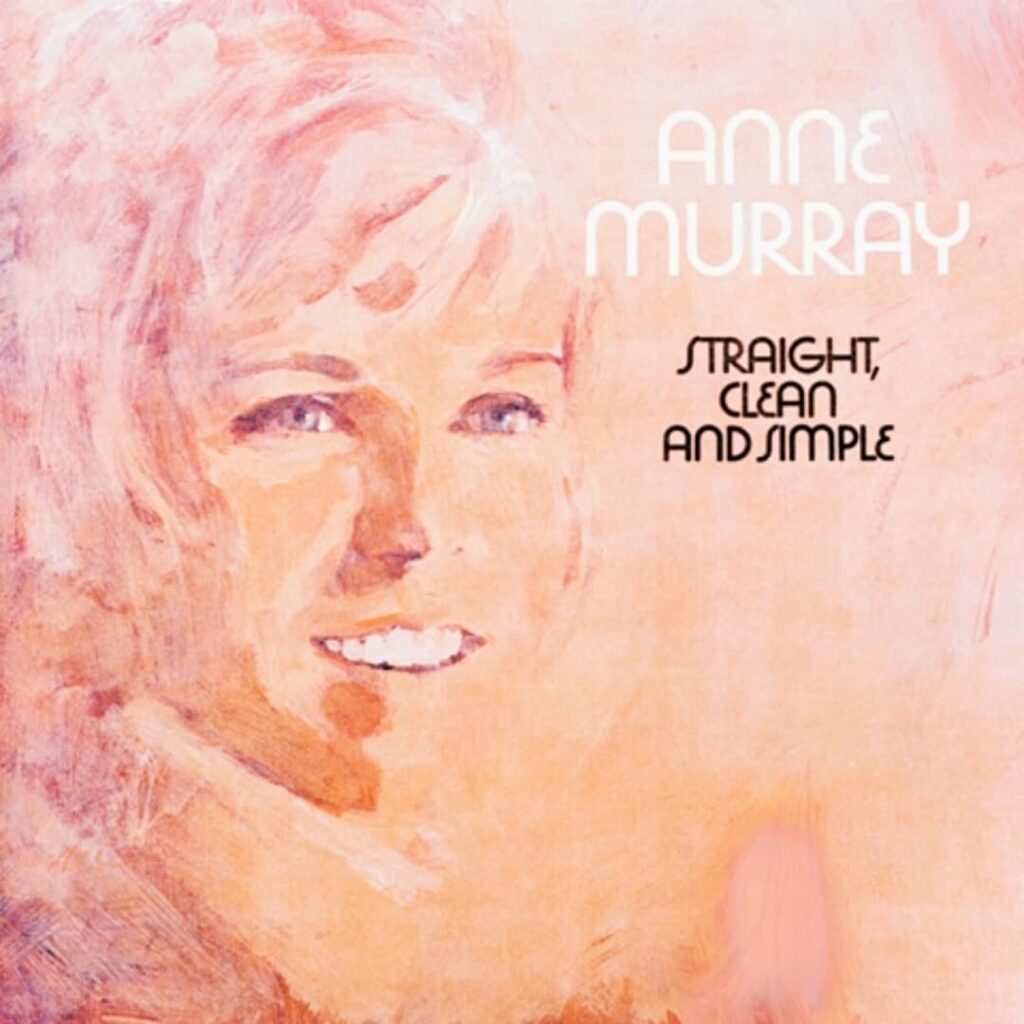
In 1971, Anne Murray offered listeners a quiet consolation with “It Takes Time.” Written by the gifted Canadian songwriter Shirley Eikhard, the song became one of the defining statements of Murray’s early career. Upon its release, it climbed to No. 1 on the Canadian Adult Contemporary chart, reached No. 6 on the Canadian Country chart, and rose to No. 26 on the Canadian Pop chart. It also appeared on her 1971 album Straight, Clean and Simple, a record that solidified Murray’s reputation as one of Canada’s most sincere and emotionally transparent voices.
Those chart positions matter because they mark a moment when subtlety still had power. In an era when rock music was growing louder and more rebellious, Anne Murray chose restraint. She chose patience. And with “It Takes Time,” she spoke directly to anyone who had ever tried to hurry the process of healing after heartbreak.
The song itself is deceptively simple. There are no dramatic vocal acrobatics, no sweeping orchestral crescendos designed to overwhelm. Instead, Murray delivers the lyric with a calm, almost maternal steadiness. The arrangement is gentle, built around soft instrumentation that allows the message to breathe. It feels less like a performance and more like a conversation shared across a kitchen table late at night, when honesty comes easier.
Shirley Eikhard, who wrote the song while still very young, understood something profound about emotional recovery. The lyric does not promise quick relief. It does not pretend that love can be erased by willpower. Instead, it acknowledges that moving on requires endurance. The central idea is not dramatic heartbreak but the quiet, ongoing work of letting go. That is what gives “It Takes Time” its lasting resonance. It recognizes that grief has its own timetable.
For Anne Murray, this song arrived during a pivotal period. After her breakthrough hit “Snowbird” in 1970, she was emerging as a distinctive voice in North American music. Her sound blended country warmth with pop accessibility, creating what would later be known as adult contemporary. Straight, Clean and Simple reflected that clarity. The album title itself mirrors Murray’s artistic identity. No excess, no artifice. Just honest songs delivered with emotional precision.
Listening now, decades later, there is a certain stillness in her voice that feels increasingly rare. She does not rush the phrases. She allows silence to sit between lines. That space is important. It mirrors the very theme of the song. Time. Waiting. Enduring.
What makes “It Takes Time” endure is not nostalgia alone. It is the truth embedded in its structure. The melody moves gently forward, almost cautiously, as if unwilling to leap ahead of the heart’s readiness. Murray’s interpretation avoids bitterness. Instead, she offers reassurance without sentimentality. She sings not as someone shattered beyond repair, but as someone who understands that recovery is gradual.
There is also something distinctly Canadian about the song’s tone. It is modest. It does not demand attention. It earns it quietly. In 1971, audiences responded to that authenticity. The song’s strong performance across multiple Canadian charts confirmed that listeners were ready for music that reflected real emotional experience rather than theatrical despair.
Over time, Anne Murray would become one of the most successful artists in Canadian history, crossing into American charts and winning numerous awards. Yet songs like “It Takes Time” remain essential to understanding her legacy. They show her not merely as a vocalist but as an interpreter of life’s softer truths.
Today, when we revisit this recording, it carries the weight of memory. The world in which it was released feels distant, yet the sentiment has not aged. Love still leaves echoes. Healing still asks for patience. And voices like Anne Murray’s remind us that sometimes the bravest thing we can admit is that we are not finished recovering.
Because in the end, as the song so gently insists, it takes time.
 Music Legend