
A Quiet Reckoning with Love and Absence, Told Through Memory and Regret
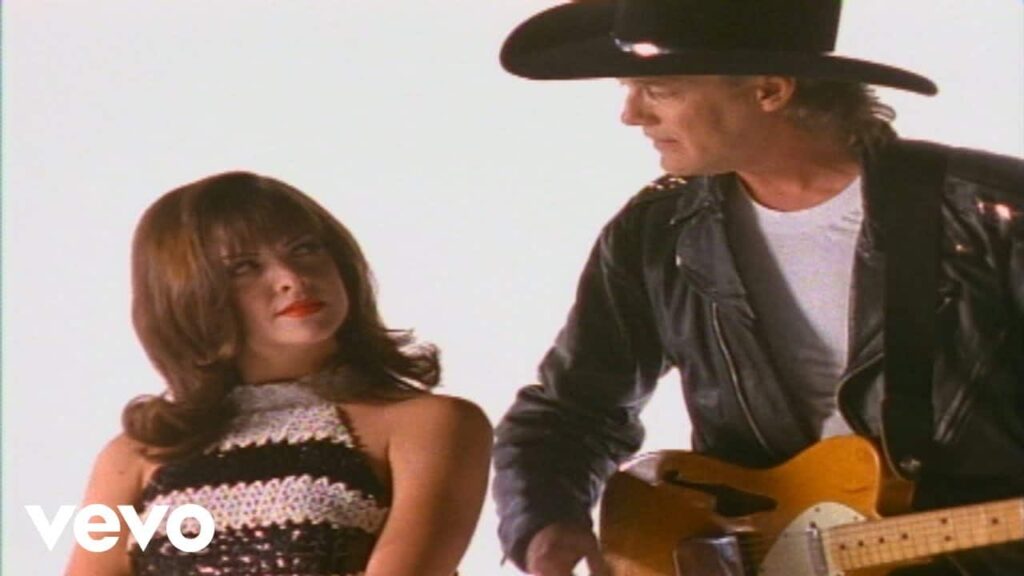
Released in January 1994, “Where Was I” arrived during a reflective moment in the career of Ricky Van Shelton, an artist whose voice had already carried millions through heartbreak, humility, and grace. Written by Gary Burr and Harry Stinson, the song was issued as the second single from Shelton’s final studio album for Columbia Records, A Bridge I Didn’t Burn. Upon its release, “Where Was I” reached No. 20 on the Billboard Hot Country Singles & Tracks chart, a modest position by Shelton’s earlier standards, yet one that carries a deeper historical weight. It would become the last Top 40 country hit of his career, quietly closing a chapter that began with remarkable commercial and emotional impact in the late 1980s.
By the time “Where Was I” reached radio, Ricky Van Shelton was no longer the industry’s newest revelation. His debut album Wild-Eyed Dream in 1987 had produced five consecutive No. 1 singles, an achievement almost unheard of for a new artist. His voice, warm and resonant, evoked the traditions of classic country without imitation. He sang plainly, but never simply. That honesty had become his signature. Yet as the 1990s progressed, the sound of country music was shifting. Production grew louder, personas more polished, narratives more performative. Against that backdrop, “Where Was I” felt restrained, inward looking, and deliberately human.
The song itself unfolds as a series of painful realizations. It is not about betrayal or dramatic loss, but about absence. Emotional absence. The narrator confronts a moment of clarity, realizing that love did not disappear suddenly. It faded while he was elsewhere, distracted, inattentive, assuming permanence where care was required. The repeated question at the heart of the song is not accusatory. It is confessional. Where was I when love needed me most. The power of the lyric lies in its refusal to offer excuses. There is no villain here, only the quiet cost of neglect.
Gary Burr, known for his ability to capture emotional nuance, and Harry Stinson, a songwriter and drummer with deep roots in Americana and country rock, crafted a lyric that feels conversational yet profound. It speaks in the language of hindsight, a language everyone eventually learns. In “Where Was I”, regret is not shouted. It is spoken slowly, almost carefully, as if the truth itself might break if handled too roughly.
On A Bridge I Didn’t Burn, this song stands as one of the album’s most introspective moments. The album title itself suggests unresolved connections, relationships not destroyed but altered, left behind without closure. Shelton’s vocal performance is measured and sincere. There is no attempt to overpower the lyric. His voice carries a slight weariness, not fatigue, but experience. It sounds like a man who has lived long enough to recognize his own mistakes and brave enough to name them.
Historically, “Where Was I” marks an important turning point. After its release, Ricky Van Shelton would soon step away from the mainstream spotlight, later citing personal struggles and a desire for privacy. In retrospect, the song feels almost prophetic. It is about looking back, taking inventory, and acknowledging moments that cannot be reclaimed. That thematic weight gives the track an enduring resonance beyond its chart position.
Today, “Where Was I” endures not as a forgotten single, but as a quiet companion to reflection. It belongs to a lineage of country songs that value truth over spectacle, humility over resolution. For listeners who have loved, lost, and wondered how time slipped through their hands, the song does not offer comfort so much as understanding. It reminds us that some questions arrive too late to change the past, but not too late to be meaningful.
 Music Legend