
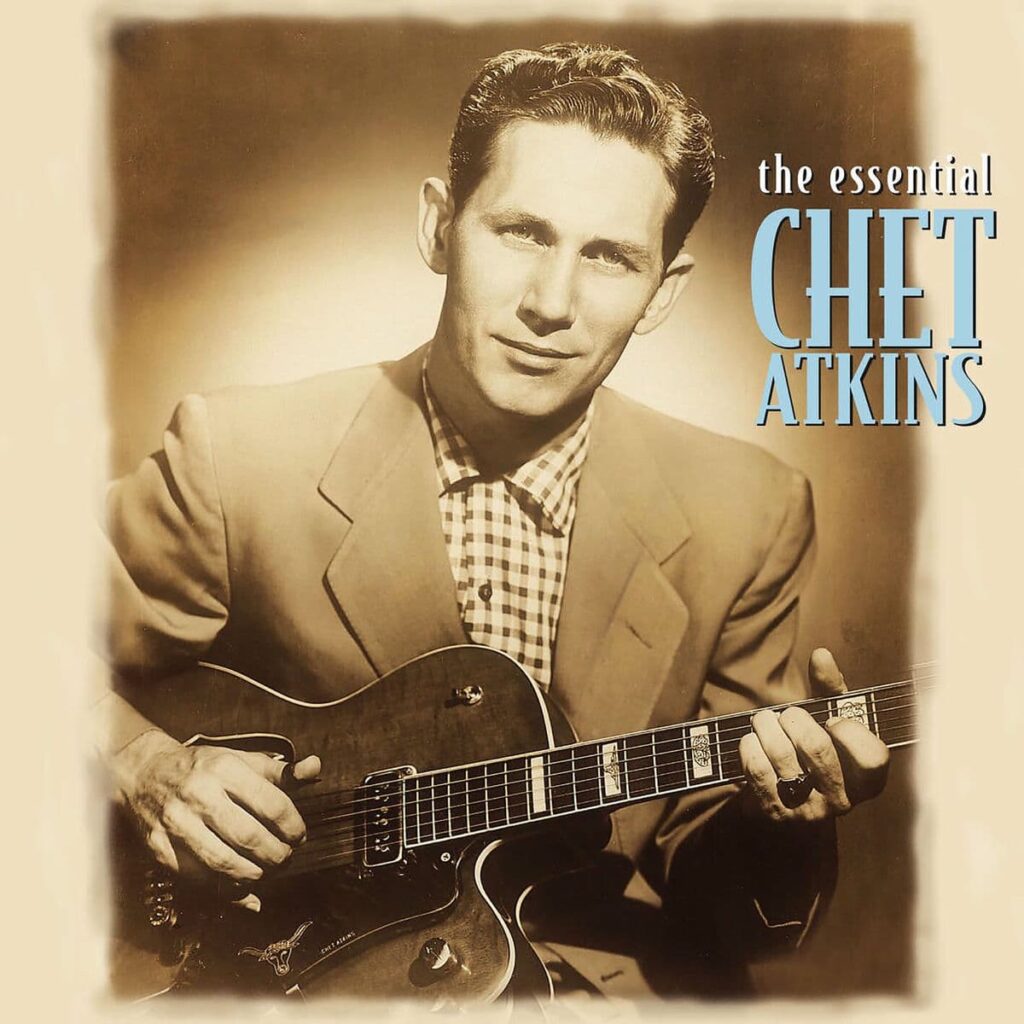
A dazzling instrumental conversation that turns speed, precision, and joy into pure country elegance.
When Chet Atkins released “Jerry’s Breakdown” in 1977, he was not merely offering another guitar showcase—he was engaging in a spirited dialogue between two masters of their craft. The track appeared on the celebrated album Me and Jerry, a collaborative project with fellow guitar virtuoso Jerry Reed. Issued by RCA, the album quickly earned critical acclaim and commercial success, reaching No. 3 on the Billboard Top Country Albums chart. In 1977, Me and Jerry went on to win the Grammy Award for Best Country Instrumental Performance, underscoring its importance within the country music canon.
Although “Jerry’s Breakdown” itself was not released as a major charting single in the pop sense, it became one of the most admired instrumental pieces within the country and guitar communities. Its reputation grew steadily through radio play, live performances, and word of mouth among musicians who recognized the extraordinary interplay between Atkins and Reed. For those who followed the Nashville scene closely, the track represented something far deeper than chart statistics—it was a summit meeting.
The story behind “Jerry’s Breakdown” is rooted in friendship, rivalry, and profound mutual respect. By the mid-1970s, Chet Atkins had long established himself as “Mr. Guitar,” the architect of the smooth “Nashville Sound” that reshaped country music in the late 1950s and 1960s. His fingerstyle technique—elegant, economical, and richly melodic—had influenced generations. Jerry Reed, younger and fiery, brought a contrasting energy: bold syncopation, percussive flair, and an almost mischievous sense of rhythm. When these two sat down together, the result was not competition but conversation.
Listening to “Jerry’s Breakdown,” one hears that conversation unfold in real time. The title suggests velocity—and indeed, the piece is brisk, dazzling in its tempo. Yet beneath the speed lies remarkable control. Atkins’ playing is smooth as polished wood, each note articulated with crystalline clarity. Reed responds with rhythmic punches and playful runs that seem to challenge and delight in equal measure. The “breakdown” in the title nods to bluegrass tradition, where instrumental breaks allow musicians to step forward and speak in their own musical dialect. Here, the breakdown becomes a celebration of virtuosity.
There is something deeply nostalgic about instrumental country music of this era. Without lyrics to guide the listener, memory fills the space. The chiming strings evoke front porches, quiet evenings, and the simple dignity of craftsmanship. Chet Atkins never relied on flash alone; his artistry was always about taste. Even at breathtaking speed, he maintained warmth. That balance—technical brilliance paired with emotional restraint—is what gives “Jerry’s Breakdown” its enduring resonance.
The album Me and Jerry itself emerged during a period when country music was evolving rapidly. The outlaw movement was gaining ground, and production styles were shifting. Yet Atkins, who had once been criticized for smoothing country’s rough edges, returned here to something organic and roots-driven. The collaboration felt almost like a homecoming: two Southern musicians reminding audiences that authenticity can coexist with sophistication.
Over the years, “Jerry’s Breakdown” has become a rite of passage for serious guitarists. To attempt it is to measure oneself against two giants. But beyond the technical challenge lies a deeper lesson. The track reminds us that music can be competitive without being combative, complex without losing its soul. It captures a moment when mastery was worn lightly, when two friends could sit in a studio and transform wood, wire, and fingertips into something timeless.
Decades later, the notes still shimmer with vitality. They speak of an era when musicianship stood at the center of the stage—when a guitar, in the right hands, could tell stories without uttering a single word. And in that bright cascade of strings, one hears not just speed, but grace.