
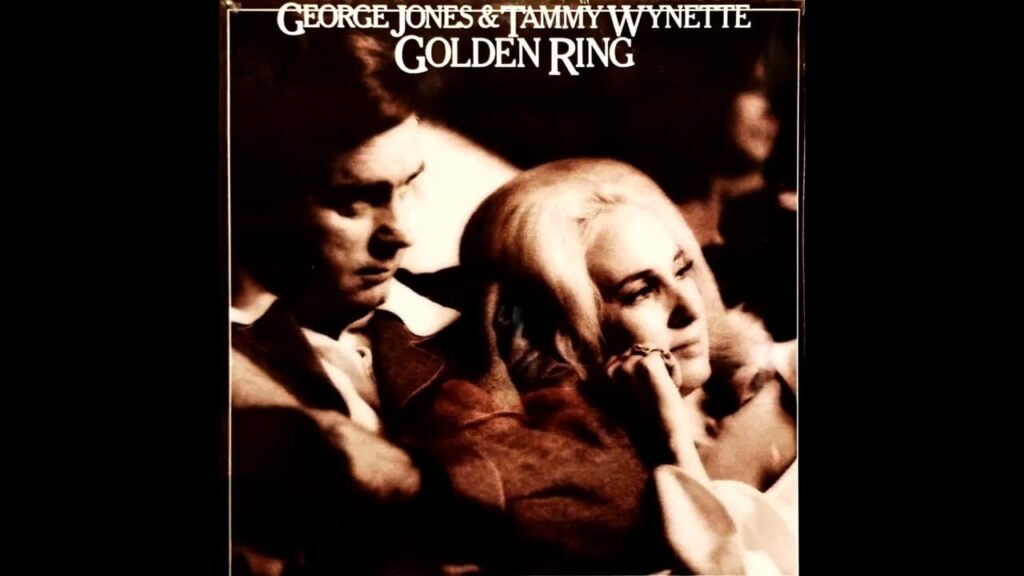
A tender conversation set to harmony, where love asks questions it is afraid to hear answered
Released in 1968, “Did You Ever?” stands as one of the most intimate duet recordings by George Jones & Tammy Wynette, arriving at a moment when both artists were not only dominating the country charts but also living out a highly publicized and emotionally complex partnership. The single climbed to No. 2 on the Billboard Hot Country Singles chart, affirming its immediate resonance with listeners who recognized its emotional honesty. By the time it reached radio airwaves, the song already carried a quiet gravity, shaped as much by lived experience as by melody and lyric.
Recorded during the peak of their collaborative years, “Did You Ever?” belongs to a remarkable series of duets that captured the fragile space between devotion and doubt. While many country duets of the era leaned toward dramatic declarations or playful exchanges, this song chose a different path. It unfolded like a private conversation overheard by accident, built not on accusations but on questions. Each line feels tentative, as if spoken carefully, mindful of what the answer might reveal.
Written by Don Chapel, the song centers on emotional uncertainty within a relationship that has already weathered change. Rather than recounting a specific event, the lyric dwells in reflection. Did love ever feel complete. Did it ever truly belong to both voices singing. These are not questions meant to provoke conflict. They are questions born from quiet nights and long memories. This restraint gives the song its lasting power.
Musically, George Jones & Tammy Wynette approach the duet with remarkable balance. Jones delivers his lines with a fragile steadiness, his voice carrying the unmistakable ache that defined his greatest performances. There is no excess sorrow, only a sense of careful vulnerability. Wynette responds with warmth and composure, her phrasing calm yet deeply expressive. Together, their voices do not compete. They listen to each other. That act alone gives the song its emotional core.
The arrangement is deliberately understated. Gentle instrumentation frames the vocals without intruding, allowing the words to breathe. The tempo moves slowly, as if reluctant to reach the end of the conversation too quickly. This pacing mirrors the emotional weight of the song itself. Every pause feels intentional. Every harmony feels earned.
At the time of its release, both artists were already established stars. George Jones had long been regarded as one of the most emotionally precise vocalists in country music, while Tammy Wynette was emerging as a defining voice of resilience and emotional clarity. Their partnership gave songs like “Did You Ever?” a sense of authenticity that could not be manufactured. Listeners understood that these were not just roles being performed. There was truth behind the delivery, even if the song itself was fictional.
The meaning of “Did You Ever?” lies in its refusal to provide resolution. There is no clear answer to the questions posed. That ambiguity is the point. Love, the song suggests, is not always something that can be measured or confirmed. Sometimes it exists only in memory, shaped by moments that feel different when revisited. The song captures that uncertainty with grace rather than despair.
Within the broader catalog of George Jones & Tammy Wynette, this duet occupies a quieter place than some of their more dramatic hits, yet its emotional impact is no less profound. It represents a moment when country music allowed silence and subtlety to speak just as loudly as heartbreak and triumph. The song does not ask for sympathy. It invites reflection.
Decades later, “Did You Ever?” remains a testament to the power of honest restraint. It endures not because it offers answers, but because it understands the weight of asking the right questions. In the shared voices of George Jones & Tammy Wynette, those questions still linger, gently and unmistakably, long after the final note fades.