
A quiet country prayer where memory, faith, and winter light meet at the edge of home
Few holiday recordings feel as honest and unguarded as Christmas Time’s a Comin’, especially when carried by the voice of Emmylou Harris, a singer who has always understood how to let a song breathe. Her rendition does not arrive with spectacle or cheerful insistence. Instead, it steps softly into the room, like someone brushing snow from their coat, carrying with them the weight of distance traveled and the hope of finally coming home.
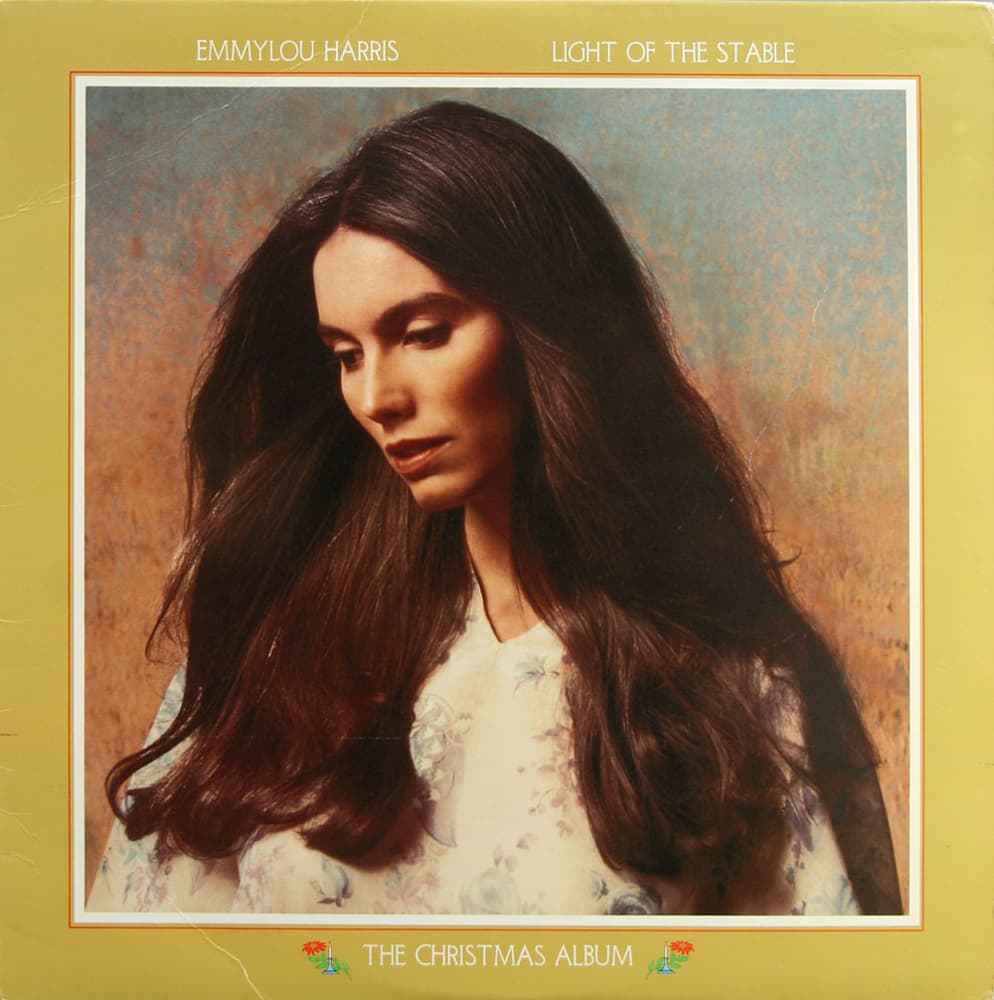
Christmas Time’s a Comin’ is a song written by Benjamin Tex Logan, a Texas songwriter whose work drew deeply from rural memory, seasonal ritual, and the quiet emotional gravity of family gatherings. The song first gained wide recognition through Ray Charles, but when Emmylou Harris recorded it for her 1979 album Light of the Stable The Christmas Album, it took on a different life altogether. Her version is not celebratory in the conventional sense. It is reflective, restrained, and deeply human.
Released in late 1979, Light of the Stable The Christmas Album reached the Top 10 of the Billboard Top Country Albums chart upon its release, affirming that there was still a wide audience for country music rooted in tradition, faith, and emotional honesty. While Christmas Time’s a Comin’ was not released as a commercial single and did not chart independently, its placement early in the album made it one of the emotional anchors of the record. From the opening moments, it establishes the album’s tone of reverence and memory rather than seasonal gloss.
What makes Emmylou Harris’s interpretation so enduring is her refusal to dramatize the song. She sings with a calm, steady clarity, allowing the lyrics to carry their own weight. There is no excess, no vocal acrobatics. Her voice sounds weathered in the best sense, shaped by miles traveled and years lived. When she sings about the road leading home, you believe she has walked it many times, in many seasons, carrying different versions of herself along the way.
The story behind the song is deceptively simple. It speaks of returning home for Christmas, of familiar faces, cold air, warm kitchens, and the unspoken understanding that time has passed whether we are ready or not. Yet beneath that simplicity lies a deeper emotional truth. This is a song about distance and belonging, about the ache of separation softened by tradition. It acknowledges that the journey home is not only measured in miles, but in memory.
On Light of the Stable, the arrangement is spare and respectful. Acoustic instruments dominate, with gentle harmonies that feel more like shared breath than performance. The production never draws attention to itself. It serves the song rather than reshaping it, allowing listeners to focus on the emotional landscape rather than the studio craft. This restraint was characteristic of Emmylou Harris’s artistic philosophy at the time, one rooted in preservation and reverence for songcraft.
The meaning of Christmas Time’s a Comin’ extends beyond the holiday itself. It speaks to cycles, to the way certain moments return no matter how far life takes us. In Emmylou Harris’s hands, Christmas becomes a symbol rather than a date on the calendar. It represents reunion, reflection, and the quiet hope that some things remain unchanged even as everything else moves forward.
Decades after its release, her recording still resonates because it does not attempt to sound timeless. It sounds grounded in its moment, in a particular voice, in a particular emotional truth. That honesty is what allows it to endure. Listening to it now feels less like revisiting a Christmas song and more like opening an old letter, one written carefully, without haste, and meant to be read slowly.
In a world that often rushes the season, Emmylou Harris reminds us that Christmas can be a pause rather than a performance. Christmas Time’s a Comin’ remains one of her most quietly powerful recordings, not because it demands attention, but because it understands the value of stillness, memory, and the long road that always seems to lead us back to ourselves.