
A heartfelt tribute to the land, culture, and quiet pride of the American Southwest, “Down On The Rio Grande” captures the spirit of heritage and belonging that defined Johnny Rodriguez at the height of his country music career.
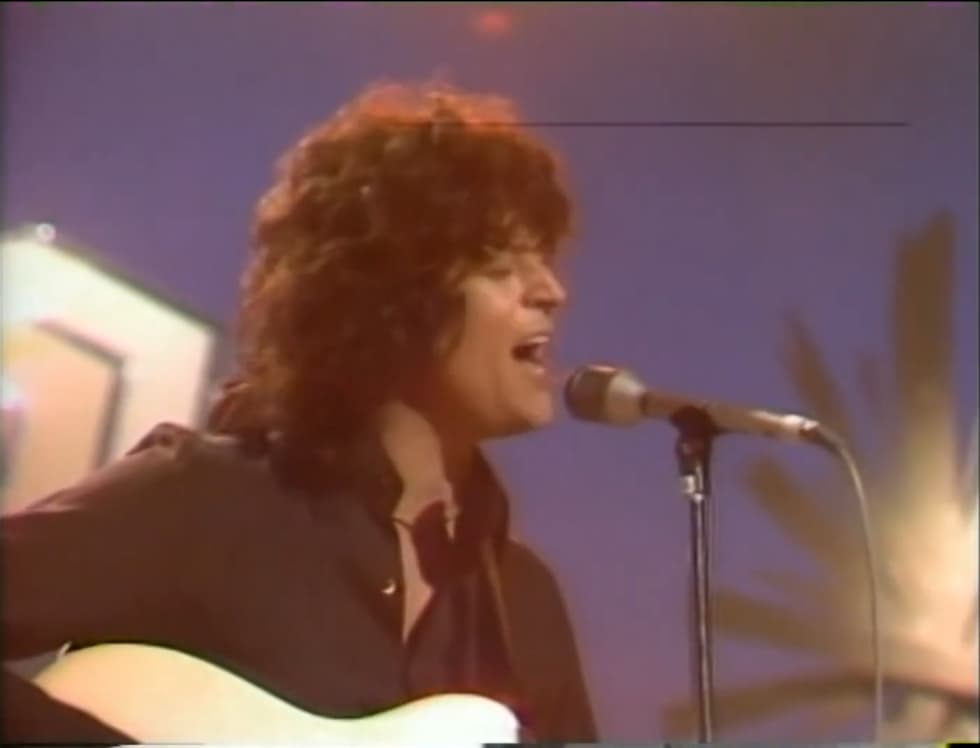
In 1979, when Johnny Rodriguez stepped onto the stage of the long running television program Pop! Goes the Country to perform Down on the Rio Grande, he was already recognized as one of the most distinctive voices in country music. Only a few years earlier he had risen almost unexpectedly from a small Texas town to become one of Nashville’s brightest new stars. By the mid to late 1970s, Rodriguez had accumulated a remarkable run of hits and had quietly made history as the first major Mexican American country star to dominate the national charts.
The song itself appeared during an important chapter of Rodriguez’s career. Throughout the 1970s he recorded for Mercury Records, releasing a string of albums that blended traditional honky tonk storytelling with the warm rhythms and cultural influences of South Texas. Among those recordings was the album Rodriguez, which included “Down on the Rio Grande.” While the song was not one of his chart topping singles like Ridin’ My Thumb to Mexico or That’s the Way Love Goes, it carried a meaning that ran deeper than simple chart success. For many listeners, it felt like a quiet reflection of Rodriguez’s own roots and identity.
Born in Sabinal, Texas, not far from the Mexican border, Johnny Rodriguez grew up surrounded by a musical world where country ballads, Spanish melodies, and ranchera rhythms lived side by side. Those influences would later shape his unique vocal style. When he sang, there was always a sense of the borderlands in his voice a mixture of country warmth and Latin phrasing that set him apart from nearly everyone else on the Nashville scene.
“Down on the Rio Grande” reflects that background with remarkable sincerity. The Rio Grande River, which forms part of the natural border between the United States and Mexico, is more than just a geographical landmark in the song. It becomes a symbol of memory, family, and cultural identity. The lyrics evoke images of wide open Texas landscapes, quiet evenings along the riverbanks, and a sense of belonging that can only come from knowing where one truly comes from.
When Rodriguez performed the song on Pop! Goes the Country in 1979, the moment carried a particular resonance. The program, which aired nationally across the United States, introduced country artists to audiences far beyond the traditional Nashville circuit. Watching Rodriguez perform this deeply personal song on national television felt like a bridge between two musical worlds the polished stage of mainstream country entertainment and the dusty roads of South Texas where his story had begun.
By that time Rodriguez had already achieved an extraordinary list of accomplishments. Between 1973 and 1978, he scored six No. 1 hits on the Billboard Hot Country Singles chart, including You Always Come Back (to Hurting Me) and I Just Can’t Get Her Out of My Mind. Yet songs like “Down on the Rio Grande” reveal another side of his artistry one less concerned with commercial triumph and more focused on storytelling and cultural pride.
Listening to the performance today, there is a gentle authenticity that stands out immediately. Rodriguez does not deliver the song with dramatic flair or theatrical emotion. Instead, he sings it with the calm confidence of someone who understands every line because it reflects a real life experience. The melody flows easily, almost like a conversation, while the imagery of the Rio Grande quietly anchors the story.
In many ways, Johnny Rodriguez helped broaden the emotional landscape of country music. At a time when the genre was still searching for new voices and perspectives, he brought something both traditional and new a reminder that country music’s roots extended far beyond Nashville and deep into the cultural fabric of the American Southwest.
That is why “Down on the Rio Grande” remains such a meaningful piece of his legacy. It is not simply a song about a river. It is a musical postcard from a place where memory, identity, and music flow together like water moving slowly through the desert.
And when Johnny Rodriguez sings about that river, it feels as though the sound carries the listener there the wide sky above Texas, the quiet current of the Rio Grande below, and the unmistakable voice of an artist who never forgot where his story began.