
When Love Quietly Begins Again, and Somehow Feels New Every Time
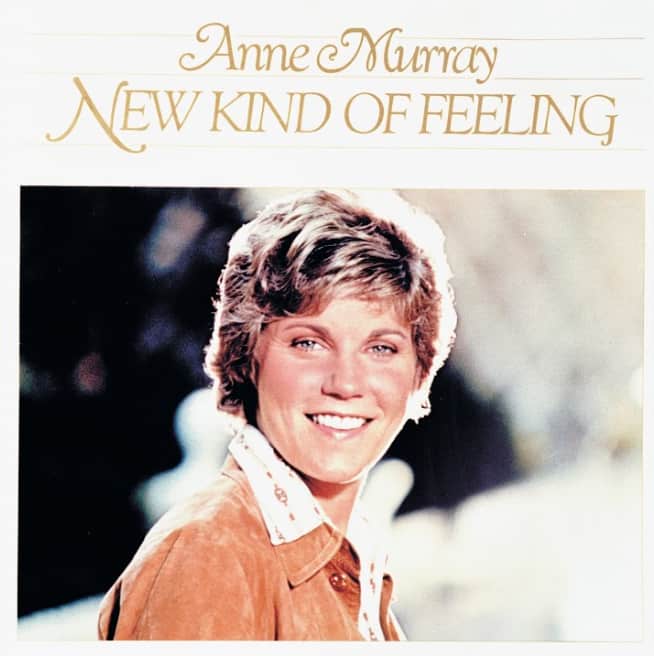
Released in early 1979, “I Just Fall in Love Again” stands as one of the defining recordings of Anne Murray’s remarkable career. By the time the single reached radio, Murray was already an established voice in North American popular music, yet this song elevated her to a rarified level of emotional intimacy with listeners. Upon release, it climbed to No. 1 on the Billboard Country Fans chart and also topped the Adult Contemporary chart, remaining there for several weeks. Commercial success aside, the song quickly became something more enduring: a quiet anthem for mature love, patience, and the gentle rediscovery of feeling within long-held relationships.
The song appeared during a period when popular music was growing louder, faster, and increasingly driven by spectacle. Against that backdrop, Anne Murray offered restraint. “I Just Fall in Love Again” did not shout its message. It whispered it. The arrangement was deliberately soft, built around a warm melodic line and unobtrusive instrumentation that allowed Murray’s distinctive alto voice to take center stage. Her voice, neither dramatic nor overly sentimental, carried a calm authority shaped by years of disciplined phrasing and emotional control. That balance is precisely what gave the song its timeless quality.
Lyrically, “I Just Fall in Love Again” explores a feeling rarely celebrated in popular music: the experience of falling in love again with the same person. Not through grand gestures or dramatic reconciliations, but through the smallest moments. A glance. A familiar touch. The quiet realization that affection has never truly faded, only settled into something deeper. The song does not describe youthful infatuation. It reflects a love that has endured routine, silence, and the passing of years, yet still surprises when least expected. That emotional honesty resonated deeply with listeners who understood that real love often reveals itself in repetition rather than novelty.
Before Anne Murray transformed the song into a massive hit, “I Just Fall in Love Again” had already existed in another musical space. It was first recorded by The Carpenters, whose interpretation leaned toward polished pop harmony, and later by Dustin Hollywood. Those earlier versions hinted at the song’s potential, but they lacked the understated emotional gravity Murray brought to it. Her rendition slowed the listener down. She allowed pauses to breathe, syllables to linger, and silence to speak alongside the melody. In doing so, she reframed the song not as a declaration, but as a quiet confession.
The success of “I Just Fall in Love Again” also reinforced Anne Murray’s unique position in popular music. As a Canadian artist crossing seamlessly into American country and adult contemporary charts, she occupied a space defined by sincerity rather than image. This song, more than many others, solidified her reputation as a singer who respected the intelligence and emotional experience of the audience. It did not rely on trend or novelty. It trusted memory, patience, and recognition.
Over time, the song has become inseparable from Murray’s legacy. It is frequently cited as one of the recordings that best captures her artistic identity: warm, grounded, emotionally precise. Within her broader catalog, it stands alongside other career-defining works as a reminder that simplicity, when handled with care, can outlast even the most elaborate productions.
Decades after its release, “I Just Fall in Love Again” continues to find its way into quiet rooms, late evenings, and reflective moments. Its meaning has not shifted with time. If anything, it has deepened. The song understands that love does not always arrive with fireworks. Sometimes it returns softly, unexpectedly, and leaves a deeper mark because of how familiar it feels. In that understanding lies its enduring power, and the reason Anne Murray’s voice still feels like a trusted companion rather than a distant echo from the past.