
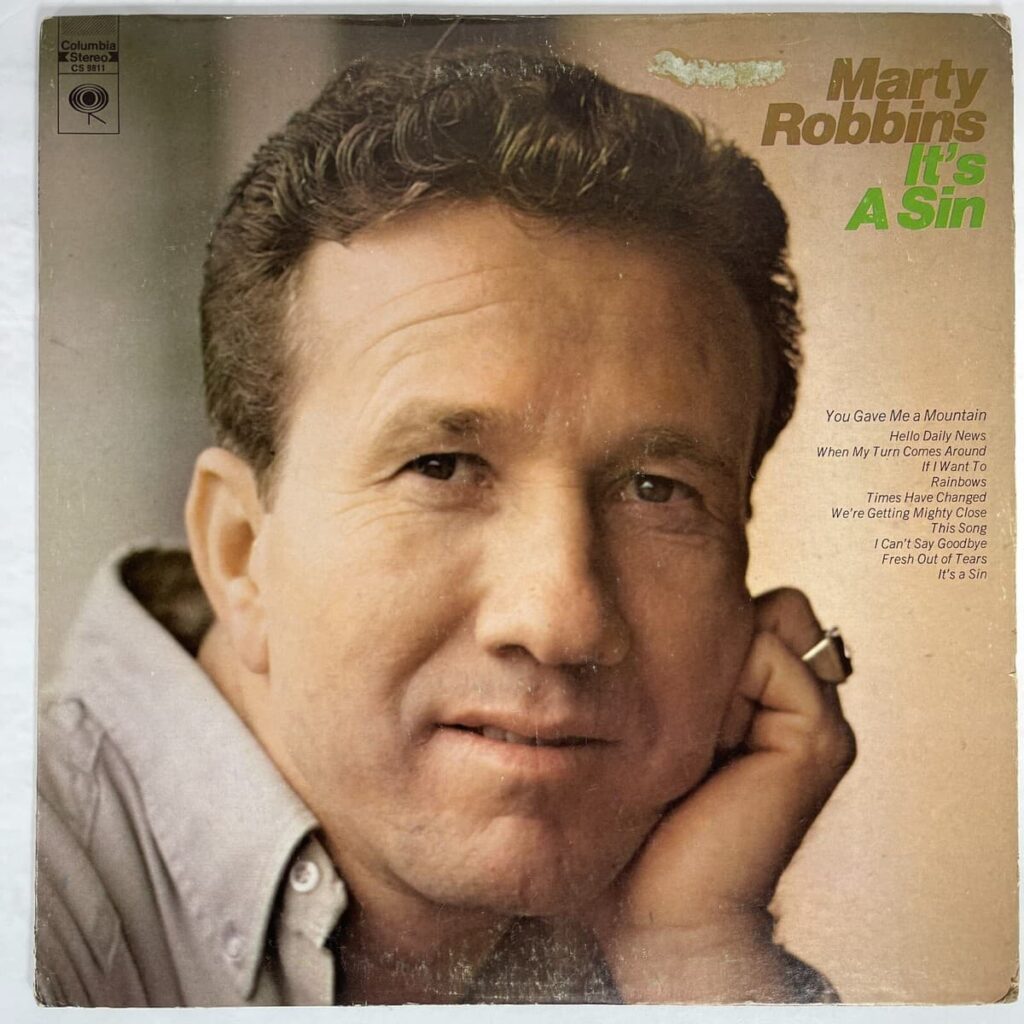
Marty Robbins – Cry Stampede: The Thunder of the Desert and the Ghost of the Trail
In the early 1960s, Marty Robbins was not just a singer; he was the primary architect of the Western myth. “Cry Stampede,” a hidden jewel from his 1962 album Marty Robbins’ Greatest Hits, Vol. 2 (though it captures the raw energy of his earlier trail song sessions), is a masterclass in atmospheric tension. While “El Paso” gave us the drama of the gunfight, “Cry Stampede” gives us the primal fear of the open range. It is a song for those who appreciate the raw, untamed power of nature and the heavy burden of the men who tried to guide it.
To listen to “Cry Stampede” is to feel the vibration of the earth itself. The story behind this recording is one of sonic world-building. Working with his legendary studio team, Marty sought to capture the “pulse” of a cattle drive on the edge of disaster. The song utilizes a unique, driving rhythm that feels like the frantic drumming of hooves against hard-packed dirt. Recorded during a period when Marty was deeply immersed in the lore of the Old West, “Cry Stampede” serves as a bridge between the romantic ballads and the rugged reality of the “long drive.”
The story within the lyrics is a visceral account of chaos and consequence. The narrator is a cowboy on night watch, feeling the heavy, electric stillness of a coming storm. Suddenly, a flash of lightning or a stray sound triggers the cattle, and the “cry” of the stampede begins. It is a narrative of man against the elements. He describes the terrifying sound of thousands of hooves and the desperate struggle to “turn the lead” before the herd plunges over a rimrock or into a canyon. It is the story of that split second where life and death are decided by the speed of a horse and the steadiness of a rider’s hand.
The profound meaning of this track resonates with a mature audience because it honors the inevitability of the “storm” in our lives:
- The Metaphor of the Uncontrollable: It acknowledges that despite our best efforts to “corral” our lives, there are forces—nature, time, or fate—that can trigger a stampede at any moment. For those of us who have weathered life’s sudden crises, the song validates the courage it takes to ride through the dust.
- The Respect for the Working Cowboy: It strips away the “Hollywood” glitz to show the danger of the job. It reflects a nostalgia for an era where survival depended on grit and physical instinct, honoring the rugged foundations of the American spirit.
- The Sound of Survival: There is a specific kind of “lonely adrenaline” in Marty’s voice. It reflects a maturity that understands that sometimes, the only thing you can do when the world breaks loose is to keep your seat in the saddle and ride it out.
Marty Robbins delivers this performance with a voice that is surprisingly “hushed” in the verses, building to a dramatic, resonant power in the chorus. He mimics the tension of the night, his signature vibrato acting like the flicker of lightning on the horizon. The arrangement is quintessential Western Marty—featuring a relentless, percussive acoustic rhythm, a subtle bassline that thumps like a racing heart, and the haunting, wind-like backing vocals that make the “cry” of the stampede feel almost supernatural. For our generation, “Cry Stampede” is a timeless piece of Western drama; it reminds us that while the trail may be dangerous, there is a fierce, unforgettable beauty in the thunder.
 Music Legend