
A gentle anthem of shared sorrow and quiet hope, where simple words carry the weight of lived experience
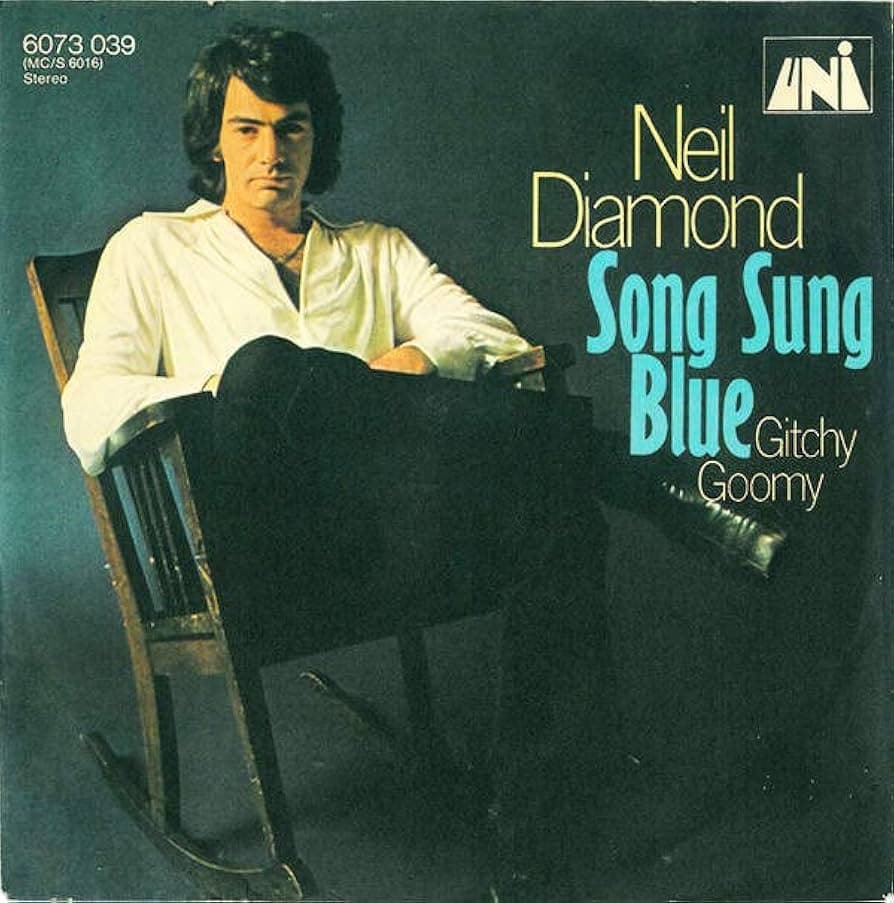
When Neil Diamond released Song Sung Blue in 1972, it arrived without spectacle and without urgency. Yet it quietly became one of the most enduring and emotionally resonant songs of his career. Issued as a single from the album Moods, the song reached No. 1 on the Billboard Hot 100 for one week in early July 1972, spent twelve weeks in the Top 40, and remained at No. 1 on the Adult Contemporary chart for seven weeks. In the United Kingdom, it peaked at No. 14 on the UK Singles Chart. These numbers matter not only because they confirm its success, but because they underline how a song built on restraint and humility could move so many listeners at once.
Song Sung Blue was written and recorded entirely by Neil Diamond, who at that point was already a seasoned songwriter and performer. Inspired loosely by the second movement of Mozart’s Piano Concerto No. 21, Diamond distilled a classical sense of melancholy into a modern folk-pop framework. The result was not imitation, but translation. The classical influence is felt not in structure, but in emotional pacing. The song breathes slowly, allowing sadness and comfort to coexist without competing for attention.
At the heart of Song Sung Blue lies a deceptively simple message. Diamond later described it as a “very basic message, unadorned.” There is no bridge, no dramatic shift, no lyrical flourish meant to impress. Instead, the song unfolds like a quiet conversation, acknowledging pain without embellishment. The opening lines immediately set the tone. Song sung blue, everybody knows one. This is not the sadness of isolation, but of recognition. The song suggests that sorrow is not unique, that it is shared, familiar, and deeply human.
What gives Song Sung Blue its lasting power is its refusal to dramatize suffering. Diamond does not tell a story of betrayal or loss in specific terms. He speaks in generalities, and in doing so, leaves room for memory to enter. Lines like “Me and you are subject to the blues now and then” feel less like lyrics and more like truths quietly spoken aloud. The song does not promise transformation. It offers companionship. Sing it out loud, the refrain urges, because expression itself becomes a form of release.
The public response to the song surprised even its creator. Diamond admitted he never expected such a strong reaction. Yet its success was immediate and widespread. Song Sung Blue became his second No. 1 hit in the United States, following Cracklin’ Rosie in 1970, and it remains his last solo song to top the Hot 100. Later, in 1978, he would reach No. 1 again in a duet with Barbra Streisand on You Don’t Bring Me Flowers, but Song Sung Blue stands apart as a singular personal statement.
Critical reception at the time echoed this sentiment. Cash Box famously remarked that the song “gives the phrase ‘Everybody, sing!’ new meaning,” while Record World praised its soft, commercial sound as among the best on the contemporary scene. In 1973, the song earned two Grammy nominations, for Record of the Year and Song of the Year. Though both awards ultimately went to Roberta Flack’s interpretation of The First Time Ever I Saw Your Face, the nominations themselves placed Diamond’s work among the most respected recordings of the era.
Over the decades, Song Sung Blue has become a standard in Neil Diamond’s live performances. It is often sung collectively, turning concerts into moments of shared reflection. In those moments, the song fulfills its quiet mission. It reminds listeners that sadness does not need explanation, and that comfort often comes not from answers, but from voices joining together.
In the end, Song Sung Blue endures because it understands something essential. Life moves forward carrying joy and disappointment side by side. Some songs try to escape that truth. This one sits with it, calmly, and invites others to do the same.
 Music Legend