
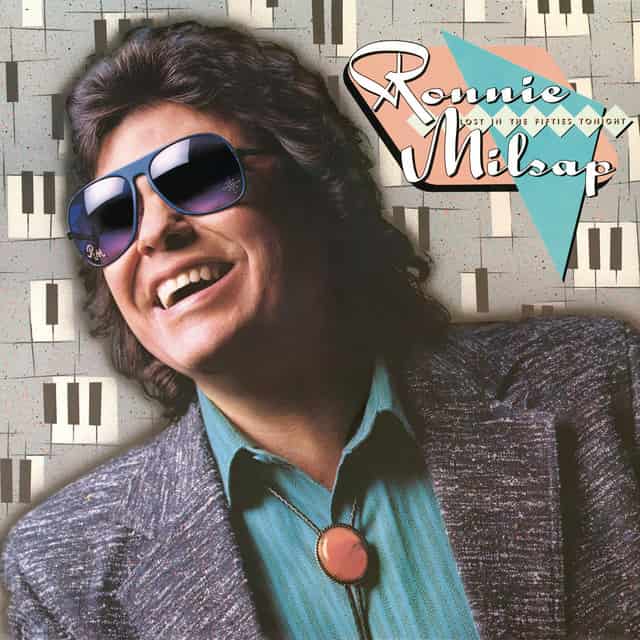
A Tender Birthday Song That Turned Nostalgia Into a Country No.1 Moment
On this day in 1943, Ronnie Milsap was born in Robbinsville, North Carolina, a small mountain town that would one day be quietly linked to one of the most remarkable careers in American country music. Few artists bridged emotional intimacy and commercial success as naturally as Milsap did, and few songs illustrate that balance more gently than “Happy, Happy Birthday Baby.” Released during the peak of his creative power, the song became another milestone in a career defined by feeling rather than flash.
By the time “Happy, Happy Birthday Baby” reached the airwaves in 1975, Ronnie Milsap was already firmly established as a dominant voice in country music. The single rose to No. 1 on the Billboard Hot Country Singles chart, becoming one of his 35 chart-topping country hits, a number that places him among the most successful artists the genre has ever known. It was included on the album A Legend in My Time, released by RCA Records, an album that further solidified his ability to reinterpret familiar material with emotional authority and restraint.
The song itself, however, had a history long before Milsap ever stepped into the studio. “Happy, Happy Birthday Baby” was originally written by Margo Sylvia and Gilbert Lopez, and first recorded in 1957 by The Tune Weavers. That original version climbed to No. 5 on the Billboard pop chart, becoming a teenage heartbreak anthem of its era. It was a simple song, almost conversational in tone, but it carried a quiet devastation beneath its polite surface. The narrator remembers a former lover on her birthday, offering congratulations while privately mourning what has been lost.
What Ronnie Milsap did with the song nearly two decades later was transform it without betraying its soul. His version slowed the emotional pulse, replacing youthful vulnerability with mature reflection. Where the original carried the ache of first heartbreak, Milsap’s interpretation felt like a letter written years later, when the pain has softened but never fully disappeared. His vocal delivery is restrained, almost tender, as if he understands that the greatest sorrow often speaks the softest.
This was one of Milsap’s greatest gifts as an artist. Blind since infancy, he developed an acute sensitivity to phrasing, tone, and emotional shading. In “Happy, Happy Birthday Baby,” every pause matters, every line feels considered. He does not beg, accuse, or dramatize. Instead, he remembers. That act of remembering becomes the emotional center of the song. It is not about reconciliation or regret alone, but about acknowledging that some loves remain important even after they are gone.
For listeners who had lived through love, loss, marriage, separation, or quiet compromise, the song resonated deeply. It spoke to a generation that understood how time changes emotions without erasing them. This is likely why the song connected so strongly with country audiences in the mid 1970s, a period when the genre was increasingly embracing adult perspectives and emotional realism.
Placed alongside other Milsap classics such as “Smoky Mountain Rain,” “It Was Almost Like a Song,” and “I Wouldn’t Have Missed It for the World,” “Happy, Happy Birthday Baby” stands as a reminder that country music’s power often lies in its simplicity. There are no grand metaphors here, no dramatic declarations. Just a voice, a memory, and a date circled on the calendar that still matters.
As Ronnie Milsap celebrates his 83rd birthday, the song feels especially fitting. It is a quiet acknowledgment of time passing, of love remembered, and of music’s ability to hold emotions long after moments have slipped away. In a career filled with No. 1 records, this gentle birthday song remains one of his most enduring and human achievements.
 Music Legend
  Music Legend