
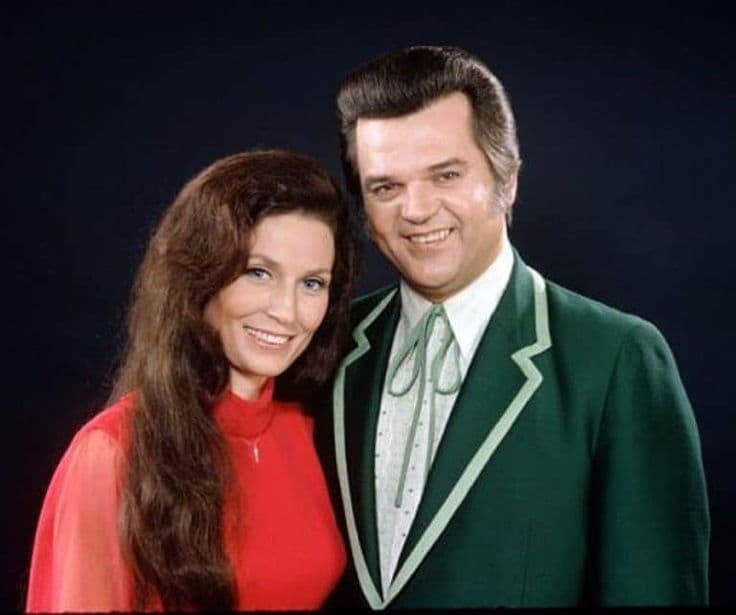
When Desire Fades and Silence Remains, After the Fire Is Gone Stands as Country Music’s Most Honest Confession
Released in 1971, After the Fire Is Gone by Conway Twitty and Loretta Lynn arrived at a moment when country music was quietly redefining how much truth it was willing to tell. The song was issued as a single and quickly rose to No. 1 on the Billboard Hot Country Singles chart, becoming one of the most significant duet records of the era. It was later included on Loretta Lynn’s album Lead Me On (1971), an album that further cemented her reputation as country music’s most fearless storyteller. In 1972, the song earned the Grammy Award for Best Country Vocal Performance by a Duo or Group, formal recognition of what listeners already knew. This was not just a hit. It was a moment of reckoning.
By the time Conway Twitty and Loretta Lynn recorded this duet, both were established stars with strong and distinct identities. Twitty had mastered the role of the conflicted romantic, his voice smooth but edged with vulnerability. Lynn, meanwhile, had built a career on songs that spoke frankly about marriage, temptation, and the emotional cost of love. When their voices came together on After the Fire Is Gone, the result was unsettling in its honesty. This was not a song about the thrill of forbidden love. It was about what remains when that thrill has burned itself out.
Written by L.E. White, the song tells the story of two people who have crossed a moral line and are left alone with the consequences. There is no celebration here, no illusion of escape. The lyrics move slowly, almost cautiously, as if afraid of their own truth. What made the recording so powerful was the restraint in both performances. Twitty does not plead. Lynn does not accuse. They sound tired, reflective, and painfully aware that desire has a cost that cannot be undone.
At the time of its release, After the Fire Is Gone stirred controversy. Country radio had rarely embraced a song that dealt so openly with emotional infidelity and regret. Yet audiences responded immediately, perhaps because the song did not judge its characters. Instead, it allowed listeners to sit with them in that quiet moment after everything has already happened. For many, especially those who had lived long enough to understand complicated relationships, the song felt uncomfortably familiar.
Behind the scenes, the duet also required personal courage. Loretta Lynn often spoke in interviews about the importance of honesty and trust in her marriage to Oliver “Doolittle” Lynn. Recording intimate duets with male singers could invite misunderstanding, especially in an era that blurred the line between performance and reality. What made this collaboration possible was not scandal, but trust. That trust allowed Lynn to sing a song of emotional conflict without betraying the life she lived offstage. It is one of the quiet truths that deepens the meaning of the record.
Musically, the arrangement is understated, built around gentle acoustic textures and a measured tempo. This simplicity gives the lyrics room to breathe. Each pause feels intentional. Each harmony sounds like two people trying to understand what they cannot change. The production avoids drama, which makes the emotional impact even stronger. There is nowhere to hide in this song, for the singers or the listener.
Over time, After the Fire Is Gone has come to be seen as one of the defining duets in country music history. It represents a turning point when the genre embraced emotional realism over moral certainty. For older listeners, the song carries a particular weight. It speaks to memories, regrets, and the quiet wisdom that comes only with age. It does not offer comfort. It offers recognition.
More than fifty years later, the song endures because it tells the truth gently. In the stillness after passion fades, Conway Twitty and Loretta Lynn gave voice to something many people feel but rarely say. That is why After the Fire Is Gone remains not just a classic, but a companion to those who understand that some of life’s most important moments happen in silence.
 Music Legend