
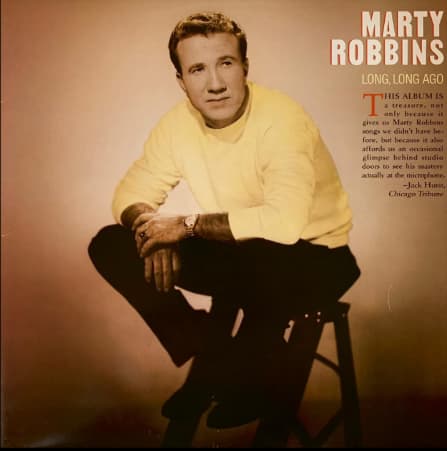
Marty Robbins – Unchained Melody: A Soul-Stirring Ascent into the Stratosphere of Eternal Longing
In the late summer of 1977, a year that saw the world mourning the loss of the King of Rock and Roll, Marty Robbins entered the studio to breathe his own legendary spirit into the most haunting love song of the twentieth century. Released on his album Adios Amigo, Marty’s rendition of “Unchained Melody” is a breathtaking display of vocal prowess that remains one of the most underrated jewels of his late-career catalog. While the song is inextricably linked to the Righteous Brothers, Marty’s version—which reached No. 7 on the Billboard Hot Country Singles chart—stripped away the blue-eyed soul grit and replaced it with a celestial, crystalline purity. It is a song for the romantic who knows that true love isn’t just a feeling; it is a patient, agonizing wait for a reunion.
For the reader who has cherished a single love across the vast expanse of decades, this song is a profound emotional homecoming. Marty Robbins, whose voice had remarkably retained its youthful “ping” even as it gained a mature, resonant depth, delivers a performance that feels like a prayer sent toward the stars. For the mature listener, the “unchaining” of the melody is a metaphor for the liberation of the heart—the moment when all the years of distance and “lonely times” are finally bridged by a single touch. There is a powerful, nostalgic ache in hearing Marty’s voice climb those iconic, soaring notes, reminding us of the times we’ve stood on distant shores, waiting for the “lonely rivers” of our lives to finally flow to the sea.
The story behind the song is a fascinating journey through the annals of pop history. Originally written in 1955 by Alex North and Hy Zaret for an obscure prison film called Unchained, the song became an instant standard. By the time Marty approached it in 1977, he was a seasoned veteran of the Nashville scene, yet he remained an artist who refused to be pigeonholed. He understood that his “Gentle Balladeer” persona was the perfect vessel for this song’s inherent vulnerability. At a time when the music industry was leaning toward the “Outlaw” movement, Marty leaned into pure, unabashed romanticism, proving that a man’s strength is often most visible when he is at his most exposed.
The lyrical depth of “Unchained Melody” lies in its timeless simplicity. The narrator pleads for his lover to “hang on” and “speed” to him, capturing the desperate, physical need for companionship. For those of us looking back through the lens of a long life, the song speaks to the endurance of devotion. When Marty reaches the climax of the song—the legendary high notes on “God speed your love to me”—his voice doesn’t just sing; it yearns. His phrasing is impecabbly slow, as if he is savoring the weight of every silent hour he has spent alone. It is a performance that honors the “long, lonely time” that defines so many of our greatest journeys.
Musically, the track is a masterclass in Late-Seventies Nashville Sophistication. It features:
- Lush, Orchestral Swells: A cinematic string arrangement that provides a dramatic “lift” to Marty’s vocals.
- A Delicate Piano Foundation: Setting a somber, reflective tone that anchors the song in a sense of intimacy.
- The “Robbins” Tenor: His control here is nothing short of miraculous; he navigates the wide intervals of the melody with a fluidity that few singers in history have ever matched.
To listen to this track today is to appreciate the sheer “majesty” of Marty Robbins. He reminds us that while genres may change and icons may pass, a great melody—delivered with total sincerity—is unchainable. It is a song that invites us to close our eyes, reach out a hand, and believe that love, in its truest form, is always worth the wait.
 Music Legend