
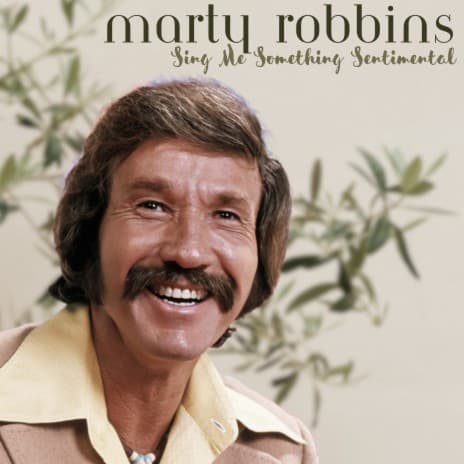
Marty Robbins – Shackles and Chains: A Soulful Lament of Love’s Long Shadow
In the mid-1950s, as Marty Robbins was refining the “Gentle Balladeer” style that would make him an international icon, he turned his attention to a classic theme of country music: the prisoner of love. Recorded during his prolific early years at Columbia Records and often found on his essential 1950s compilations, “Shackles and Chains” is a song that captures the heavy, lingering weight of a memory that refuses to let go. It is a song for the reflective heart—a melody that explores the idea that sometimes the strongest bars aren’t made of iron, but of unrequited devotion.
The Weight of Yesterday
For the reader who has lived through the long seasons of life, understanding that the past can sometimes feel like a physical weight, this song resonates with a quiet, profound truth. Marty Robbins, with a voice as clear as a bell and as smooth as polished stone, inhabits the role of a man bound by his own feelings.
To the mature listener, “Shackles and Chains” isn’t just about a breakup; it’s about the endurance of memory. We’ve all had those moments where a scent, a song, or a certain slant of light brings back a ghost from forty years ago. Marty captures that “sweet sorrow”—the realization that even though we are free to move on, a part of us remains “shackled” to the people we once loved. There is a deep, nostalgic comfort in his delivery; he makes the burden feel noble rather than bitter.
A Bridge Between Traditions
The song itself has deep roots in the folk and bluegrass traditions, most famously associated with the “Father of Bluegrass,” Bill Monroe, and later covered by legends like Jimmie Davis. However, when Marty Robbins took hold of it, he stripped away the high-lonesome grit of the mountains and replaced it with the urban sophistication of the emerging Nashville Sound.
Recording in the mid-1950s, Marty was a pioneer in “smoothing out” country music without losing its soul. He understood that to make a song about “chains” effective, the music had to feel light and airy—creating a haunting contrast between the freedom of the melody and the confinement of the lyrics. His version emphasizes the balladry, turning a standard country lament into a timeless piece of vocal art.
The Echoes of the Heart
Musically, Marty’s rendition of “Shackles and Chains” is a showcase of his early-career precision:
- The Swaying, Waltz-Like Tempo: The 3/4 time signature gives the song a repetitive, cyclical feel, mirroring the “round and round” thoughts of a restless mind.
- Marty’s Signature Vibrato: In this track, his vibrato is used to convey a sense of “trembling” emotion, especially on the sustained notes of the chorus.
- Minimalist Acoustic Backdrop: The soft strumming of the guitar and the walking bass line provide just enough structure to let Marty’s voice act as the primary storyteller.
Listening to “Shackles and Chains” today is an invitation to appreciate the “Empath” in Marty Robbins. He reminds us that our past loves aren’t meant to be forgotten, but carried—sometimes as a burden, but often as a testament to our capacity to care. It is a song that invites us to look at our own “chains” not as signs of weakness, but as the gold links of a life deeply lived.
 Music Legend