
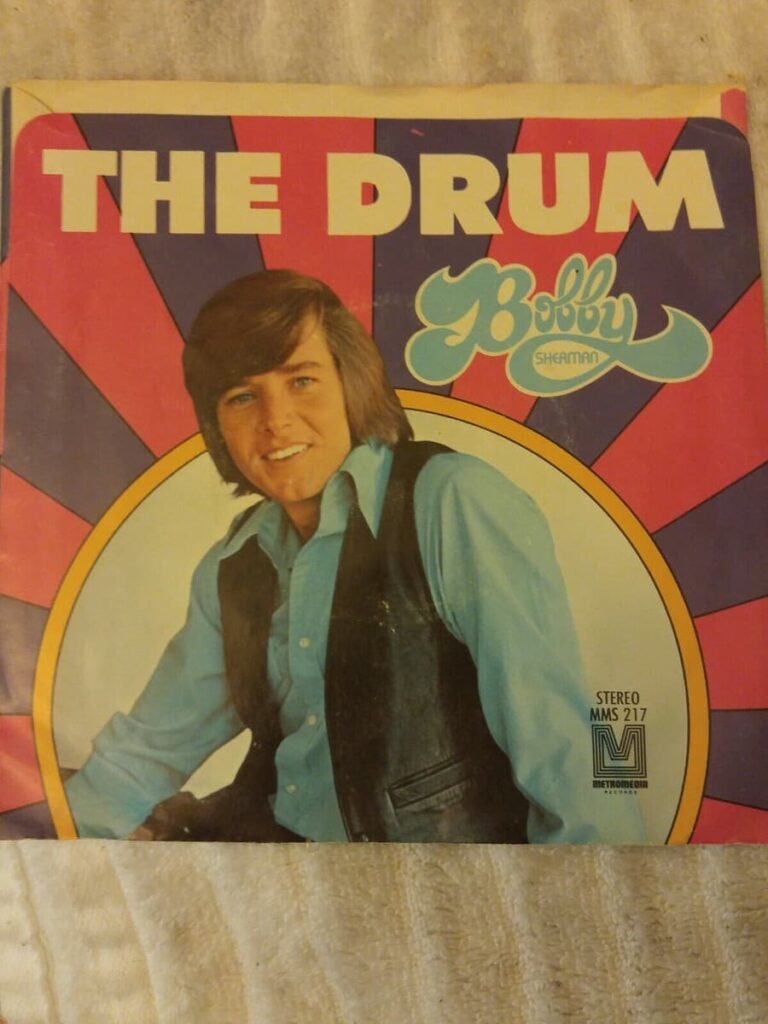
A quiet meditation on conscience and consequence, where a gentle pop voice confronted the noise of war and the cost of obedience.
When Bobby Sherman released The Drum in 1971, it stood apart from much of his earlier work, both musically and emotionally. Known primarily for romantic pop hits that celebrated youthful affection and uncomplicated love, Sherman surprised listeners with a song that carried a far heavier emotional and moral weight. The Drum reached number 29 on the Billboard Hot 100 and performed even more strongly on the Adult Contemporary chart, reflecting how deeply its message resonated with listeners who were ready to hear something thoughtful, restrained, and quietly courageous.
Released during a period of profound cultural unease, The Drum emerged at a time when the echoes of global conflict were impossible to ignore. Yet the song never raises its voice. Instead, it chooses reflection over protest, inward reckoning over public declaration. From its opening moments, the song frames the drum not as an instrument of celebration, but as a symbol of command, repetition, and obedience. The steady beat becomes a metaphor for orders given and followed, often without question, often without pause.
Musically, The Drum is understated, almost deliberately so. The arrangement avoids excess, allowing the lyrics to remain in clear focus. Acoustic textures, measured pacing, and a somber melodic line give the song a sense of inevitability, as if each verse is marching toward a conclusion the listener already senses but hopes might somehow be avoided. Bobby Sherman’s vocal performance is central to the song’s power. He sings with restraint, never dramatizing the emotion, trusting the words to carry their own gravity. There is a calmness in his delivery that makes the message even more unsettling, as though it is being spoken after long contemplation rather than in the heat of anger.
The story behind The Drum reflects a moment when popular music began to shoulder more responsibility. By the early seventies, audiences had grown accustomed to songs that questioned authority and examined the personal cost of collective decisions. Yet The Drum approaches these themes from a deeply human angle. It does not accuse. It observes. The song tells of a young man drawn into a cycle of duty, guided by the sound of the drum, only to discover too late what that rhythm has demanded of him. The tragedy lies not in malice, but in compliance.
The meaning of The Drum unfolds gradually. On the surface, it is a narrative song about war and loss. Beneath that, it becomes a meditation on choice, responsibility, and the consequences of surrendering one’s judgment to an external force. The drum beats steadily, indifferent to who follows it or where it leads. That indifference is the song’s quiet warning. It suggests that systems move forward regardless of individual cost, unless someone chooses to stop listening.
Within Bobby Sherman’s catalog, The Drum occupies a unique and important place. It revealed an artist willing to step beyond expectation and engage with the emotional complexities of his time. While it did not reach the chart heights of his earlier hits, its endurance comes from a different source. It remains memorable because it asked listeners to sit with discomfort, to reflect rather than escape.
Over time, The Drum has taken on an almost timeless quality. Its themes are not bound to a single conflict or generation. The questions it raises about obedience and conscience continue to feel relevant long after its original release. In revisiting the song today, one is reminded that popular music, at its best, does more than entertain. It listens to the world, absorbs its anxieties, and gives them shape in a way that invites understanding rather than outrage.
In Bobby Sherman’s gentle but resolute performance, The Drum becomes more than a song. It becomes a quiet moment of reckoning, asking the listener to consider not only the rhythm they hear, but the direction it leads them toward, and the silence that follows when the drum finally stops.