
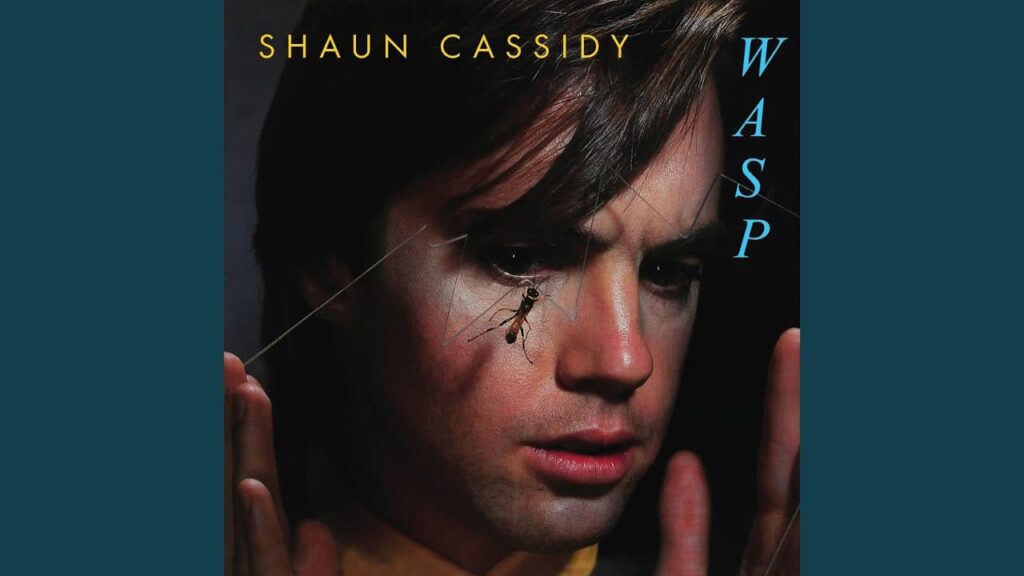
A bittersweet farewell wrapped in bright guitars, where youthful romance meets the ache of inevitable goodbye.
When Shaun Cassidy released “So Sad About Us” in 1978 as part of his third studio album, Under Wraps, he was stepping into a different emotional register. Unlike the sparkling innocence that defined his earlier hits, this recording carried a sharper edge, a knowing sigh beneath the melody. Although the single did not achieve major chart success on the Billboard Hot 100, it became one of the more artistically significant moments of the Under Wraps era, signaling Cassidy’s determination to move beyond teen idol status and into more mature musical territory.
Originally written by Pete Townshend and first recorded by The Who in 1966 for their album A Quick One, “So Sad About Us” was already a song with history. Townshend’s composition captured the peculiar sadness of two people who care deeply for each other yet cannot seem to bridge the growing distance between them. By choosing this song, Cassidy aligned himself with a lineage of British rock introspection, far removed from bubblegum pop formulas. It was a bold selection, and that boldness mattered.
The late 1970s were not kind to former teen idols who failed to evolve. Audiences were shifting toward harder rock, disco, and more complex singer songwriter material. Under Wraps was Cassidy’s answer to that change. Produced with a tighter, more contemporary sound, the album leaned into rock textures, layered guitars, and a moodier atmosphere. “So Sad About Us” fit perfectly within that vision. It was not glossy. It was not carefree. It was restless.
Cassidy’s interpretation of the song deserves close attention. Where The Who delivered it with raw, almost urgent frustration, Cassidy approached it with controlled vulnerability. His voice carries a sense of resignation rather than anger. The line between love and loss feels thinner here. He does not sound defeated. He sounds reflective. That subtle difference transforms the song’s emotional impact. It becomes less about conflict and more about quiet realization.
The lyrics themselves are deceptively simple. Two people acknowledge that something once beautiful has unraveled. There is no villain, no dramatic betrayal. Just distance. Just the soft echo of what used to be. “So sad about us,” he sings, and in that phrase lies the entire weight of shared memories. It is the sadness of understanding that affection alone cannot always repair what time has worn down.
In retrospect, “So Sad About Us” stands as one of the clearest signals that Shaun Cassidy was striving for artistic credibility. While his earlier singles like “Da Doo Ron Ron” and “That’s Rock ’n’ Roll” climbed high on the charts, this recording chose emotional complexity over commercial certainty. It may not have delivered a blockbuster ranking, but it delivered growth. And growth often reveals itself not in numbers, but in nuance.
There is something profoundly human in the way this song lingers. It reminds listeners of relationships that ended without fireworks or scandal. The kind that simply faded, leaving behind photographs, letters, and songs that still sting a little when revisited. The melody carries brightness, yet the words speak of parting. That contrast mirrors life itself. Joy and sorrow rarely arrive separately.
Over time, Under Wraps has been reassessed as a transitional album, marking the point where Cassidy began stepping out from under the weight of expectation. “So Sad About Us” remains one of its emotional centerpieces. It reveals an artist willing to risk vulnerability in order to be taken seriously.
Listening today, the song feels less like a pop cover and more like a confession. It captures that quiet hour when one realizes that love has shifted shape. Not gone entirely, but changed. And in that recognition, there is both pain and dignity.
Some songs age by becoming nostalgic. Others age by becoming truer. “So Sad About Us” belongs to the latter.