
A Playful Guitar Instrumental That Turned Virtuosity Into Pure Joy
When Chet Atkins released “Yakety Axe” in 1965, he did something few guitarists had ever managed so effortlessly: he made dazzling technical brilliance sound like lighthearted mischief. The single climbed to No. 4 on the Billboard Hot Country Singles chart in early 1965 and crossed over to reach No. 30 on the Billboard Hot 100, a remarkable achievement for an instrumental in the middle of the rock and soul dominated decade. At a time when lyrics ruled the airwaves, Atkins proved that six strings alone could still command the room.
“Yakety Axe” was, of course, a witty reimagining of Boots Randolph’s 1963 saxophone hit “Yakety Sax.” Where Randolph’s version became famous for its breathless, comedic sprint, Atkins translated that same playful energy to the electric guitar, reshaping the melody with his signature fingerstyle precision. Backed by Randolph himself on saxophone in the recording session, Atkins turned what might have been a novelty into a masterclass. The interplay between guitar and sax feels like two old friends teasing each other, trading lines with a grin you can almost hear.
By 1965, Atkins was already an established architect of what would be called the “Nashville Sound.” As a producer and session guitarist at RCA Victor, he had helped smooth country music’s rough edges, blending it with pop sensibilities to broaden its appeal. Yet “Yakety Axe” reminds us that beyond the producer’s desk stood a musician of astonishing dexterity. His thumb maintained the steady bass line while his fingers danced across the melody, creating the illusion of two guitars at once. That fluid independence between bass and treble lines became one of his trademarks, studied by generations who would follow.
There is something deeply symbolic about “Yakety Axe.” In an era when country music wrestled with modernization, Atkins offered reassurance that tradition and innovation could sit side by side. The song carries no lyrics, yet it speaks volumes about confidence, humor, and the joy of craft. It is not weighed down by heartbreak or longing. Instead, it celebrates sheer musicality. The melody tumbles forward with almost boyish exuberance, yet beneath that brightness lies years of discipline and quiet devotion to the instrument.
Listeners who encountered the track on AM radio in 1965 likely remember the surprise of it. The first notes leap out like a wink, as if Atkins were saying that music need not always be solemn to be serious. Its crossover success showed that audiences were willing to follow musicianship wherever it led. In fact, the recording earned Atkins the 1965 Grammy Award for Best Country & Western Recording, further cementing his reputation not merely as a behind the scenes craftsman, but as a headline artist.
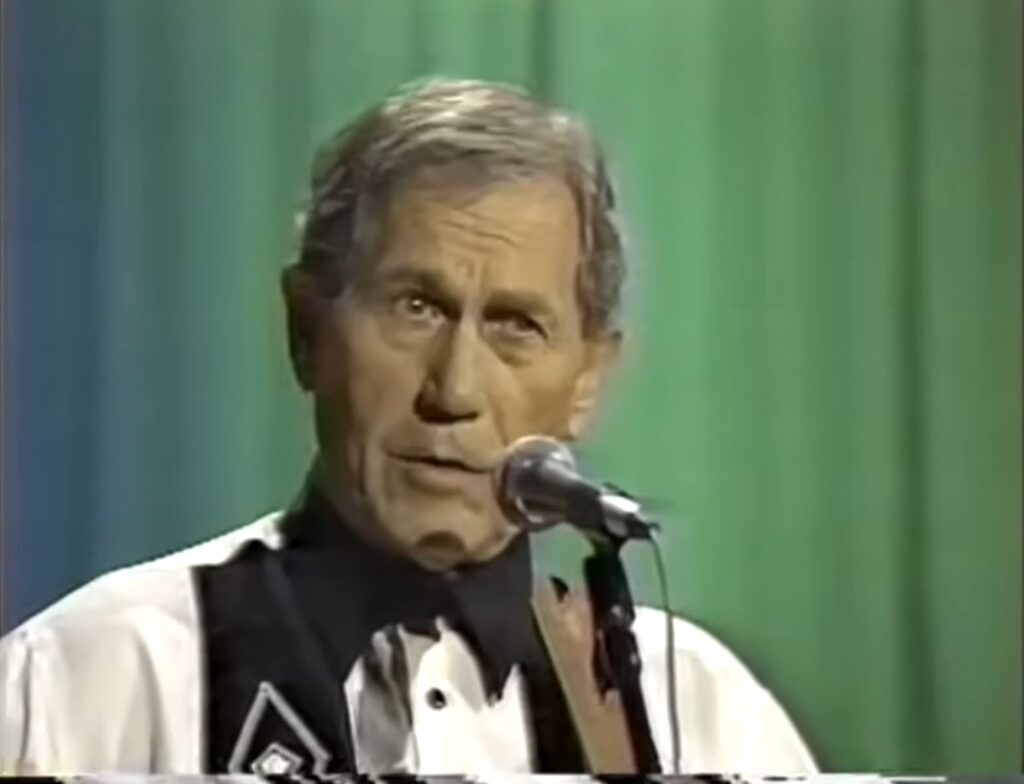
Over time, “Yakety Axe” became a staple of Atkins’ live performances. Concertgoers often watched in amazement as he navigated the rapid runs with calm composure, barely breaking a smile while his fingers blurred across the fretboard. It was entertainment, yes, but also education. Every note was clean. Every phrase was deliberate. The humor never slipped into chaos. That balance between control and spontaneity defined his artistry.
In retrospect, “Yakety Axe” feels like a snapshot of mid sixties optimism filtered through Nashville elegance. It stands as a reminder that technical brilliance can coexist with warmth, and that sometimes the most lasting statements in music are made without a single word. In the hands of Chet Atkins, the guitar was not just an instrument. It was a storyteller, a comedian, and a bridge between worlds.