
A Defiant Anthem of Resilience, Where Every Fall Becomes a Reason to Rise Again
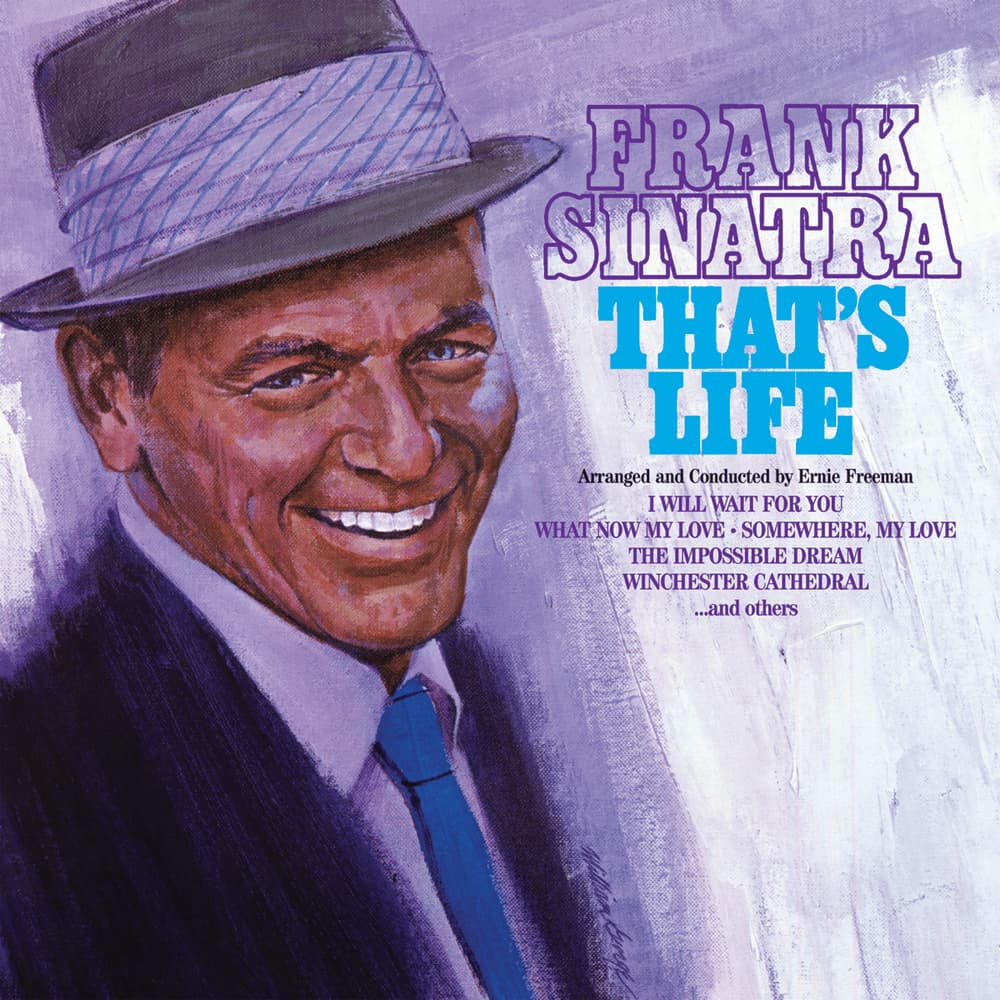
When Frank Sinatra released “That’s Life” in 1966, he was not merely adding another single to his catalog—he was reclaiming his narrative. The song reached No. 4 on the Billboard Hot 100 and climbed to No. 1 on the Easy Listening chart in early 1967. It also became the title track of his album That’s Life, which peaked at No. 6 on the Billboard 200. At a time when rock and soul were dominating popular music, Sinatra—already a seasoned icon—proved that charisma, phrasing, and emotional conviction could still command the charts.
Originally written by Dean Kay and Kelly Gordon, “That’s Life” had first been recorded by Marion Montgomery in 1963, but it was Sinatra who transformed it into a cultural statement. Produced by Jimmy Bowen, the recording featured a bold, brassy arrangement with driving horns and a gospel-tinged backing chorus. From the opening punch of the brass section, there is no hesitation. The song strides forward with confidence, almost daring the listener to doubt it.
By 1966, Sinatra had already lived several artistic lives. He had endured career slumps in the early 1950s before staging one of the most remarkable comebacks in entertainment history. He had conquered film, dominated Las Vegas, and redefined the concept of the pop vocalist. Yet the mid-1960s presented new challenges. The British Invasion had shifted youth culture, and many traditional pop singers found themselves sidelined. In that context, “That’s Life” felt like more than a song—it felt autobiographical.
The lyrics speak of a man who has been “a puppet, a pauper, a pirate, a poet, a pawn and a king.” It is a line delivered with swagger, but beneath that swagger lies lived experience. Sinatra’s phrasing—never rushed, always deliberate—turns each word into testimony. He does not sing as a victim of circumstance. He sings as someone who understands that setbacks are part of the journey. When he reaches the climactic declaration, “I’m gonna roll myself up in a big ball and die… my, my,” there is a hint of theatrical exaggeration. But the next line—“And I can’t deny it”—grounds the drama in honesty. He acknowledges despair, only to reject surrender moments later.
Musically, the arrangement reflects the era’s evolving sound. The brass punches harder than in his earlier Capitol recordings. The rhythm section leans into a more contemporary groove. Yet Sinatra’s voice remains unmistakable—rich, controlled, and emotionally textured. He rides the orchestra rather than being carried by it. That dynamic tension gives the performance its vitality.
Over time, “That’s Life” has become one of Sinatra’s signature songs. It has been covered by numerous artists, but few have matched the authority of the original 1966 recording. The song’s enduring appeal lies in its universal message: fortunes rise and fall, reputations shift, luck turns without warning. What matters is the refusal to stay down.
Listening today, the recording carries an added layer of poignancy. It captures a mature artist standing firm amid change, reminding audiences that resilience never goes out of style. In just over three minutes, Frank Sinatra distilled decades of triumph and setback into a single, bracing anthem.
“That’s Life” is not simply about endurance. It is about dignity in the face of uncertainty—and the quiet, unshakable belief that tomorrow is always worth another try.
 Music Legend