
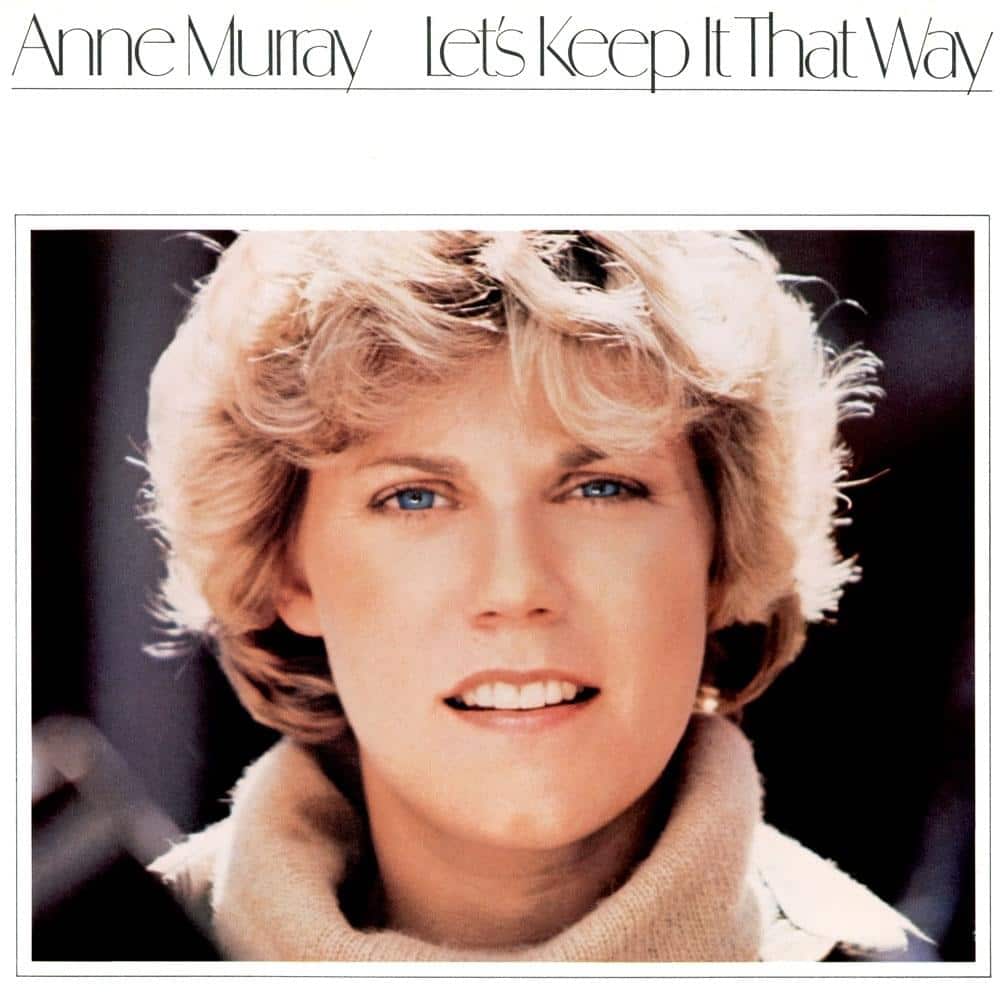
A Gentle Promise of Return Wrapped in Country Warmth and Pop Grace
When Anne Murray released “Walk Right Back” in 1978, she was already an established international star, and the single quickly affirmed her enduring appeal. The song appeared on her platinum selling album Let’s Keep It That Way, a record that solidified her crossover dominance between country and pop audiences. Upon release, “Walk Right Back” climbed to No. 4 on the U.S. Billboard Hot Country Singles chart and reached No. 2 on the Adult Contemporary chart. In Canada, it performed even more strongly, reinforcing Murray’s stature as one of the most successful recording artists the country had ever produced. These chart positions were not mere statistics. They were confirmation that her voice still carried emotional authority in a rapidly changing musical landscape.
The song itself was written by Sonny Curtis, best known as a member of The Crickets, and it was first recorded in 1961 by The Everly Brothers. Their original version reached No. 7 on the Billboard Hot 100 and became one of their signature harmony driven hits. By the late 1970s, however, Murray’s interpretation gave the song a second life. Where the Everly Brothers emphasized bright, close harmonies and youthful optimism, Murray offered something steadier and more reflective. Her version did not simply revisit an old hit. It reframed it.
The late 1970s were a fascinating moment in popular music. Disco dominated the airwaves, rock was growing louder and more theatrical, and country music was expanding into mainstream pop territory. Anne Murray stood comfortably in that intersection. She possessed a voice that could move seamlessly between genres without sacrificing sincerity. On Let’s Keep It That Way, she balanced contemporary production with traditional songwriting. The album also included the No. 1 country and pop crossover hit “You Needed Me”, which won the Grammy Award for Best Female Pop Vocal Performance. In that company, “Walk Right Back” functioned as both a nostalgic nod and a reaffirmation of timeless melody.
The emotional core of “Walk Right Back” lies in its simplicity. The lyrics speak of parting without bitterness. There is no dramatic accusation, no grand confrontation. Instead, there is an open door and a quiet confidence. The narrator does not beg. She simply says that when you are ready, walk right back. In Murray’s voice, this message carries a calm maturity. It feels less like the plea of a young lover and more like the assurance of someone who understands that love sometimes needs space to find its way home.
Murray’s vocal phrasing deserves particular attention. She avoids excessive ornamentation. Her tone is controlled, rounded, and luminous. There is a steadiness in her delivery that mirrors the emotional patience expressed in the lyrics. The production, guided by producer Jim Ed Norman, supports her with gentle strings and a restrained rhythm section. Nothing overwhelms the vocal. The arrangement leaves room for the sentiment to breathe.
For listeners who first encountered the song in 1961, Murray’s 1978 rendition likely carried a layer of memory. It connected two different eras of popular music. The bright innocence of early 1960s pop met the polished, crossover sensibility of late 1970s country. That bridging of decades is part of what made the recording resonate so deeply. It allowed the song to mature alongside its audience.
In retrospect, “Walk Right Back” exemplifies what made Anne Murray so significant in the history of country pop. She did not rely on vocal acrobatics or dramatic reinvention. Instead, she trusted melody, clarity, and emotional honesty. At a time when trends shifted quickly, she remained grounded. The result was music that felt reliable without ever being dull.
Listening to the song today, one hears not just a cover of an early 1960s hit, but a meditation on constancy. In a world that often rushes forward, “Walk Right Back” reminds us that some promises endure. Some voices remain steady. And sometimes, the most powerful expression of love is simply leaving the light on and believing that someone will find their way back through the door.
 Music Legend