
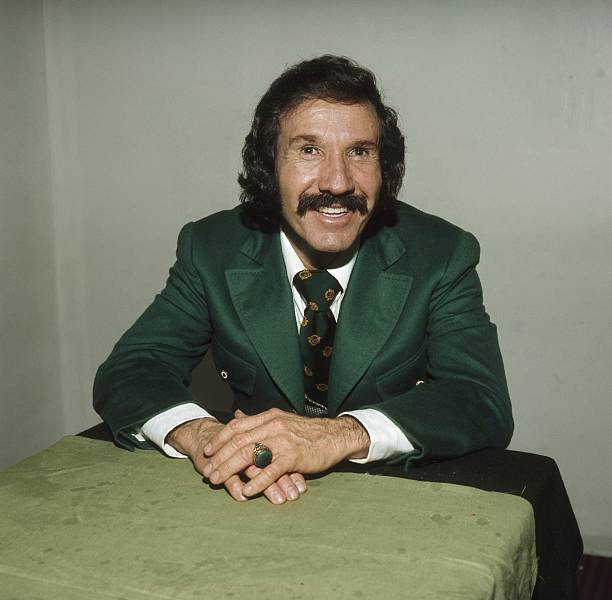
Marty Robbins – To Get To You: A Soulful Odyssey of Devotion Across the Miles of the Heart
In the transformative landscape of 1969, as the world was captivated by the moon landing and the roar of a changing culture, Marty Robbins released a song that felt like a warm, steady embrace. “To Get To You” arrived as a standout track on his album It’s a Sin, a record that showcased Marty at the peak of his “Country-Politan” elegance. While the album itself climbed to #6 on the Billboard Top Country Albums, this particular song became a quiet anthem for the faithful, eventually reaching #3 on the Billboard Hot Country Singles chart. It was a testament to the fact that no matter how fast the world moved, the timeless story of a man journeying back to the one he loves would always find an audience.
A Melody Bound by Miles and Memories
To hear the opening notes of “To Get To You” is to be swept into a cinematic landscape of the mind—a long, winding highway at dusk, the rhythmic hum of tires on pavement, and the singular focus of a heart heading home. For those of us who remember the late sixties, Marty Robbins was the voice of emotional clarity. He didn’t just sing lyrics; he breathed life into the very concept of longing. This song, written by the prolific Jean Chapel, was the perfect vessel for Marty’s operatic yet intimate tenor.
Recorded during his legendary tenure at Columbia Records, the track captures a specific moment in Nashville history when the rough edges of honky-tonk were being smoothed over by lush arrangements and sophisticated production. Yet, beneath the polished surface, Marty’s performance remained raw and deeply human.
The Geography of a Faithful Heart
The narrative of “To Get To You” is a poetic exploration of perseverance. It isn’t just about physical distance—the mountains climbed or the rivers crossed—it’s about the emotional resilience required to remain true in a world that often pulls us apart.
“I’d walk across the burning sand… I’d swim the deepest ocean too.”
For the mature reader, these lines carry a weight that only time can provide. We look back on our own lives and remember the “oceans” we crossed for our families, the “mountains” we climbed to provide a better life, and the quiet sacrifices made in the name of love. Marty’s delivery is masterful; he builds the intensity of the song like a traveler nearing his destination, his voice rising with a mixture of exhaustion and exhilaration. There is a profound sense of nostalgia in his phrasing, a reminder of a time when commitment was a vow written in stone, not whispered in the wind.
The Harmony of the “Velvet” Era
Musically, the song is a triumph of the “Nashville Sound.” It features a beautiful blend of traditional country instrumentation—the crying steel guitar—and the sophisticated addition of swelling strings and choral backing that gave Marty’s hits of this era their “larger-than-life” feel. The production allows Marty’s voice to sit front and center, highlighting the incredible range and the “velvet” texture that earned him his nickname.
As we revisit “To Get To You” today, we aren’t just listening to a chart-topping hit from 1969; we are reconnecting with the virtues of patience and devotion. Marty Robbins created a song that serves as a beacon for anyone who has ever been far from home. It is a nostalgic masterpiece that reassures us that no distance is too great and no mountain is too high when the destination is the heart of the one we love.
 Music Legend