
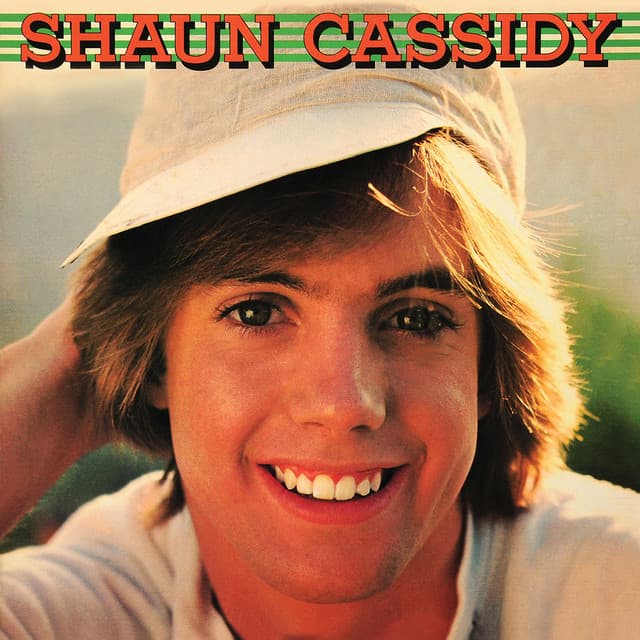
A restless anthem about breaking free from the weight of expectation and stepping into a harder, truer adulthood
When Break for the Street was released in 1980, it marked a striking turning point in the career of Shaun Cassidy—a moment when the bright lights of teen-idol stardom gave way to something sharper, more complex, and undeniably more adult. The single, drawn from the album Wasp, reached No. 83 on the Billboard Hot 100 that year. While that chart position may seem modest compared to the dizzying heights Cassidy had known just a few years earlier, its cultural and artistic significance runs far deeper than numbers alone.
By 1980, the world had changed. The polished pop innocence of the mid-’70s was fading, replaced by edgier textures—new wave, post-punk, a harder strain of rock. Cassidy, once synonymous with youthful charm and glossy magazine covers, understood that he stood at a crossroads. Instead of chasing past formulas, he chose reinvention. For Wasp, he collaborated with Todd Rundgren, one of the most inventive and uncompromising producers of the era. Rundgren did not simply polish Cassidy’s sound; he deconstructed it, rebuilt it, and challenged him to confront a different artistic identity.
Break for the Street embodies that transformation. From its opening bars, the song pulses with urban tension—lean guitars, tight rhythms, and an undercurrent of urgency. This is not the wide-eyed romanticism of Cassidy’s early hits. Instead, it is a declaration of independence, almost defiant in tone. The lyrics speak of escape—not the escapism of fantasy, but the need to break free from suffocating expectations. “Break for the street” feels like a metaphor for stepping out into the real world, stripped of illusions.
Behind the scenes, the making of Wasp was no easy process. Rundgren reportedly pushed Cassidy relentlessly, demanding emotional authenticity and musical risk. For listeners who had followed Cassidy since his television days, the shift was startling. Gone were the lush orchestrations and safe love songs; in their place stood sharper edges, darker moods, and a willingness to sound vulnerable. The album itself peaked at No. 76 on the Billboard 200, a respectable showing given how dramatically it departed from his earlier image.
Yet the true story of Break for the Street lies not in its commercial performance, but in its symbolism. Cassidy was confronting the double-edged sword of early fame. Having been elevated to heartthrob status almost overnight, he understood how fragile that pedestal could be. The song carries the weight of someone who has seen both adoration and doubt—and who chooses to step forward anyway. There is a quiet courage in that.
Listening to it today, one hears more than just a pop-rock track from 1980. One hears an artist wrestling with time itself. The late ’70s had crowned him a teen sensation; the early ’80s demanded maturity. Break for the Street stands at that fragile bridge between eras. Its rhythm feels like footsteps on pavement, moving away from yesterday’s applause toward something less certain, but more honest.
What gives the song lasting resonance is its universality. Everyone reaches a moment when the familiar world feels too small, when applause fades and reality waits outside the door. Cassidy’s performance captures that precise emotional tremor—the mixture of fear and determination that comes with stepping into uncharted territory. His voice, no longer cloaked in youthful gloss, carries a deeper timbre here, as if experience itself has altered the grain.
In retrospect, Break for the Street may not be the most commercially celebrated chapter in Shaun Cassidy’s catalog, but it is among the most revealing. It shows an artist refusing to remain frozen in the amber of nostalgia. It shows ambition, risk, and the willingness to evolve even when the path forward is uncertain.
There is something profoundly moving about that choice. In an industry that often clings to formulas, Cassidy chose growth. And in that choice, Break for the Street becomes more than a single—it becomes a statement of resilience. A reminder that reinvention is not betrayal of the past, but an embrace of the future.