
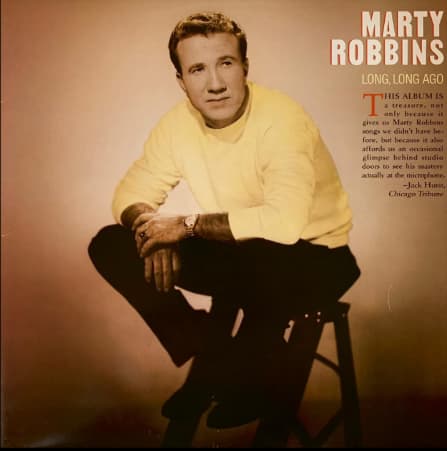
Marty Robbins – The Chair: A Haunting Final Walk into the Shadows of Justice and Regret
In the spring of 1971, a year when the airwaves were dominated by the folk-rock movement and the soulful sounds of a changing America, Marty Robbins returned to a theme he had mastered like no other: the tragic intersection of law, crime, and the human soul. “The Chair” was released as a single from his evocative album Today, a record that reached #15 on the Billboard US Country charts. Unlike the rolling plains of his earlier hits, this song was set within the cold, claustrophobic confines of a prison cell. It debuted with a somber power, climbing to #7 on the Billboard Country chart and even making an appearance on the Billboard Bubbling Under Hot 100, proving that Marty’s gift for storytelling remained as sharp as a razor’s edge.
The Echo of the Iron Gate
To listen to “The Chair” is to experience the heavy, echoing silence of death row. For those of us who lived through the era of the great radio ballads, this song represents the pinnacle of the “outlaw” narrative—not the glamorous rebellion of a movie star, but the stark, terrifying reality of a man facing the ultimate consequence. Marty Robbins, a man who wrote this masterpiece himself, understood that true drama doesn’t need a thousand instruments; it only needs the truth of a voice that knows how to tremble without breaking.
Released on Columbia Records and produced by Marty himself, the song arrived at a time when society was beginning to question the finality of justice. Yet, in Marty’s hands, the song isn’t a political statement; it is a human one. It is a time capsule of a specific kind of American storytelling—one that doesn’t shy away from the darkness.
A Final Confession in the Dark
The narrative of “The Chair” is a chilling first-person account of a man’s final walk to the electric chair. It is a masterclass in suspense and sorrow, told through the eyes of a condemned prisoner who is reflecting on the path that led him to this final, fateful seat. The lyrics are visceral, detailing the sound of the footsteps in the hall and the cold touch of the leather straps.
“The warden’s coming down the hall… he’s coming for me now.”
For the mature listener, this song hits with the force of a lifetime of experience. We understand, perhaps better than we did in our youth, the concept of “choices” and how a single moment of madness or desperation can echo through eternity. Marty’s vocal performance is nothing short of legendary here; his voice drops into a low, weary register that makes the listener feel like they are sitting right there on the cot beside him. There is an unbearable nostalgia in his tone—a longing for a life that was wasted, for a freedom that is now just a ghost in the hallway.
The Minimalism of a Masterpiece
The arrangement of “The Chair” is a study in tension. Led by the brilliant arrangements of William McElhiney, the music is sparse, relying on a steady, marching beat that mimics a heartbeat or a ticking clock. The crying steel guitar doesn’t play a melody so much as it wails for the protagonist’s soul. It is a haunting, “stripped-down” sound that highlights the loneliness of the setting.
As we look back on the vast discography of Marty Robbins, “The Chair” stands out as his most daring and emotionally taxing work. It is a nostalgic masterpiece because it reminds us of the power of the ballad to make us feel things we’d rather forget. It is a song for the quiet hours, for the times when we reflect on the fragility of life and the weight of our deeds. When Marty hits that final note, the silence that follows is as loud as any symphony, leaving us alone with the memories of a man who ran out of time.
 Music Legend