
A Voice Tempered by Time, Finding Redemption in “Statue of a Fool”
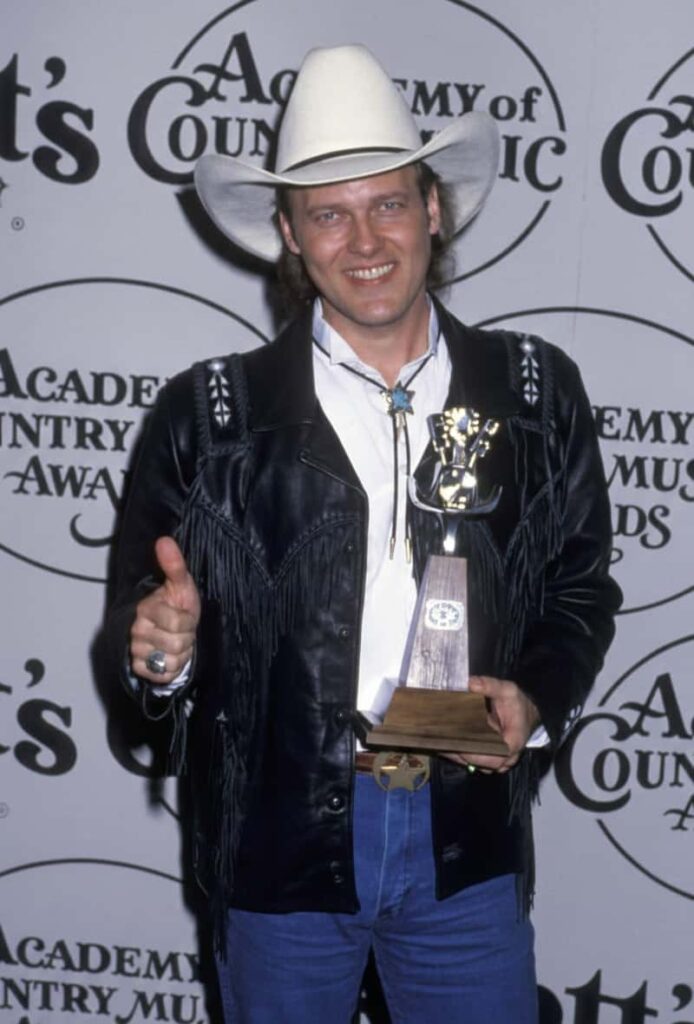
When Ricky Van Shelton recorded “Statue of a Fool” for his 1989 album RVS III, he was already a dominant force in country music. The single was released in 1990 and climbed to No. 2 on the Billboard Hot Country Singles chart, confirming that his appeal was not a passing trend but a steady presence in the genre. By that point, Shelton had already accumulated multiple No. 1 hits, Country Music Association honors, and a devoted following built not on flash, but on restraint and sincerity.
Yet the story of “Statue of a Fool” reaches further back than Shelton’s own rise. Written by Jan Crutchfield, the song was first a hit for Jack Greene in 1969, and later recorded by Brian Collins. It is a classic Nashville narrative, steeped in regret and public heartbreak. The lyric tells of a man who feels exposed in his humiliation, standing metaphorically in the town square as a monument to his own foolish devotion. It is a simple conceit, but country music has always thrived on simple truths delivered without disguise.
What distinguished Ricky Van Shelton’s version was not reinvention but recognition. By the time he arrived in Nashville in the early 1980s, he was not a young dreamer fresh off a bus. Born in Virginia in 1952, Shelton had worked ordinary jobs, sung in regional clubs, and lived enough life to understand disappointment without theatrical exaggeration. That maturity shaped his delivery. In “Statue of a Fool”, his baritone does not plead for sympathy. It accepts the consequences. There is dignity in the phrasing, a measured pacing that suggests a man who has already relived the mistake countless times before singing it aloud.
The late 1980s country scene was increasingly polished, moving toward a brighter commercial sound. Shelton, however, carried forward the neotraditionalist movement alongside artists like George Strait and Randy Travis. His style honored the lineage of classic country storytelling. On RVS III, he balanced honky tonk energy with ballads that leaned heavily on emotional clarity. “Statue of a Fool” became one of the album’s most enduring performances because it aligned perfectly with his artistic identity. He was never a singer chasing novelty. He was a singer interpreting human frailty.
Listeners responded because they recognized authenticity. The arrangement is understated, built around steel guitar and steady rhythm, leaving space for the lyric to breathe. Shelton’s control is especially evident in the chorus, where the metaphor could easily slip into melodrama. Instead, he keeps it grounded. The result is not self pity but reflection. The song becomes less about public shame and more about private reckoning.
By the end of the decade, Ricky Van Shelton had amassed ten No. 1 hits and numerous awards, including CMA Male Vocalist of the Year in 1989. Yet success never altered his artistic posture. He remained drawn to material centered on regret, forgiveness, faith, and endurance. Those themes gave his recordings a continuity that felt reassuring in a changing industry.
Then, after roughly a decade at the top, Shelton did something rare. He stepped away. In the early 2000s, he gradually withdrew from touring and recording, later confirming his retirement from the music business. There was no scandal, no dramatic fall. He simply chose quiet. For an artist whose career had been built on emotional honesty, the decision felt consistent. He had said what he needed to say.
Today, revisiting “Statue of a Fool” offers more than nostalgia. It recalls a moment when country radio still made room for songs rooted in humility and lyrical craftsmanship. It reminds us that a seasoned voice can carry subtleties that youth cannot imitate. Most of all, it affirms that the greatest performances often come not from ambition, but from experience lived fully and sung plainly.
 Music Legend