
Love Without You is a quiet meditation on absence, dignity, and the long emotional echo of a love that chose to walk away
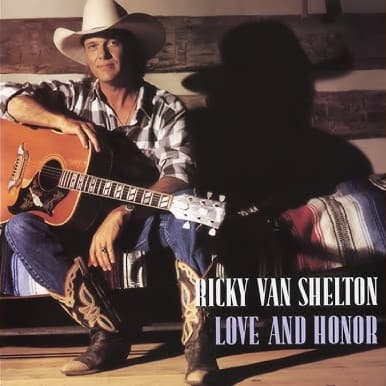
When Ricky Van Shelton released Love Without You in late 1994, it arrived without fanfare, without radio dominance, and without the urgency that usually surrounds a country single chasing the charts. And yet, that restraint was precisely the point. The song appeared on Love and Honor, his seventh studio album and his final release for Columbia Records, issued on November 1, 1994. By that time, Shelton had already stepped back from the commercial spotlight that once defined his remarkable late-1980s rise. What remained was not ambition, but reflection.
Love Without You was released as a single but made only a modest showing on the Billboard Hot Country Singles and Tracks chart, failing to break into the Top 40. In another era, that might have been framed as disappointment. In hindsight, it feels more like a quiet epilogue, a song unconcerned with rankings and more interested in emotional truth. For listeners who had followed Shelton since Somebody Lied and I’ll Leave This World Loving You, the song sounded less like a comeback attempt and more like a personal confession offered without expectation.
Musically, the song is restrained and deliberately understated. The arrangement favors space over spectacle. Gentle acoustic textures, measured steel guitar lines, and a steady, unhurried tempo allow Shelton’s baritone to carry the emotional weight. There is no dramatic crescendo. No vocal acrobatics. Instead, the performance leans on control and clarity, hallmarks of Shelton’s style but here rendered with a sense of emotional fatigue. This is not the voice of a man pleading for love to return. It is the voice of someone who has already accepted the loss and is now learning how to live inside it.
The story behind Love Without You aligns closely with where Shelton stood in his career and life. By the mid-1990s, he had grown increasingly uncomfortable with the demands of fame and the expectations of the Nashville industry. He had spoken openly about valuing privacy, faith, and personal balance over chart momentum. That perspective seeps into the song’s core. The narrator does not rage against abandonment. He does not bargain or rewrite the past. Instead, he acknowledges a harder truth. Loving someone does not guarantee their presence. And surviving their absence becomes its own quiet discipline.
Lyrically, the song explores an emotional paradox that resonates deeply with mature listeners. The title itself suggests endurance rather than resolution. To love without someone is not to stop loving, but to carry that feeling forward into a life reshaped by loss. The words reflect restraint, dignity, and emotional accountability. There is no villain in the story. Only distance, time, and the unspoken realization that some relationships end not because they fail, but because they reach a natural silence.
Within the context of Love and Honor, the song stands as one of the album’s most introspective moments. The record as a whole leans toward traditional values, emotional honesty, and spiritual reflection. It does not chase contemporary trends of the 1990s country scene. Instead, it feels rooted in an older moral and musical framework, one that respects patience, humility, and understatement. As Shelton’s final statement with Columbia Records, the album reads like a closing chapter written carefully, without bitterness.
For listeners who have lived long enough to understand that not all goodbyes are loud, Love Without You holds particular power. It speaks to the quiet rooms left behind, to habits that linger after someone is gone, to the realization that love can remain even when companionship does not. In that sense, the song is less about heartbreak than about emotional survival.
Today, Ricky Van Shelton is often remembered for his early hits and traditionalist sound, but Love Without You deserves recognition as one of his most emotionally honest recordings. It may not have climbed the charts, but it settled into something deeper. A song that understands the long view of life, where love is not always rewarded, but still honored.
 Music Legend