
A Farewell Measured in Silence and Dignity
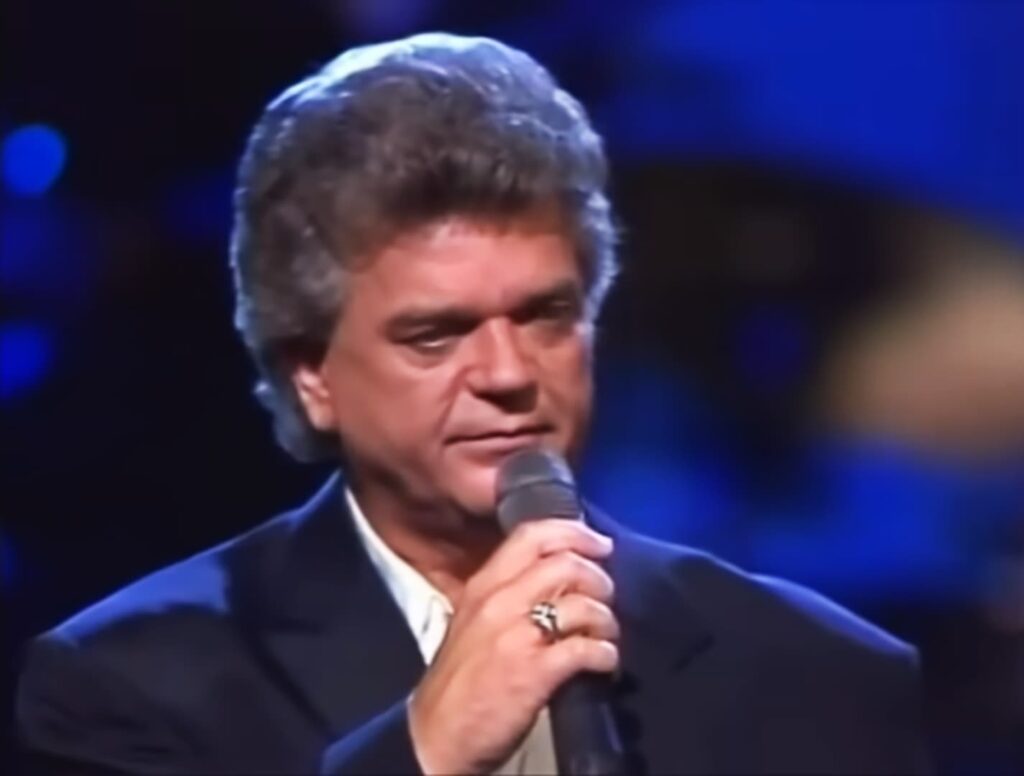
On the evening of 1988, when Conway Twitty stepped onto the stage to perform “Goodbye Time” at the TNN Music City Country News Living Legend Award ceremony, the moment carried more than melody. It carried history. The performance, preserved in the televised special, found Twitty already crowned by decades of success, yet standing with the humility of a man who understood the cost of every goodbye he had ever sung.
“Goodbye Time” was originally released in 1988 as the title track of his MCA album. Though it would later find renewed commercial life through other artists, in Twitty’s voice it felt definitive. By the time of this live rendition, he had already amassed more than 50 No. 1 country hits, a record that placed him among the giants of the genre. The Living Legend Award was not ceremonial flattery. It was institutional recognition of a career that began in rock and roll in the 1950s and matured into one of the most consistent reigns in country music history.
The staging was restrained. No theatrical flourish. No dramatic lighting cues. Twitty stood almost motionless, microphone in hand, delivering the song with the calm authority of someone who no longer needed to prove anything. His voice, slightly weathered but steady, wrapped around the lyric with quiet control. He did not oversell the heartbreak. He let it breathe.
“Goodbye Time” is built on emotional inevitability. It is not a plea for reconciliation. It is not even a bitter farewell. It is acceptance. The narrator acknowledges that love has already slipped beyond reach. In Twitty’s live delivery that night, the words felt autobiographical, even if they were not written as such. After decades of touring, personal upheavals, reinventions, and public scrutiny, he sang like a man who had learned that some departures are not dramatic explosions but slow dissolves.
The audience reaction was telling. This was not the roar reserved for a chart topping single. It was the sustained, respectful applause of peers and lifelong fans who understood the weight of the moment. Many in that room had grown up with his voice on their radios. They had heard him through marriages, divorces, long highway drives, and late night loneliness. In 1988, country music itself was evolving, welcoming a new generation. Yet Twitty’s presence that evening was a reminder of continuity, of roots that refused to fade.
Television has a way of flattening intimacy, but this performance escaped that limitation. The camera lingered on his face, capturing the subtle tightening around his eyes on certain lines. He did not dramatize pain. He embodied it. That restraint made the song more devastating. When he reached the closing phrases, there was no grand crescendo. Just the steady acknowledgment that parting is sometimes the final act of love.
Looking back now, decades after that broadcast, the performance carries an added layer of poignancy. Twitty would pass away in 1993, only five years later. Knowing that fact transforms the 1988 rendition into something almost prophetic. It feels less like a routine awards show appearance and more like a quiet summation of a life spent singing to America’s private sorrows.
In the broader arc of his career, “Goodbye Time” was not his biggest commercial triumph. Yet in that televised moment, it became a statement piece. It showed why he endured. His phrasing remained precise. His baritone retained its velvet gravity. Most importantly, he trusted the song. He allowed the lyric to stand without ornament.
For those who revisit the footage today, the nostalgia is immediate and powerful. The TNN stage, the formal attire, the respectful hush of the crowd, all evoke an era when country music television still felt intimate and ceremonial. More than that, the performance reminds listeners of what Twitty represented. Stability. Emotional clarity. A voice that never rushed the truth.
There are farewell songs that scream. There are others that whisper. On that 1988 stage, Conway Twitty chose the whisper. And in doing so, he left behind a performance that feels timeless, dignified, and achingly human.
 Music Legend
  Oldies Songs